Farzin Khan
Stories (3)
Filter by community
Wings of Innovation:The Wright Brothers and the Dawn of Flight
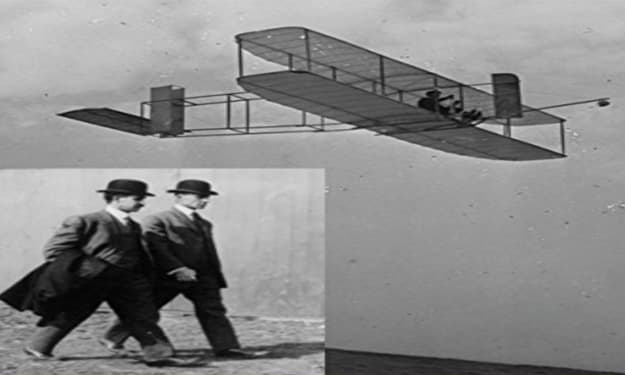
The Wright brothers, Orville and Wilbur, is of ingenuity, perseverance, and ground-breaking achievement. Their invention of the first successful powered airplane in the early 20th century transformed transportation and sparked an era of innovation in aviation. This article explores the Wright brothers' journey, the challenges they faced, their inventions, and the enduring impact of their work on modern aviation. Orville and Wilbur Wright were born in the late 1860s in Indiana and Ohio, respectively. Growing up in a family that encouraged curiosity and learning, both brothers developed a fascination with flight at an early age. Their interest was piqued further by a toy helicopter their father gave them, which sparked a lifelong passion for aviation. Despite their lack of formal engineering education, the brothers were dedicated to studying the principles of flight. They voraciously read books and articles on aeronautics, experimenting with kites and gliders. Their keen understanding of the mechanism of flight began to take shape as they built and tested their designs. By the turn of the 20th century, the brothers had established a successful bicycle manufacturing business in Dayton, Ohio. This venture provided the financial stability and technical experience necessary to pursue their dream of human flight. In 1899, they began exploration in aerodynamics, developing wind tunnel experiments to study lift and control. In 1900, the Wright brothers constructed their first glider, which they tested at Kitty Hawk, North Carolina. The remote location provided the necessary space and strong winds for gliding experiments. Their initial attempts were met with mixed results; while they learned valuable lessons about lift and control, they faced numerous crashes and failures. One of the key challenges in early aviation was controlling the aircraft during flight. Many inventors had created flying machines, but none could achieve sustained, controlled flight. The Wright brothers realized that without a reliable controlling method, their dream would remain just that—an unfulfilled aspiration. To solve this problem, the brothers developed a three-axis control system, which allowed the pilot to steer the aircraft effectively. This innovation enabled the pilot to control the aircraft's pitch, roll, and yaw, thus ensuring a more stable flight. Their focus on control set them apart from their contemporaries and laid the foundation for future aviation. After years of experimentation with gliders, the Wright brothers shifted their focus to powered flight. In 1903, they began building their first powered aircraft, the Wright Flyer. The Flyer featured a 12-horsepower engine, custom-built by the Wrights themselves, and a wingspan of 40 feet. On December 17, 1903, the moment they had worked tirelessly, arrived. The Wright Flyer took to the skies for the first time at Kitty Hawk. Orville piloted the first flight, covering 120 feet in 12 seconds. This moment they have marked the dawn of a new era in human transportation. Over the next few hours, the brothers completed three more flights, the longest covering 852 feet in 59 seconds. This achievement was monumental, not only for the brothers but for humanity as a whole. The first powered flight proved that controlled, sustained flight was possible, paving the way for future advancements. Despite their success, the Wright brothers faced significant challenges following their historic flight. Their invention garnered little immediate attention, and they struggled to gain financial support for further development. Many were skeptical about the practicality of powered flight, viewing it as little more than a novelty. In the years following their initial success, the brothers continued to refine their designs. They worked tirelessly to improve the efficiency and reliability of their aircraft. Their second machine, the Wright Flyer II, debuted in 1904, featuring a more powerful engine and enhanced control mechanisms. In 1905, the Wright brothers achieved a significant milestone, the construction of Wright Flyer III. This aircraft featured a wingspan of 40 feet and an upgraded engine that allowed it to fly for extended periods. On October 5, 1905, the Flyer III completed a 39-minute flight, covering 24 miles. This flight demonstrated the practicality of powered flight and showcased the brothers’ dedication to refining their invention. It wasn’t until 1908 that the Wright brothers finally gained public recognition for their invention. They conducted demonstrations in Europe and the United States, showcasing their flying machines to a captivated audience. Their success led to contracts with the U.S. military, further solidifying their status as pioneers of aviation. Despite their achievements, the Wright brothers faced ongoing competition from other aviation innovators, including Glenn Curtiss and Alberto Santos-Dumont. The brothers were often embroiled in legal battles over patents and intellectual property, further complicated their legacy. The contributions of Orville and Wilbur Wright extend far beyond their initial flights. Their pioneering work laid the groundwork for modern aviation, influencing aircraft design and aerodynamics. The principles of flight they developed continue to be taught in engineering programs worldwide. Their commitment to research, experimentation, and safety transformed aviation into a respected field of study and innovation. The Wright brothers’ story serves as a testament to the power of determination and creativity in overcoming obstacles. Today, the impact of the Wright brothers is evident in the aviation industry. From commercial air travel to space exploration, their contributions have shaped the world we live in. Major advancements in technology and engineering can trace their roots back to the foundational work of the Wright brothers. Their legacy is celebrated globally, with numerous museums and monuments dedicated to their achievements. The National Air and Space Museum in Washington, D.C., features the original Wright Flyer, serving as a reminder of that pivotal moment in history. The story of the Wright brothers offers valuable lessons for aspiring innovators and entrepreneurs. Their journey underscores the importance of persistence, creativity, and collaboration. Despite facing countless failures and setbacks, they remained dedicated to their vision, ultimately achieving their goal. In today's fast-paced technological landscape, the spirit of the Wright brothers continues to inspire individuals to pursue their dreams and challenge the boundaries of possibility. Their story is a reminder that great achievements often arise from humble beginnings and relentless determination. Conclusion
By Farzin Khanabout a year ago in BookClub
Australia vs England: A Riveting Battle of Cricket Titans
Introduction: In a much-anticipated clash of cricketing titans, Australia and England recently locked horns in a thrilling encounter that left fans on the edge of their seats. The two teams, known for their fierce rivalry and historic battles, showcased their exceptional skills, determination, and unwavering spirit on the pitch. From the breathtaking displays of batting prowess to the fierce bowling exchanges, the Australia vs England match was a testament to the timeless allure of the gentleman's game.
By Farzin Khan3 years ago in Gamers
David Corenswet: A Rising Star Shining Bright
David Corenswet is an American actor who has captivated audiences with his talent, versatility, and charm. Born on July 8, 1993, in Philadelphia, Pennsylvania, Corenswet has risen to prominence in a relatively short span of time, leaving an indelible mark on both the small and big screens. With his striking looks and undeniable talent, he has quickly become one of Hollywood's rising stars, accumulating an impressive array of achievements.
By Farzin Khan3 years ago in Styled