faheem akbar
Bio
I HAVE UPLODE EVERY SINGL DAY EMOTIONAL STORY NEED YOUR SUPORT PLEASE🏅🎊🎉
Stories (11)
Filter by community
The Villain Who Saved Me First
No one remembers the day he saved a single life. Mine. I was sixteen when the sky cracked open. Sirens screamed, people ran, and the ground trembled like it was afraid of what was coming next. I stood frozen in the middle of the street, my backpack slipping from my shoulder, my mind unable to process the chaos unfolding around me. That was when the shadows bent. He stepped out of them like he had always been there. Black coat. Silver mask. Eyes glowing faintly blue. Void. The villain every broadcast warned us about. The one blamed for collapsing districts, shutting down power grids, and defying every hero the city worshipped. He looked at me. “Move,” he said. I didn’t. Before I could react, the street exploded behind me. Something massive crashed where I had been standing seconds earlier. Void’s arm wrapped around my waist, and the world blurred as shadows swallowed us whole. When the darkness cleared, we were in an alley miles away. I pushed myself out of his grip, heart racing. “You—you’re him,” I stammered. “Yes,” he said calmly. “Why didn’t you—” I swallowed. “Why didn’t you let me die?” He tilted his head. “Because you weren’t supposed to.” Then he vanished. That should have been the end. It wasn’t. Over the next three years, the city fell further into chaos. Heroes fought villains. Villains fought each other. The news painted everything in black and white. Void was always on the wrong side. Yet every time disaster struck, there were whispers. Someone pulled from rubble before the building collapsed. A train mysteriously stopped before derailment. A child found unharmed in the center of a war zone. No one ever saw who did it. Except me. I started seeing him everywhere. Watching from rooftops. Standing at the edges of crowds. Always distant. Always silent. Until one night, he spoke again. “You shouldn’t be here,” he said, stepping into the flickering streetlight behind me. “I could say the same,” I replied, surprising myself with the lack of fear in my voice. He studied me for a long moment. “You’re older.” “So are you,” I said. He let out a quiet breath that might have been a laugh. “Why do you keep saving people?” I asked. He looked away. “Because no one saved me.” That answer stayed with me. The truth came out the night the city burned for real. The Core—an experimental energy source built beneath downtown—overloaded. Heroes rushed in, cameras following every step. Void didn’t. I found him standing alone on a bridge, staring at the smoke rising in the distance. “You’re not going to help?” I asked. “I am,” he said. “Then why aren’t you moving?” He turned to me. “Because if I do this the way it needs to be done,” he said, “I won’t come back.” My chest tightened. “What do you mean?” “The Core needs someone to absorb the backlash,” he explained. “Someone whose body can survive it. Someone like me.” I shook my head. “Then let the heroes—” “They can’t,” he interrupted. “Their powers are visible. Celebrated. Watched.” He looked at me with those glowing eyes. “Mine were designed to be forgotten.” Understanding hit me like a punch. “They made you like this,” I whispered. “Yes.” He stepped closer. “That’s why I saved you years ago. You reminded me of who I was before they turned me into a weapon.” The city shook violently. Void turned away. “Stay here,” he said. “No,” I said immediately. “I’m coming with you.” He hesitated. Then nodded. The Core chamber was blinding. Energy pulsed violently, tearing metal apart like paper. Heroes lay unconscious around the perimeter, their cameras shattered, their symbols broken. Void walked to the center. “I need you to remember me,” he said quietly. “Even when no one else does.” Tears burned my eyes. “I will,” I promised. He reached out, placing his hand against the Core. Light exploded outward. I screamed his name. When it was over, the chamber was silent. The Core was gone. So was Void. The city called it a miracle. They praised the heroes who survived. They blamed the villains who didn’t. Void became a footnote. A rumor. A threat neutralized. But sometimes, late at night, I feel the shadows shift. And once, in the reflection of a dark window, I swear I saw glowing blue eyes watching over the city. Not as a villain. But as the hero who saved me first.
By faheem akbar2 months ago in Fiction
The Hero Who Was Written Out
That’s the first thing you should know. In this city, statues rise for heroes who saved millions, streets are named after battles that changed history, and children grow up memorizing the names of legends who bled for the future. But mine was erased. I still walk these streets every day. I pass murals painted in bright colors, showing faces I once fought beside. I hear people tell stories that almost include me—until they don’t. They call it a miracle that the city survived the Blackfall Event. I call it a lie built on silence. I used to be part of them. The Vanguard. The strongest group of enhanced humans the world had ever known. We trained together, fought together, and promised—stupidly—that no matter what happened, we’d all be remembered. Then came the night everything burned. The sky cracked open like glass. Creatures poured through, tearing the city apart. Buildings fell. Systems failed. Millions ran while a handful of us ran toward the chaos. We fought for hours. Maybe days. Time broke that night. At the center of it all was the Rift Core—the source of the invasion. Unstable. Intelligent. Feeding on energy, fear, and attention. We realized too late what it needed most. Witnesses. The more the world focused on it, the stronger it became. And that’s when I made the decision. I didn’t tell anyone. I slipped away from the battlefield and reached the Core alone. I used my ability—not strength or speed, but something quieter. I could remove myself from perception. Not invisibility. Erasure. I could make people forget I existed. Memories would slide off me like water. Records would corrupt. Images would blur. Not instantly—but permanently. I had never used it at full scale. I didn’t know if I’d survive. But I knew what would happen if the Core kept feeding. So I stepped into its light and erased myself from the world’s awareness. The Core weakened instantly. Without witnesses, without recognition, it collapsed in on itself. The invasion ended. The city was saved. And I was gone. I woke up in an alley two days later. No alarms. No medics. No teammates shouting my name. Just silence. When I tried to access Vanguard systems, my clearance didn’t exist. My apartment had been reassigned. My bank account had never been opened. Even my reflection felt unfamiliar. I found the others eventually. They were giving a press conference, standing in front of the ruins, bruised and exhausted—but alive. A reporter asked who made the final move. They hesitated. Then the leader said, “We don’t know. Something just… changed.” That was the moment I understood. I hadn’t just erased myself from the Core. I’d erased myself from history. Years passed. The city rebuilt. Heroes aged. New threats rose and fell. I stayed. Someone had to. Without recognition, I could move unnoticed. I stopped crimes before they started. Redirected disasters. Protected people who would never know my face. I became a rumor. A glitch. A feeling people described but couldn’t explain. “Something saved me,” they’d say. “I don’t know what.” That was enough. Until one night, everything shifted. I felt it immediately—the pressure in the air, the hum beneath reality. Another Rift was forming. Smaller. Smarter. And this time, it was learning from the past. I followed the energy to an abandoned district and found a single figure standing at the center. A girl. Young. Untrained. Terrified. She was glowing. “You shouldn’t be here,” I said. She jumped. “You can see me?” My heart stuttered. “Yes,” I said slowly. “Why wouldn’t I?” She swallowed. “No one ever does.” I understood instantly. “You’re like me,” I said. Her eyes filled with tears. “I don’t want to disappear.” “You don’t have to,” I told her. “Not yet.” The Rift pulsed harder, reacting to us. Two erased beings. Two anomalies. It wanted us. I made a choice without thinking. I stepped forward and placed my hand on the energy wall. “This time,” I whispered, “I’ll stay forgotten.” I poured everything into it—every remaining trace of myself. Every echo. Every half-memory still lingering in the world. The Rift screamed. Then it collapsed. When I turned back, the girl was gone. The alley was empty. Weeks later, I sat on a park bench watching the city breathe. A group of kids ran past me, laughing. One of them tripped. Before I could move, someone else caught her. A young woman. Calm. Focused. The kids thanked her and ran off. She looked at me. Really looked. “Thank you,” she said. “For what?” I asked. “For making space,” she replied softly. Then she walked away. For the first time in years, my chest felt light. Maybe heroes don’t need statues. Maybe saving the world isn’t about being remembered. Maybe sometimes, the greatest act of courage… …is choosing to disappear so someone else can stay.
By faheem akbar2 months ago in Fiction
The Timeline Where You Didn’t Leave
I hadn’t bought it. I hadn’t seen it before. And yet, it fit perfectly, as if it had always belonged to me. The screen flickered once, then displayed a single line of text: “Timeline Active.” I laughed under my breath. I’d been working too many night shifts at the lab. My brain was clearly filling in gaps where sleep should have been. Then the watch vibrated. The room shifted. Not violently. Not dramatically. Just enough that my stomach dropped and my breath caught. The walls shimmered, the hum of the lights deepened, and suddenly… the apartment looked lived in. Not mine. There were two mugs on the counter. Two jackets by the door. My heart started racing. “No,” I whispered. A voice came from the hallway. “Did you change the coffee filter again?” I turned so fast my neck hurt. There you were. Older. Softer around the eyes. Wearing the hoodie you’d stolen from me years ago and never returned. “You left,” I said. My voice cracked. “You left three years ago.” You frowned. “I went to the store. I told you I’d be back in ten minutes.” The watch buzzed again. “Deviation Confirmed.” I backed away, my hands shaking. This wasn’t possible. You and I didn’t exist like this. Not anymore. In my world, you walked out after the argument that broke everything. In my world, I never saw you again. But here you were, standing in our kitchen like nothing ever went wrong. I swallowed hard. “What day is it?” I asked. You raised an eyebrow. “You okay?” “What. Day. Is it?” “Thursday,” you said slowly. “Why?” The watch pulsed warm against my skin. I realized then what it was doing. It wasn’t showing me the past. It was showing me a version of reality where you stayed. I spent the next few days pretending everything was normal. I went to work. I came home. I laughed at your jokes. I memorized the way you moved through the space, terrified that if I looked away too long, you’d disappear. At night, I lay awake watching you breathe. In this timeline, we were happy. Not perfect—but real. We fought about small things. We made up easily. We talked about the future like it wasn’t fragile. I checked the watch constantly. Timeline Stable. Then one morning, it changed. “Correction Required.” My chest tightened. That night, I finally told you the truth. Not about the watch. Not about timelines. But about us. “In another version of my life,” I said quietly, “you left.” You stopped washing dishes. “Left how?” “You walked out. And you never came back.” You turned to face me, eyes searching my expression for something like a joke. “And what did you do?” you asked. “I let you go,” I said. “I thought it was easier than fighting.” The room felt heavier. You dried your hands slowly. “And was it?” “No,” I whispered. “It ruined me.” The watch buzzed violently. “Emotional Anchor Detected.” You reached for my hand. “Then maybe that’s why this version exists.” My heart skipped. “Maybe this time, you don’t let fear decide.” For a moment, I believed that. The warning came two days later. “Timeline Collapse Imminent.” I stared at the watch until my vision blurred. I’d changed too much. Said too much. Loved too openly. The universe was correcting itself. That evening, the power flickered. The air felt wrong—thin, stretched. You noticed it too. “What’s happening?” you asked. I didn’t answer. When the room began to shimmer again, panic crossed your face. “Hey,” you said, gripping my arm. “What’s going on?” Tears spilled down my cheeks. “This world isn’t mine,” I admitted. “And I don’t think I’m allowed to keep it.” The watch burned hot. “Final Choice Available.” I understood instantly. I could stay. If I stayed, this timeline would stabilize. I would keep you. This life would continue. But my world—the one where you left, where the lab existed, where everything I knew was built—would collapse without me. You looked at me like you already knew. “You’re not from here,” you said softly. I shook my head. “But you belong somewhere,” you continued. “And I won’t be the reason you abandon it.” I sobbed. “I don’t want to lose you again.” You cupped my face. “You’re not losing me,” you said. “You’re choosing yourself.” The watch vibrated one last time. “Decision Confirmed.” I held you as the room dissolved into light. I woke up alone. My apartment was quiet. One mug. One jacket. The watch was gone. Weeks passed. Then months. Sometimes, I wondered if it had all been a dream. Until one morning, at a coffee shop across town, someone brushed past me and said— “Sorry.” I froze. I turned. You were there. Different clothes. Same eyes. You frowned, then smiled politely. “Have we met?” I swallowed. “Not yet,” I said. But this time, when you started to walk away— I didn’t let you.
By faheem akbar2 months ago in Fiction
If We Had One More Mission
That was how Alex knew something was wrong. Neon lights still flickered between broken buildings, and the rain still fell in thin silver lines, but the usual noise—hover traffic, street vendors, distant sirens—was gone. Silence pressed against his ears like a warning. His comm device buzzed. Unknown Signal Detected. Alex stopped walking. “Don’t do this,” he muttered, tightening his grip on the energy blade at his side. “Not tonight.” A familiar voice crackled through the comm. “Still talking to yourself, Captain?” His breath caught. “No,” Alex said slowly. “That’s impossible.” A laugh followed—soft, sarcastic, unmistakable. “Wow. That hurts.” The rain blurred his vision as he turned toward the abandoned tower ahead. He hadn’t heard that voice in three years. Not since the mission that broke the team. Not since the explosion that was supposed to have killed her. “Nova?” he whispered. “Come upstairs,” the voice said. “We’re running out of time.” The elevator didn’t work, so Alex climbed the stairs two at a time, heart pounding harder with every floor. Memories flooded back—missions gone wrong, victories celebrated too quickly, and one final moment he replayed every night in his dreams. He burst through the door on the fifteenth floor. Nova stood by the window. She looked exactly the same. Same short silver hair. Same scar on her left cheek. Same confident posture that once made Alex believe they could survive anything. “You’re real,” he said. “Last time I checked,” she replied, turning toward him. “Unless you’ve finally lost it.” He crossed the room in seconds and stopped just short of touching her. Afraid she’d disappear. “You died,” he said. “I watched the tower collapse.” “And I watched you leave,” she said quietly. The words hit harder than any weapon. “There was no choice,” Alex said. “Command ordered a retreat. The blast radius—” “I know,” Nova interrupted. “I heard the transmission.” Silence stretched between them. “So,” Alex said finally, “if you’re alive… why now?” Nova’s expression hardened. “They’re activating the Core tonight.” Alex’s blood ran cold. “The Core was destroyed,” he said. “They rebuilt it,” Nova replied. “And this time, it won’t just control the city. It’ll control every connected system on the planet.” Alex ran a hand through his hair. “Why didn’t you contact me sooner?” Nova looked away. “Because I wasn’t sure I could trust you.” That hurt more than he expected. “But I need you now,” she continued. “And I don’t have anyone else.” Alex exhaled slowly. “One more mission,” he said. “Just like old times?” Nova smiled, just a little. “Exactly like old times.” They moved through the city like ghosts. The Core facility was buried beneath the old transit tunnels, guarded by automated drones and biometric locks. Alex hacked the systems while Nova covered him, their movements synchronized in a way that muscle memory never forgot. “You’re slower,” Nova teased over comms. “You’re meaner,” Alex shot back. “Someone had to survive.” They reached the final chamber—a massive sphere of pulsing light, humming with raw energy. The Core. Nova stared at it. “This thing ruined everything,” she said. “Did you know they blamed you for the failure last time?” Alex clenched his jaw. “Wouldn’t be the first time.” He started uploading the shutdown code. Red lights flared. WARNING: MANUAL OVERRIDE REQUIRED. Nova’s eyes widened. “No,” she said. “That wasn’t in the plans.” Alex scanned the interface. “The Core needs a physical anchor,” he realized. “Someone has to stay behind to hold the link open.” Nova stepped forward instantly. “I’ll do it.” Alex grabbed her arm. “Absolutely not.” “You already left me once,” she said, meeting his gaze. “Don’t make me watch you do it again.” “You’re not dying for this,” he said. “Not after everything.” Nova smiled sadly. “I already did.” Before he could react, she pushed him back and connected herself to the Core. Energy surged around her, lifting her off the ground. “Nova!” Alex shouted. “Listen to me,” she said, her voice steady despite the light consuming her. “I didn’t survive that explosion by accident. The Core saved me—changed me. I was never meant to walk away.” Tears blurred Alex’s vision. “I should’ve stayed,” he said. “I should’ve come back for you.” “I know,” Nova said softly. “But this… this is how we finish it.” The countdown hit zero. The Core imploded in a burst of light that shook the tunnels. Alex was thrown backward. When the dust settled, the chamber was empty. The Core was gone. So was Nova. The city slowly came back to life. Weeks later, Alex stood on a rooftop, watching hover traffic weave through the skyline. The world was safe again. Free. His comm buzzed. Unknown Signal Detected. His heart skipped. A single message appeared. “Mission complete, Captain.” Alex smiled through the ache in his chest. “Yeah,” he whispered. “It is.”
By faheem akbar2 months ago in Fiction
I Didn’t Answer the Call — and I Still Think About It
Start writing...The message arrived at 1:48 a.m. I know the exact time because I stared at my phone for a long moment before locking the screen and placing it face down on the table. Late-night messages rarely bring anything good, and I had trained myself not to react to them anymore. The notification was simple. “Hey. I don’t know if you’re awake.” No name. Just a number I didn’t recognize. I told myself it could wait until morning. I went back to bed, convinced I was doing the healthy thing. Boundaries, I called it. Protecting my peace. Sleep came slowly. When I woke up, sunlight filled the room, and the world felt normal again. Coffee, emails, routine. Life moved on, just like it always does, whether we pay attention or not. It wasn’t until late afternoon that I remembered the message. I picked up my phone and opened it. There was another text. “You don’t have to reply. I just needed to say this.” My chest tightened. I hesitated, then opened the conversation fully. A third message sat beneath the others. “I’m sorry for how things ended.” I sat down. The words felt heavier than they should have. Apologies usually come with explanations or excuses, but this one stood alone. Simple. Unprotected. I typed a response. Deleted it. Typed again. Deleted that too. Some conversations feel dangerous, even when they’re quiet. Before I could decide what to say, a voice message appeared. I pressed play. The audio started with a breath, shaky and uneven. “Hi… I didn’t think I’d actually send this.” The voice was familiar in a way that hurt. “I know we said goodbye a long time ago. And I know you probably don’t want to hear from me. I just—” Another pause. “I just didn’t want to keep carrying this.” I closed my eyes. “I spent a long time being angry,” the voice continued. “At you. At myself. At how easily everything fell apart. But lately, I’ve realized something.” The silence stretched. “I never thanked you. For showing up when you did. For loving me the way you did. Even if it didn’t last.” My throat tightened. “I don’t need anything from you,” they said softly. “I just wanted you to know… you mattered. You still do.” The message ended. I didn’t move. For years, I had convinced myself that chapter was closed. That the past belonged exactly where it was — behind me. But in less than two minutes, that belief unraveled. I checked the time. 1:48 a.m. I hit call. Straight to voicemail. I tried again. Nothing. The evening felt heavier after that. Every sound seemed louder. Every thought refused to settle. I replayed the message again and again, hearing new meanings each time. That night, another notification appeared. Not from the number. From someone else. “Hey. Are you sitting down?” My heart sank before I even opened it. “There was an accident last night,” the message continued. “It was sudden. I thought you should know.” The room felt unreal. I stared at the screen, waiting for the words to change. “They didn’t make it.” Time slowed. I sat on the floor, phone slipping from my hand. The voice message echoed in my head, every word now painfully clear. “I didn’t want to keep carrying this.” They weren’t reaching out to reconnect. They were letting go. In the days that followed, guilt became my shadow. I replayed the moment I ignored the first message. The choice to sleep. The assumption that there would always be time later. But later never came. I realized something uncomfortable. We often think closure is something we receive. A conversation. An apology. An explanation. But sometimes, closure is something someone tries to give us — and we don’t recognize it until it’s gone. I still have that message saved. Not because it hurts, but because it reminds me. Now, when my phone lights up late at night, I pause before turning away. I listen. I respond when something feels unfinished. Because some messages aren’t meant to be answered. They’re meant to be heard. And sometimes, they arrive only once.
By faheem akbar2 months ago in Fiction
The Wallet I Forgot — and the Fortune I Almost Lost
I didn’t remember buying cryptocurrency. That’s the part people don’t believe. When they hear “lost crypto,” they imagine careless traders or people chasing overnight wealth. They don’t imagine someone like me — cautious, skeptical, and convinced I’d never risk money on something I didn’t fully understand. Yet there it was. An old email notification from years ago, buried deep in my inbox, subject line faded but unmistakable: “Your wallet has been successfully created.” I stared at the screen, trying to place it in my memory. It had been during a strange phase of my life. Late nights. Curiosity. Too much time online. Friends talking about digital money like it was the future. I must have created the wallet out of curiosity and forgotten about it just as quickly. At least, that’s what I told myself. I clicked the email. It was dated seven years ago. The instructions were simple. A link. A reminder to store my recovery phrase somewhere safe. I laughed quietly. I never stored it. I searched my email for anything related. Old screenshots. Backup files. Notes. Nothing. That’s when the weight of realization hit. If there was money in that wallet, it was unreachable. Lost forever. I checked the transaction history using the public address listed in the email. My heart started beating faster. There were transactions. Not many. But enough. The balance wasn’t life-changing. It was life-interrupting. Enough to make me sit down. Enough to make me think about everything I could have done differently if I’d remembered. I spent hours searching for the recovery phrase. Old notebooks. Cloud storage. Even old hard drives I hadn’t plugged in for years. Each discovery brought hope — and then disappointment. Crypto doesn’t care about intentions. It doesn’t care if you forgot. It doesn’t care if you’ve changed. Without the key, the door stays locked. At some point, exhaustion replaced panic. I stopped searching and started reflecting. I realized the wallet wasn’t just holding digital currency. It was holding a version of me. A person who tried something new. A person who believed in future possibilities. A person who didn’t yet understand the cost of neglecting details. In the end, I accepted the loss. Not with happiness — but with clarity. I closed my laptop and went for a walk, thinking about how strange it was that invisible assets could teach such tangible lessons. Weeks later, while organizing a drawer I hadn’t opened in years, I found it. A folded piece of paper.After that day, crypto stopped feeling like a game to me. Before, it had been numbers on a screen, charts moving up and down, strangers arguing online about price predictions. But once I held that recovery phrase in my hands, once I felt how close I had come to losing everything permanently, it became real. I started reading again—not with excitement, but with respect. I learned how unforgiving decentralization truly is. There are no customer support lines. No “forgot password” buttons. No second chances built into the system. Ownership comes with weight. I also noticed something else: how many people around me were chasing crypto for the wrong reasons. They wanted speed. They wanted shortcuts. They wanted to get rich without understanding what they were holding. I saw my old self in them. That realization was uncomfortable. I remembered how casually I had created that wallet years ago, how little thought I gave to responsibility. That forgotten wallet wasn’t luck—it was survival. A reminder that patience sometimes protects us from our own recklessness. I didn’t suddenly become a crypto expert. I didn’t turn into a full-time trader or evangelist. Instead, I became cautious. Intentional. I talked less. Listened more. When friends asked for advice, I didn’t give predictions. I shared the story. I told them about the fear of seeing funds you can’t access. About the helplessness of knowing the system works perfectly—and still leaves you locked out. Some laughed. Some shrugged. A few took it seriously. And that felt enough. The wallet taught me something bigger than finance: that responsibility doesn’t feel exciting in the moment, but it protects your future. That discipline isn’t loud, and wisdom rarely goes viral. Today, I still hold crypto. But I also hold perspective. I back up what matters. I document what’s important. I don’t assume I’ll “remember later.” Because later isn’t guaranteed. That small balance I left behind in the old wallet still sits there, untouched. Every time I check it, I don’t see money. I see a lesson. One that almost cost me everything—and ended up giving me something far more valuable: respect for what I own, and awareness of what I could lose. Twelve words. I froze. I typed them carefully, hands shaking, half expecting an error message. The wallet opened. The balance was still there. Unmoved. Waiting. I didn’t feel triumph. I felt humility. That money stayed because the blockchain doesn’t rush — but it also doesn’t forgive. I transferred the funds to a new wallet. Backed it up properly. Wrote down the phrase in more than one place. And then I did something unexpected. I left a small amount behind. Not for investment. For memory. A reminder that in a world of instant wealth and constant noise, patience — and responsibility — still matter.
By faheem akbar2 months ago in Education
The Letter That Was Never Meant for Me
It arrived on an ordinary Tuesday, slipped halfway under my door like it had always belonged there. No name. No stamp. No return address. Just a plain white envelope with my apartment number written in careful handwriting. At first, I assumed it was a mistake. In a building where deliveries got mixed up constantly, this felt normal. I placed it on the table and made coffee, telling myself I’d deal with it later. But something about it bothered me. It wasn’t rushed. It wasn’t sloppy. Whoever wrote it had taken their time. Curiosity won. I opened the envelope. Inside was a single page, folded once. The first line stopped me cold. “If you’re reading this, it means I didn’t have the courage to say it out loud.” I sat down. The letter wasn’t addressed to anyone by name. No “Dear.” No greeting. Just words spilling forward like they had been waiting too long. “I’ve spent years convincing myself that silence was kinder than honesty. That staying quiet would hurt less than telling the truth.” I felt like I was intruding. Like I’d stepped into a private moment that wasn’t meant for me. I should have stopped reading. I didn’t. “I don’t expect forgiveness. I don’t even expect understanding. I just need these words to exist somewhere outside my head.” My chest tightened. The letter spoke of missed chances. Of love delayed too long. Of fear disguised as patience. It described someone watching life pass by while waiting for the “right time” that never came. The handwriting wavered in places, darker in others, as if emotion had pressed harder against the pen. “I wonder if you ever noticed how close I came to speaking. How many times I almost said your name.” I folded the paper and stared at it. This wasn’t meant for me. And yet, somehow, it was. I reread it, slower this time. The details were vague enough to belong to anyone, but specific enough to feel real. The writer mentioned a shared routine. A familiar place. The ache of seeing someone daily and never crossing the invisible line between strangers and something more. By the end, my hands were shaking. “If I don’t say this now, I never will. And I don’t want the rest of my life to be shaped by what I was too afraid to admit.” The letter ended without a signature. Just one final sentence: “I hope you find the courage I couldn’t.” I didn’t sleep much that night. The next morning, I took the letter with me and waited in the lobby. I didn’t know who I was looking for. I just knew I’d recognize them if I saw them. People passed. Neighbors I nodded to but never spoke with. Familiar faces wrapped in their own routines. Then I saw her. She stood by the mailboxes, flipping through envelopes, her expression tight with disappointment. She checked again, then sighed. Something in my chest clicked. I approached slowly. “Excuse me,” I said, holding out the envelope. “I think this might be yours.” Her eyes widened the moment she saw it. Color drained from her face. “I—” She stopped, then nodded. “Yes. Thank you.” She hesitated, then looked up at me. “Did you read it?” I didn’t lie. “Yes.” She closed her eyes for a moment, bracing herself. “I didn’t mean for anyone else to see it,” she said quietly. “I know,” I replied. “But I think it found the right person anyway.” She studied me, then smiled sadly. “I almost didn’t write it,” she admitted. “I was going to throw it away.” “But you didn’t,” I said. She shook her head. “No.” We stood there in silence, two strangers connected by words that refused to stay hidden. “Sometimes,” she said softly, “we write letters not to be answered, but to be released.” I handed it back to her. “Then I’m glad it was released,” I said. She held it close to her chest. “So am I.” As she walked away, I realized something unexpected. That letter wasn’t meant for me. But it changed me anyway.
By faheem akbar2 months ago in Fiction
The Day I Finally Listened to My Body. AI-Generated.
It was too slow, too tired, too heavy, too uncooperative. Every ache felt like betrayal. Every low-energy day felt like proof that I was failing at something everyone else seemed to manage effortlessly. I didn’t hate my body. I just didn’t trust it anymore. Most mornings began the same way: alarm ringing, eyes opening, and a quiet negotiation with myself about how much effort the day would require. Getting out of bed felt harder than it should have. My joints protested before my feet even touched the floor. I told myself this was normal. Life was stressful. Work was demanding. Everyone was tired. But deep down, I knew this wasn’t just tiredness. It was disconnection. I ignored it for years because ignoring felt easier than changing. Change sounded dramatic. Change sounded like gyms, diets, schedules, discipline — things I didn’t have the energy to commit to. Then one afternoon, something small happened. I was standing in line at a grocery store, shifting my weight from one foot to the other, when I felt dizzy. Not enough to fall, but enough to scare me. Enough to make me notice. I steadied myself and looked around. No one else seemed bothered. The world kept moving while I stood there, suddenly aware of how fragile I felt. That night, I sat on the edge of my bed and did something I hadn’t done in a long time. I listened. Not to advice. Not to motivation videos. Not to guilt. To my body. And what it was asking for wasn’t extreme. It wasn’t demanding perfection. It was asking for movement. Not workouts. Not transformation. Just movement. The next morning, I didn’t put on athletic gear or set goals. I didn’t promise myself anything beyond one thing: I would walk for as long as it felt reasonable. That turned out to be seven minutes. Seven quiet, awkward minutes around my block. My steps were slow. My breathing felt louder than the street. I kept wondering if people were watching, judging, noticing how out of place I felt. But something surprising happened. Nothing went wrong. I didn’t collapse. I didn’t fail. I didn’t embarrass myself. I came home, slightly warm, slightly out of breath, and strangely calmer. So I did it again the next day. And the next. Some days I walked longer. Some days I barely made it outside. But I kept showing up, even when it didn’t feel productive. Weeks passed. The changes were subtle at first — the kind you don’t notice unless you’re paying attention. I slept more deeply. My mornings felt less rushed. My shoulders weren’t constantly tense. The scale didn’t move much. But my mood did. Walking became my thinking space. My breathing space. The place where my thoughts stopped shouting and started organizing themselves. Problems that felt overwhelming indoors felt manageable outdoors. I noticed details again — the way the light hit the pavement, the sound of leaves moving, the rhythm of my own footsteps. It reminded me that my body wasn’t my enemy. It was my companion. One afternoon, halfway through a familiar route, I realized something important. I wasn’t doing this to fix myself anymore. I was doing it to take care of myself. That shift changed everything. I stopped pushing for results and started respecting limits. On days when my body felt tired, I walked slower. On days when I felt good, I went a little farther. There was no punishment. No shame. Just cooperation. People started noticing. “You seem more present,” someone said. “You look calmer,” another mentioned. I didn’t feel like explaining. The truth was simple but personal: I had stopped fighting my body and started listening to it. At my next medical checkup, my doctor scanned my results and nodded. “This is improvement,” he said. It wasn’t dramatic. It wasn’t a miracle. But it was real. And real progress feels different. It feels sustainable. Months later, I still walk. Not because I’m chasing a version of myself, but because walking reminds me that I’m alive in my body, not trapped inside it. I learned that health isn’t loud. It doesn’t announce itself with before-and-after photos or dramatic timelines. Sometimes it whispers. Sometimes it asks for patience. Sometimes it starts with a single decision to stop ignoring yourself. I used to think my body was failing me. Now I know it was waiting for me to listen. And when I finally did, everything else slowly began to fall into place.
By faheem akbar2 months ago in Motivation
I Thought I Was Too Late to Get Healthy — I Was Wrong. AI-Generated.
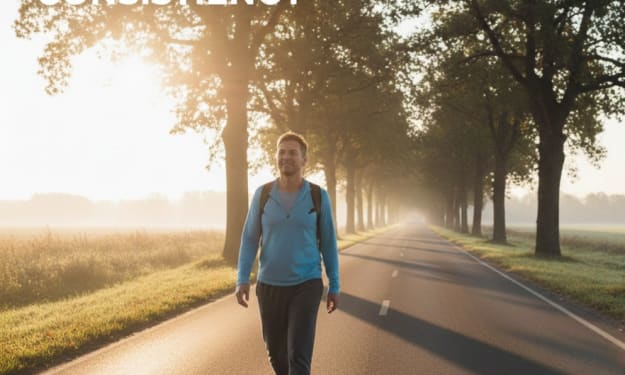
I used to believe there was a deadline for taking care of yourself. A point where your body quietly decides it’s done cooperating. Where energy becomes a memory and “being healthy” turns into something you talk about in the past tense. I didn’t think I was unhealthy. I just thought I was tired. Tired of waking up already exhausted. Tired of tight clothes, stiff joints, shallow breaths. Tired of pretending it was normal to feel older than I was. The warning signs weren’t dramatic. No hospital visits. No emergency scares. Just small losses that added up. I avoided stairs. I parked closer. I sat whenever I could. I told myself I was busy. I told myself this was adulthood. Then one morning, I struggled to tie my shoes. Not because I was in pain — because I was out of breath. That moment stayed with me. I didn’t sign up for a gym. I didn’t download an app. I didn’t make a bold promise I couldn’t keep. I just walked. Five minutes at first. I told myself it didn’t have to count. That it didn’t have to matter. I just needed to move enough to remind my body it was still alive. Those first walks felt uncomfortable in ways I hadn’t expected. My legs were heavy. My breathing sounded loud in my own ears. I kept checking the time, surprised by how slowly minutes passed. But I kept going. Not every day felt good. Some days I walked annoyed. Some days I walked bored. Some days I walked only because I didn’t want to break the streak. And that’s when something important happened. I stopped waiting to feel motivated. Motivation had always been the thing that failed me. I waited for it to arrive, and when it didn’t, I quit. Walking taught me that motivation isn’t required — only willingness. After a week, my sleep improved. Not perfectly, but noticeably. I fell asleep faster. I didn’t wake up as often. My mornings felt less heavy. After two weeks, my body felt less hostile. My back loosened. My posture changed. I wasn’t bracing myself against discomfort anymore. The scale barely moved. And strangely, I didn’t care. Because something else was shifting. I felt calmer. Less reactive. My thoughts didn’t spiral as quickly. Walking became a space where my mind could slow down without distractions. No screens. No pressure. Just steps. By the third week, five minutes turned into ten. Then fifteen. Not because I forced myself — but because stopping felt incomplete. I noticed the world again. Trees changing color. Side streets I’d never explored. The rhythm of my breath matching my pace. People started making comments. “You seem more relaxed.” “You look better.” They couldn’t pinpoint it. Neither could I. But I felt it. At my next doctor’s appointment, my numbers had improved slightly. Nothing dramatic — just enough to matter. “Keep doing whatever this is,” he said. That sentence meant more than praise ever could. I still don’t run. I still don’t lift heavy weights. I don’t track calories. I don’t chase perfection. I walk. And in walking, I learned something I wish I’d known sooner: it’s not too late until you stop trying. Health doesn’t demand extremes. It asks for consistency. For kindness. For showing up imperfectly but repeatedly. The biggest change wasn’t physical. It was trust. I stopped breaking promises to myself. I stopped quitting when things felt slow. I stopped believing that effort only matters if it’s impressive. Sometimes progress looks like nothing. Until one day, it looks like everything.I stopped breaking promises to myself. I stopped quitting when things felt slow. I stopped believing that effort only matters if it’s impressive. Sometimes progress looks like nothing. Until one day, it looks like everything.A realistic, inspirational fitness scene. An adult walking alone on a quiet suburban road in the early morning. Soft golden sunrise light, long shadows. Casual comfortable clothes, simple sneakers. No gym, no equipment, no dramatic body transformation. Peaceful environment with trees and empty street. Mood of calm, consistency, and personal growth. Natural body type, authentic and relatable. Cinematic photography, realistic lighting. High quality, clean composition. 16:9 aspect ratio, 1280x720 resolution.
By faheem akbar2 months ago in Styled
I Didn’t Change My Diet or Join a Gym — I Just Started Walking
Start writiI didn’t wake up one morning feeling motivated. There was no dramatic moment, no mirror revelation, no emotional breakdown that pushed me to change my life. What I felt instead was something much quieter and harder to explain—tiredness that sleep didn’t fix. My body ached in small, constant ways. My mind felt heavy. I avoided stairs. I avoided photos. I avoided the word “fitness” altogether because it felt like something meant for other people. At my last checkup, my doctor didn’t lecture me. He didn’t scare me with numbers. He simply said, “You don’t need intense exercise. You just need to move.” Move. That was it. No gym membership. No diet plan. No equipment. So I decided to walk. Ten minutes. That’s all I promised myself. The first day felt almost embarrassing. I walked slowly, checking my phone, wondering if people could tell how out of shape I was. My legs felt stiff. My breathing felt louder than it should have. When ten minutes ended, I turned back immediately, relieved it was over. But I kept the promise.
By faheem akbar2 months ago in Photography