The road from Video Killed the Radio Star and Love Plus One to The Real World and Jersey Shore was a long for MTV. After the channel's first decade on the air, it stopped being an especially scenic one. Nevertheless, on the occasion of its 40th birthday, I'd rather praise MTV for what was so right about the early years than bury them for (and with) the nonsense that came later.
By Don Klees5 years ago in Beat
Doctor Who ended in 1989 after 26 years of onscreen adventures. Doctor Who returned to television in 2005 to become more popular than ever worldwide. Both of the preceding statements are accurate, but neither comes close to telling the whole story. Even considered collectively, they leave major gaps in the narrative and can raise many questions in even the simplest conversations between fans.
By Don Klees5 years ago in Geeks
Like most figures in the music business who work primarily as songwriters or producers rather than performers, Jim Steinman wasn't a household name. However, anyone who's followed popular music over the past few decades almost certainly knows his work. Steinman, who died from kidney failure on April 19th at the age of 73, wrote and/or produced songs for everyone from Barbara Streisand and Celine Dion to Boyzone and The Sisters of Mercy during his long career. His most famous work of all - the one that ensured this musical familiarity - was composing songs for Meat Loaf's epic album Bat Out Of Hell.
By Don Klees5 years ago in Longevity
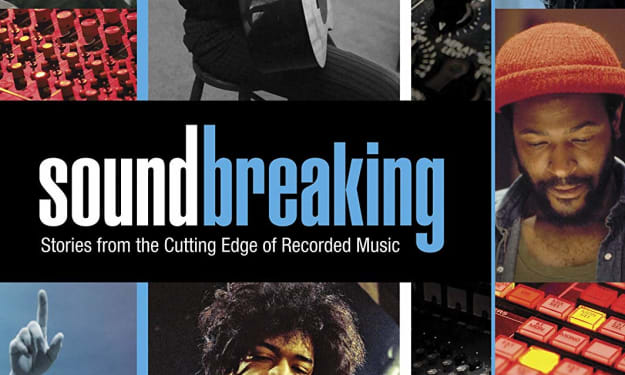
Even before MTV made “music video” an everyday term, rock and roll existed as a visual medium almost as much as a sonic one. One of the most obvious side effects of this duality has been the numerous attempts to encapsulate the cultural significance of rock music for television and film. Though not focused solely on rock music, the documentary series Soundbreaking, which aired on PBS before being released on DVD and digitally, is arguably the most successful effort to date. Somewhat paradoxically, the fact that that the program isn't totally focused on rock and roll is what makes it virtually definitive on the subject.
By Don Klees6 years ago in Beat
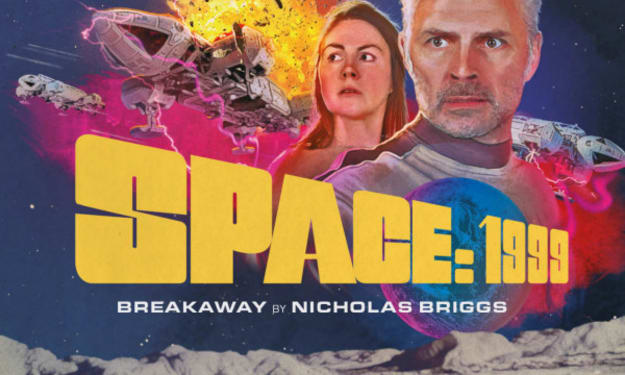
Nowhere is the disconnect between ambition and execution in television drama more apparent than science-fiction. What made Space: 1999 different from its 1970s peers is that at least in its first season this disconnect had little to do with budgetary constraints and was more a function of story and character - areas where more modestly budgeted programs frequently outshined it. Dubious science aside, Space: 1999 often posed intriguing ethical and philosophical questions (at least in its first season). Unfortunately, the drama all too often hinged on characters acting out of character, leaving even many who enjoyed it wondering if a bit more time and money should have been spent on the scripts.
By Don Klees6 years ago in Futurism
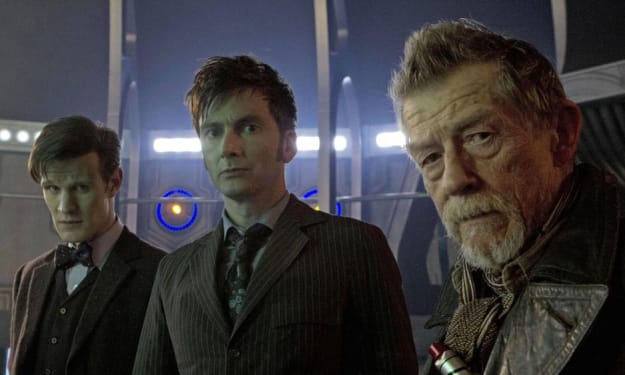
Doctor Who's 50th anniversary feels like something from another era. Even putting aside cultural and political events in the wider world, five years of ups and downs for the program itself make it easy to forget what a joyful celebration Doctor Who's 50th anniversary was. Though some factions in fandom insist that Big Finish Productions' nostalgia-tinged audio drama The Light At The End was "the real 50th anniversary story," the televised celebratory episode The Day Of the Doctor managed to unite fandom on a large scale and remains a high-point in the program's ongoing saga. Of the many people who deserve credit for this unequivocal triumph, writer-producer Steven Moffat ranks high on the list.
By Don Klees7 years ago in Geeks
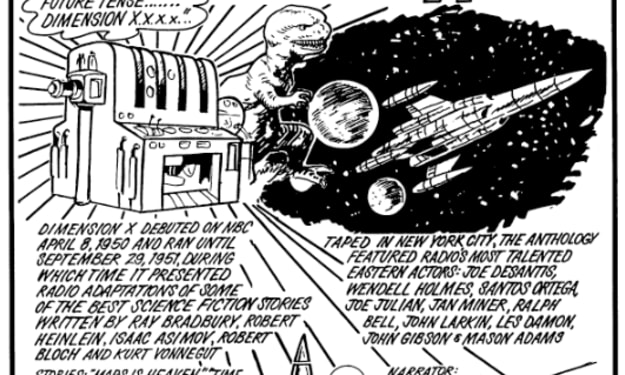
Though historians debate the exact date, by any reasonable measure radio drama stopped being a mass entertainment in America over 50 years ago. In the intervening decades fitful attempts at revivals have been made by both commercial and public radio entities. However, despite some signs of life in the area of “scripted podcasts,” the medium remains a curiosity in the current cultural landscape. Even in the final few years of radio drama’s heyday, when CBS continued to produce a handful of series, it was already something of a novelty, the mass audience having migrated to television by the time JFK took office.
By Don Klees7 years ago in Futurism
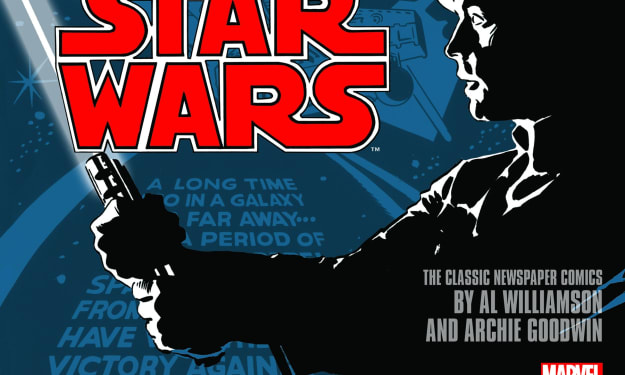
A long time ago in a pop-culture galaxy far, far away, Star Wars fans hungry for new stories had very few options. Before the "Expanded Universe" and its hierarchical levels of canon took shape in the 1990s —and long before it was de-canonized in favor of a completely unified continuity—unless you were using your action figures to make up your own adventures, there wasn't much beyond the movies. Outside of a small range of original novels and NPR's excellent dramatizations of the first two films, for over a decade the further adventures of Luke Skywalker and company could only be found in comics.