Andrea Zanon
Bio
Empowering leaders & entrepreneurs with strategy, partnerships & cultural intelligence | 20+ yrs international development | andreazanon.tech | Confidence. Culture. Connection.
Stories (307)
Filter by community
Could ESG Cause Markets To Become Over Regulated?
The environmental, social, and governing attributes of the ESG model show themselves as more than relevant to the current society and marketplace. The standards that capital markets are held accountable to dictate the future successes and failures of society. The reliability of the ESG model comes from its ability to measure the value, the risk and its mitigation measures of an organization. Global regulations are being spearheaded by the Security Exchange Commission and the European Union with the virtues of ESG in mind. Tomorrow is the day when agencies must achieve ESG standards and comply with stricter reporting and disclosure requirements. This will come in full force in 2022 when bot the United States (through the Security and Exchange Commission, and the European Union via Brussels) will make compulsory for business to report their ESG footprint and develop a public score.
By Andrea Zanon4 years ago in Journal
Control of Lithium will guarantee exponential growth and market leadership
On April 20th, during the quarter investment call Tesla’s CEO Elon Musk made clear that the Lithium price has reached insane price levels. Regardless of this, he clarified that Tesla was able to secure lower prices for lithium thanks to the locked-in long term contracts. Once again, Tesla beat market expectations and delivered a record 184,800 vehicles globally in the 2022 January to March quarter, beating market expectations on strong demand from China. But amid a record-high demand for the material, can supply keep up?
By Andrea Zanon4 years ago in Earth
The Ongoing Crisis Should Not Be Wasted
It is always wise to try to search for the positives around you, especially in the midst of a crisis situation. It may seem impossible to accomplish at the time, and you may not always have control over the circumstances. However, you do possess the power to control how you react and control the crisis as opposed to being controlled by the crisis. Instead of getting distracted and lost in turmoil, if one chooses to focus on any good that can emerge from it like knowledge gained, lessons learned, and potential growth, neither the future nor the present needs to be so grim.
By Andrea Zanon4 years ago in The Swamp
Here are my takeaways from attending Warren Buffet Berkshire Annual Meetings in person
This is the 5th time I attend the Berkshire Hathaway shareholder’s meetings. These normally occur between the end of April and the beginning of May, and they take place in Omaha, Nebraska. These meetings are also known as the Woodstock of Capitalism as they attract some of the “heaviest weight” financiers in the world. There are normally about 40 thousand people attend the shareholder meeting, which takes place on Saturday and where Warren Buffet (91 years old) and Charlie Monger (98 years old), the two leaders of the Berkshire empire take questions from the participants from 9 am to 3 pm.
By Andrea Zanon4 years ago in Education
Earth Day (April 22, 2022) is a good day for business
While I understand not all are on board with the sustainability agenda, and some like the billionaire Peter Thiel believes that Environmental, Social and Governance (ESG) has been forced on us by the government, I am going to argue we should all embrace it as it is good for our lives, and it is good for business. Let’s be clear though, there are both flaws and opportunities in ESG and while regulating markets at time is necessary, we believe in market forces and ethical capitalism to lead the way.
By Andrea Zanon4 years ago in Earth
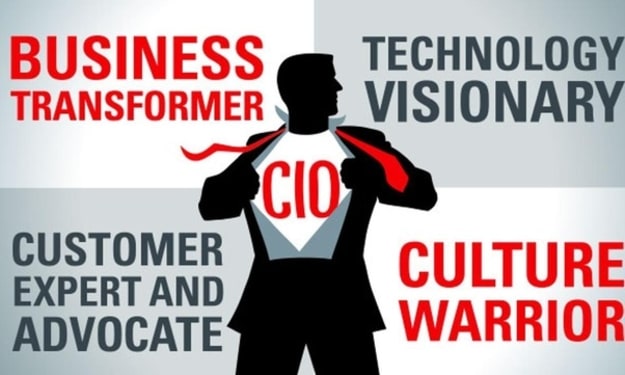
Andrea Zanon believes that Businesses, particularly start-ups should hire a Chief Impact Officer
No matter where you stand in the political or value ranks, I believe we are in the middle of a revolution across the business and policy circle and I am going to argue that hiring a Chief Impact Officer (CIO) will help your company stay competitive, attract top talent, and generate long term corporate and societal value.
By Andrea Zanon4 years ago in Journal
How to build personal confidence and metal fitness
As I work with many groups that focus on accelerating personal performance, crisis management and mental fitness, I would like to share a few key lessons on personal mastery that I have practiced and learned by getting exposed to hundreds of leaders across different disciplines from finance, entrepreneurship, environment, sports, and health. As this is a very extensive topic, I am going to focus on three areas which I believe have the highest potential for short term personal mastery. These are crisis management, wellness and longevity, and extreme performance hacks and suggestions that should be taken with criticism as none of these work for everyone and I am not a doctor.
By Andrea Zanon4 years ago in Education
ESG in the fashion industry, an opportunity for cost saving and brand strength
-Millennial and Z generation buyers are driven by ethical consumption, and this will affect the fashion industry -Investors and governments are pressing brands for greater transparency across ESG criteria as social inclusion and environmental pressure increases
By Andrea Zanon4 years ago in Earth
The future of climate food? Entrepreneur should seize the opportunity
The future of climate food? Entrepreneur should seize the opportunity Did you know that the food system is responsible for a third of overall global CO2 emissions? The graph below shows carbon emission breakdown across the food chain. It is well known that the global food system is carbon intensive and uses a lot of water to bring foods to our tables. One of the striking examples that is evidence of this, is the beef production. According to different sources the pasture-to-dinner trip of beef requires about 1,910 US gallons per pound (or 15,944 liters per kilogram). This is also why a lot of the climate conscious consumers are adopting more plant-based diets. Just to clarify though, the agriculture sector in general has done great strides in becoming more efficient, and less water intensive across its entire production chain. The start-up world, including companies that are women led are transforming the food industry for the better.
By Andrea Zanon4 years ago in Earth
ESG Scores and Reporting and why they will force-multiply corporate growth
As predicted by many experts, ESG is rapidly going mainstream and becoming the new bottom line. This is happening because ESG considerations have become top priority both for corporate leaders as well as for the regulators. Additionally, stakeholder’s activism is putting increased pressure on both the businesses and the politicians to take actions on sustainability as well as social inclusion and job creations. As ESG becomes a more formal way to do business, so does the way we measure and report companies' efforts and actions that affect the environment and society. These actions are starting to include reporting mechanisms, disclosures and scoring indexes which are being developed by ESG scores provided, and which will in the medium term better advise investment decisions potentially reducing risk considerably.
By Andrea Zanon4 years ago in Journal
ESG factors are being prioritized in M&A decision making: Let’s look at SPAC and ESG
Over the last 2 years investors have increasingly invested in new market trends which include SPACs (Special Acquisition Companies) and ESG (environmental, social, and governance). SPACs are Special Purpose Acquisition Companies that are created to raise capital through an IPO to acquire shares of private companies, taking them public through mergers. Environmental, social and governance (ESG) refers to three key factors to measure .
By Andrea Zanon4 years ago in Earth
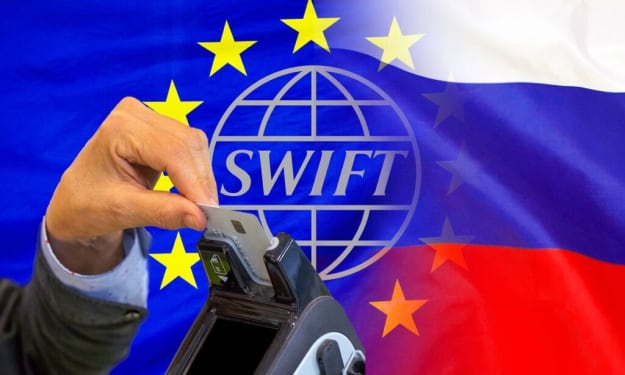
What is the SWIFT and why is it called the Financial Nuclear option against the Russian leadership?
What is the swift and how does it work? The Society for Worldwide Interbank Financial Telecommunication (SWIFT) is a messaging system that banks use to securely send messages and instructions to each other through a standardized system of several codes. SWIFT facilitates the sharing of efficient communication between members founded in 1973 that allows financial institutions to send money to each other. It is a Belgian headquartered cooperative which is currently used by more than 11,000 banks and financial institutions from around the world. It was originally created as a neutral consortium for banks to communicate about money transfers, trade, and general business transactions. Think of the SWIFT as the “plumbing for global finance” (CNN Business). SWIFT manages approximately 42 million messages daily for an average transaction of $ 5 trillion per day, and about $ 1.25 quadrillion dollars a year according to Money Transfer Comparison. Russia accounted for 1.5% of SWIFT transactions in 2020, according to the Financial Times. Prior to SWIFT, Telex was the only available instrument of communication to enable funds transfer between financial institutions. Telex was much less sophisticated, less secure, slower and was more depended on human interaction causing significant risk and mistakes. This system is still being used but it is neither considered safe nor efficient.
By Andrea Zanon4 years ago in The Swamp