Adnan Rasheed
Bio
Author & Creator | Writing News , Science Fiction, and Worldwide Update| Digital Product Designer | Sharing life-changing strategies for success.
Stories (475)
Filter by community
How to Nurture Sensitive Children
How to Nurture Sensitive Children Sensitive children experience the world differently than their peers. They feel emotions deeply absorb the energy around them and are often profoundly affected by the actions and words of others. While sensitivity is a gift that fosters empathy creativity and intuition it can also be a source of struggle when misunderstood. Many parents teachers and caregivers may not recognize the unique needs of sensitive children often urging them to "toughen up" or "grow thicker skin." However nurturing a sensitive child requires a different approach one that acknowledges and honors their emotions rather than suppressing them. Growing up as a sensitive child can feel isolating especially in environments that prioritize resilience over emotional expression. Many children internalize the belief that something is wrong with them when their sensitivity is met with frustration or dismissal. When caregivers tell them they are too sensitive it sends a message that their emotions are excessive or unwelcome. Over time this can lead to feelings of shame self doubt and an inability to trust their own emotions. Instead of suppressing their sensitivity these children need validation and guidance to navigate the world in a way that embraces their true nature. One of the most crucial ways to nurture a sensitive child is through emotional validation. Rather than dismissing their feelings acknowledge them as real and important. If a child is deeply affected by a sad movie a harsh tone or an unkind comment from a peer instead of saying Don't be so sensitive try "I see that really upset you. Do you want to talk about it? By creating a safe space for them to express their emotions without judgment parents can help their children develop emotional intelligence and resilience in a healthy way. Empathy is another powerful tool when raising a sensitive child. Since they often pick up on the emotions of those around them they may struggle to separate their own feelings from others. Teaching them about boundaries both emotional and physical can be incredibly beneficial. Letting them know it's okay to take breaks from overwhelming environments to say no when they need space and to protect their own energy can help them develop self awareness and coping skills. Sensitive children also thrive in environments that encourage creativity and self-expression. Many are naturally drawn to the arts storytelling or imaginative play. Providing opportunities for them to engage in music drawing writing or dance can be a wonderful outlet for their emotions. Creative expression allows them to process their experiences in a way that feels safe and fulfilling. It also reinforces that their emotions are valuable and can be transformed into something meaningful.
By Adnan Rasheed12 months ago in Psyche
Scientists Found The Silent 'Scream' of Human Skin For The First Time
Scientists Found The Silent 'Scream' of Human Skin For The First Time The human body is an intricate and sophisticated system that constantly communicates with its environment in ways we are only beginning to understand. In a groundbreaking discovery scientists have for the first time identified a silent "scream" emitted by human skin in response to damage. This fascinating revelation sheds new light on how our bodies react to injuries and stress at a molecular level opening up new possibilities in medical science wound healing and disease detection. At the core of this discovery lies the concept of mechanobiology the study of how physical forces and mechanical properties influence biological processes. Researchers found that when human skin experiences harm whether due to injury environmental stress, or chemical exposure it releases specific molecular signals. These signals while undetectable to the human ear can now be identified and analyzed using advanced biosensors and imaging techniques.
By Adnan Rasheed12 months ago in Longevity
What Breaks You Builds You
What Breaks You Builds You For years I fought against the currents of life. I tried to prove myself in every storm control every tide, and resist every wave. But today standing beside a quiet river, I finally realized a deep truth perhaps I was never meant to fight. Maybe like the river I was meant to flow.
By Adnan Rasheed12 months ago in Motivation
I Hugged A Tree
I Hugged A Tree The past two years have felt like battling a storm in the open sea relentless exhausting and unpredictable. Yet despite everything I am grateful for one thing the opportunity to be close to nature. There is a beautiful lush park near my home where I can find peace take deep breaths and allow my inner storms to settle.
By Adnan Rasheed12 months ago in Motivation
Can animals understand human language?
Can animals understand human language? Clever Hans a horse from early 20th century Germany captivated audiences with his apparent ability to understand human language solve arithmetic problems and even tell time. His talents seemed to suggest that animals could comprehend human speech and respond in meaningful ways. However a deeper investigation into Clever Hans' abilities led to a surprising discovery one that has shaped our understanding of animal cognition and communication ever since. The story of Clever Hans begins with his owner Wilhelm von Osten a former schoolteacher with a keen interest in mathematics and animal intelligence. Von Osten was convinced that animals particularly horses possessed untapped intellectual potential. Through rigorous training he taught Hans to respond to questions by tapping his hoof. When asked what two plus two was Hans would tap four times. If asked what day followed Monday he would tap once for Tuesday. To many spectators it appeared that Hans truly understood human language and numbers. News of the horse’s abilities spread quickly and he became a sensation across Germany. Scientists journalists and even government officials came to witness the remarkable animal eager to determine whether his abilities were genuine. After all if a horse could understand language it could revolutionize our understanding of animal intelligence. A psychologist named Oskar Pfungst took on the challenge of examining Clever Hans in detail conducting a series of experiments to determine how he arrived at his answers. Pfungst's findings were groundbreaking but not in the way von Osten had hoped. It turned out that Hans was not actually performing arithmetic or comprehending language. Instead he was incredibly skilled at reading subtle unconscious cues from his human questioners. When someone asked a question they would unknowingly give off slight changes in posture facial expressions or breathing when Hans reached the correct answer. These cues signaled him to stop tapping. In cases where the person asking the question did not know the answer Hans' accuracy dropped significantly.
By Adnan Rasheed12 months ago in Petlife
NASA Tracking Bus-Sized Asteroid Nearing Earth
NASA Tracking Bus-Sized Asteroid Nearing Earth NASA is closely monitoring a bus sized asteroid as it approaches Earth raising curiosity and concern among scientists and the general public. The asteroid, which has been designated with an official name by space agencies is expected to pass by our planet at a relatively close distance. While there is no immediate danger of impact the event serves as a reminder of the continuous movement of celestial bodies and the importance of tracking near Earth objects (NEOs). Asteroids frequently pass by Earth and NASA along with other space agencies keeps a close watch on their trajectories. This particular asteroid is estimated to be roughly the size of a city bus making it large enough to be noticed but not significant enough to cause catastrophic damage even if it were to enter Earth’s atmosphere. However its proximity to Earth has prompted detailed analysis and observations. The asteroid’s trajectory has been carefully calculated using advanced telescopic observations and tracking systems. NASA's Planetary Defense Coordination Office (PDCO) and other global space monitoring agencies utilize sophisticated tracking technologies including ground based telescopes and radar systems to predict the paths of such objects with high accuracy. By analyzing its speed direction and potential gravitational influences from other celestial bodies scientists can determine how close it will get to Earth and whether there is any possibility of future encounters.
By Adnan Rasheed12 months ago in Earth
What happened to all the water on Mars?
What happened to all the water on Mars? Mars our neighboring planet has long fascinated scientists with its potential for past habitability. Evidence overwhelmingly suggests that Mars was once home to abundant water flowing through massive river valleys carving flood channels and depositing minerals that only form in liquid water. The planet's surface bears undeniable marks of a time when lakes rivers and even possible oceans covered it. Yet today Mars is a cold arid desert with only traces of water locked in its polar ice caps and underground. The mystery of what happened to all that water remains a subject of ongoing debate. One of the most widely accepted theories is that Mars lost its water due to atmospheric stripping. Unlike Earth which has a strong magnetic field protecting its atmosphere Mars lost its global magnetic field billions of years ago. This left its atmosphere vulnerable to solar winds charged particles from the Sun that gradually eroded the planet’s once thicker atmosphere. With a thinner atmosphere water on the surface could no longer remain stable and over time it either sublimated into space or retreated underground in frozen form. However some researchers argue that not all of Mars' water was lost to space. A significant portion may still be trapped beneath the surface. Recent studies suggest that underground reservoirs of frozen water exist particularly near the planet’s poles. Scientists have detected large amounts of ice beneath the surface using radar instruments on orbiters like the Mars Reconnaissance Orbiter. If this ice were to melt it could potentially support microbial life or be utilized by future human explorers.
By Adnan Rasheed12 months ago in Earth
Whats Are Some Sad Truth About Life?
Whats Are Some Sad Truth About Life? Nisha Ghimire’s story is a poignant reflection of the transient nature of fame and the unpredictable turns that life can take. Once a shining star in Nepal’s entertainment industry she captivated audiences with her beauty talent and charisma. Her journey from stardom to tragedy is a heartbreaking tale that exposes the harsh realities of the industry she once thrived in. At the height of her career in 2018 Nisha was a well known name. She had gained immense popularity as the runner up of Miss World Nepal and her face was ubiquitous adorned on billboards, gracing the covers of magazines, and featured in numerous advertisements. With her striking looks and undeniable charm, she was seen as Nepal’s next big superstar. Top brands sought her as their ambassador and celebrities from both Nepal and India admired her. She seemed destined for even greater success with the entertainment industry eagerly awaiting her next move. But fate had other plans. In early 2019 Nisha traveled to Dehradun India in pursuit of her dreams. She wanted to refine her modeling and acting skills hoping to establish herself on an even bigger platform. Her ambition and determination were unwavering, and she was willing to put in the hard work necessary to reach new heights. However it was during this time that tragedy struck a devastating accident that would change her life forever.
By Adnan Rasheed12 months ago in Humans
Why don't all birds fly?
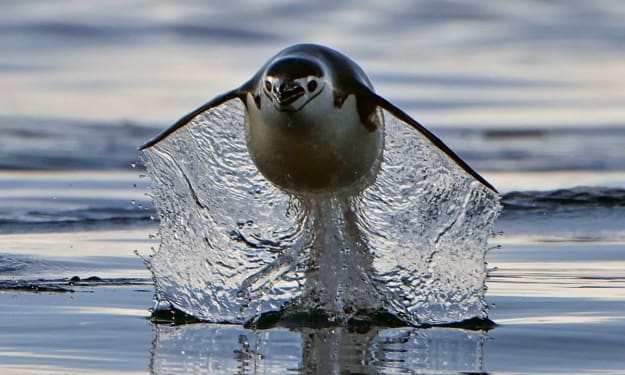
Why don't all birds fly? Birds are often associated with flight but not all birds are capable of flying. While flight is a defining characteristic of most bird species some have evolved in ways that make flying unnecessary or even impossible. This phenomenon is due to a combination of evolutionary adaptations environmental factors and biological limitations. One of the primary reasons some birds do not fly is due to their evolutionary history. Over millions of years certain bird species have adapted to life on the ground where flight is not essential for their survival. These birds have developed other means of mobility such as running or swimming that better suit their needs. Evolutionary pressures such as the absence of natural predators availability of food on the ground or the need for specialized foraging methods have led to the loss of flight in some species. The structure of a bird’s body plays a crucial role in its ability to fly. Flight requires lightweight bones strong wing muscles and aerodynamic feathers. However flightless birds often have heavier denser bones that make them less suited for flight. Their wings are typically smaller relative to their body size reducing their ability to generate enough lift. In contrast they may have strong legs which allow them to run quickly or swim effectively. For example ostriches the largest flightless birds have powerful legs that enable them to run at high speeds to escape predators. Another reason why some birds do not fly is their habitat and lifestyle. Birds that live in environments where flight is not necessary tend to lose this ability over time. For instance birds that inhabit islands with few or no natural predators have no need to fly to escape danger. Instead they conserve energy by staying on the ground. The dodo an extinct flightless bird that lived on the island of Mauritius is a famous example. With no natural predators the dodo gradually lost its ability to fly. However when humans arrived on the island and introduced new predators the dodo was unable to adapt quickly enough and became extinct.
By Adnan Rasheed12 months ago in Earth
Thinking And Feeling
Thinking And Feeling The human brain has a remarkable ability to categorize and distinguish between concepts which has shaped our understanding of the world in binary terms. We often divide reality into opposing forces light and dark right and wrong, rationality and emotion. Among these dualities, the distinction between "thinking" and "feeling" has been particularly influential in shaping personal identities political ideologies, and even entire cultures. However as we move into an era of increasing complexity and uncertainty it is worth questioning whether this binary mindset truly serves us. Could our reliance on rigid categorization be creating blind spots preventing us from embracing a more holistic integrative approach to knowledge and human experience? Throughout history the Enlightenment era championed rationality and empirical thinking pushing societies toward scientific advancements and intellectual rigor. The emphasis on logic and objectivity led to incredible breakthroughs from technological innovations to medical discoveries shaping much of the modern world. However the dominance of reason also came with unintended consequences. It often led to the marginalization of emotions intuition and subjective experience creating an imbalance that neglected the full spectrum of human understanding. In contrast many indigenous and Eastern philosophical traditions have long emphasized the integration of thinking and feeling. These traditions recognize the necessity of emotional intelligence intuition and interconnectedness as fundamental aspects of wisdom. Western societies however have been slower to embrace these aspects, often dismissing them as irrational or unscientific. The result has been a culture that prizes efficiency productivity and analytical reasoning while undervaluing empathy, creativity and the emotional dimensions of decision making. This division between thinking and feeling is not just a philosophical abstraction it manifests in real-world consequences. In politics, the growing polarization between ideological groups often stems from an inability to integrate logic with emotional resonance. Political leaders and media outlets frequently exploit emotions fear anger and outrage to manipulate public perception. At the same time, a purely analytical approach to governance can create policies that seem disconnected from human experiences failing to address the emotional and psychological needs of society. The challenge, therefore is to find a balance where analytical rigor and emotional intelligence work in tandem rather than opposition. One of the most profound ways beliefs shape our feelings is through our values. Values are not merely intellectual constructs; they are deeply emotional influencing our perceptions decisions and relationships. When we encounter information that aligns with our values, we experience emotional affirmation reinforcing our sense of identity and belonging. Conversely when faced with opposing viewpoints, we often react emotionally before engaging in logical analysis. This cognitive bias known as motivated reasoning demonstrates how deeply intertwined thinking and feeling are. Understanding this connection is crucial for fostering dialogue cooperation and civility in an increasingly divided world. The past few decades have seen a strong emphasis on objective facts and data driven decision making. While this approach has undoubtedly contributed to progress it has also revealed its limitations. Facts alone are not always enough to inspire change or drive action. Climate change for instance is backed by overwhelming scientific evidence yet public response remains fragmented. This is because facts no matter how compelling, need to be emotionally resonant to motivate people. Storytelling personal experiences, and ethical considerations play a significant role in shaping public opinion and driving meaningful action. Without integrating values and emotions into our analytical frameworks, even the most well reasoned arguments can fall on deaf ears.
By Adnan Rasheed12 months ago in Longevity