
Why the iconic English painting The Hay Wain by John Constable is not what it seems
Constable's "The Hay Wain" is not a simple pastoral scene, but a complex artistic statement masking the profound social and economic disruptions of early 19th-century rural England. The painting constructs a nostalgic myth of agricultural life while silently revealing the transformation of traditional rural communities.

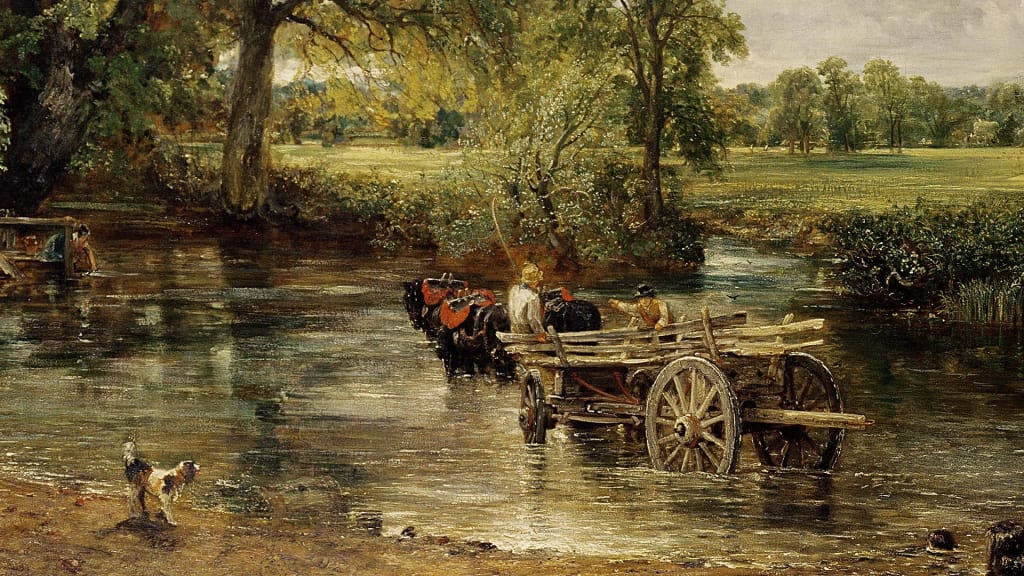
John Constable's "The Hay Wain" (1821) stands as one of the most celebrated landscapes in British art history, typically viewed as a serene, nostalgic portrayal of rural English life. However, beneath its seemingly tranquil surface lies a far more complex narrative of social transformation, economic upheaval, and artistic manipulation that challenges our conventional understanding of this iconic work.
The Manufactured Pastoral Myth
Contrary to its appearance as a spontaneous capture of rural tranquility, "The Hay Wain" is a carefully constructed artistic statement that masks profound social and economic disruptions of the early 19th century. Constable did not simply paint a landscape; he crafted a romantic mythology of rural England that deliberately obscured the harsh realities of agricultural transformation.
The Hidden Industrial Revolution
The painting's seemingly peaceful scene at Flatford Mill in Suffolk conceals the dramatic changes wrought by the Agricultural and Industrial Revolutions. During this period, traditional rural life was being systematically dismantled by:
- Enclosure acts that privatized common lands
- Mechanization of agricultural processes
- Massive population shifts from rural to urban areas
- Fundamental restructuring of land ownership and labor relationships
Constable's painting represents not a documentary record, but a deliberate aesthetic intervention—a nostalgic reimagining of a world already rapidly disappearing.
Technical Mastery and Artistic Deception
Constable's technical brilliance lies in his ability to create an illusion of spontaneity while meticulously controlling every aspect of the composition. His famous "six-footer" paintings, of which "The Hay Wain" is a prime example, were not quick sketches but carefully planned works that underwent extensive preparatory studies and revisions.
The Illusion of Naturalism
The painting's apparent naturalism is, in fact, a sophisticated artistic construct:
- Constable used a complex layering technique of oil sketches and precise color modulations
- Clouds are strategically positioned to create atmospheric depth
- The composition is carefully balanced to guide the viewer's eye
- Every element is subtly manipulated to create an idealized landscape
Economic Subtext: The Invisible Struggle
While the painting depicts a wagon crossing the River Stour, it simultaneously represents the economic precariousness of rural workers during a time of massive agricultural transformation. The hay wain itself symbolizes not just agricultural labor, but the transition from traditional farming methods to more capitalistic agricultural practices.
The Invisible Workers
Notably absent from the painting are the actual laborers who would have been crucial to such a scene. This deliberate omission speaks volumes about the social dynamics of the time:
- Agricultural workers were being systematically marginalized
- Rural communities were experiencing unprecedented economic pressure
- Traditional ways of life were being systematically dismantled
Romantic Nationalism and Artistic Propaganda
"The Hay Wain" can be understood as a form of visual propaganda—a carefully constructed narrative of English rural identity. By presenting an idealized, harmonious landscape, Constable participated in a broader cultural project of constructing a national mythology.
The Politics of Representation
The painting emerged during a period of significant social and political tension:
- The Napoleonic Wars had recently concluded
- Britain was establishing its global imperial identity
- Artists were crucial in constructing national narratives
- Landscape painting became a tool for cultural self-definition
- Scientific and Artistic Innovation
Constable was not just a painter but a careful observer of natural phenomena. His work anticipated developments in scientific understanding of atmospheric conditions and light. The painting's clouds, for instance, demonstrate a remarkable understanding of meteorological processes that predated formal scientific classification.
Technical Innovations
- Constable developed a unique technique of "working-up" paintings
- He used a wet-on-wet oil painting technique unusual for his time
- His approach to capturing light and atmospheric conditions was revolutionary
Psychological Landscape
Beyond its geographical representation, "The Hay Wain" is a psychological landscape—a projection of collective memory and desire. It represents not what rural England was, but what people wanted to believe it had been: harmonious, stable, and timeless.
The Myth of Pastoral Stability
The painting creates an illusion of:
- Eternal continuity
- Harmonious social relationships
- Unchanging natural processes
Conclusion: A Complex Artistic Statement
"The Hay Wain" is far more than a simple landscape painting. It is a complex artistic statement that:
- Negotiates social transformation
- Constructs national identity
- Challenges and reinforces contemporary artistic conventions
- Provides a nuanced commentary on economic and social change
What appears at first glance to be a straightforward depiction of rural life reveals itself, upon careful analysis, as a sophisticated artistic intervention—a masterful construction that speaks volumes about the cultural complexities of early 19th-century England.
By understanding "The Hay Wain" not as a documentary image but as a carefully crafted artistic narrative, we unlock a deeper appreciation of Constable's genius and the profound cultural work performed by landscape painting during this transformative historical moment.
About the Creator
Muhammah Hanzalah
Passionate about history and culture. Join me on Vocal Media for captivating insights into hidden historical gems and diverse cultural traditions. Let's explore the rich tapestry of our shared heritage and artistic expressions.
Keep reading
More stories from Muhammah Hanzalah and writers in Art and other communities.
Setting Records: A Deep Dive into the Historic Sale of Charles Frederick Goldie’s Portrait of Wharekauri Tahuna
The art world witnessed a monumental event when Charles Frederick Goldie’s “Thoughts of a Tohunga”, a portrait of the respected Māori elder Wharekauri Tahuna, sold for an astounding $3,757,000 at an auction held by the International Art Centre in Auckland. This sale not only set a new record for the highest price ever paid for a Māori portrait in New Zealand but also underscored Goldie’s unmatched skill in capturing the essence of Māori culture and heritage.
By Muhammah Hanzalahabout a year ago in Art
The Hidden Plumbing Problems Perth Homes Face (And How to Prevent Them)
Maintaining a home in Perth comes with a unique set of challenges. From the coastal salt air to the intense summer heat, our local infrastructure is constantly under pressure. While most homeowners focus on visible maintenance like gardening or painting, the most significant threats often lie beneath the surface. Hidden plumbing issues are the "silent saboteurs" of Perth properties, often remaining undetected until they have caused thousands of dollars in structural damage.
By Muhammad Owais4 days ago in Art


Comments (1)
Hello, just wanna let you know that if we use AI, then we have to choose the AI-Generated tag before publishing 😊