
WHY BLUE IS RARE
The Rarity of Blue in Nature's Palette

n the vast tapestry of life on Earth, a kaleidoscope of colors adorns the creatures that inhabit our planet. From the verdant greens of rainforests to the fiery oranges of sunsets, nature's palette is a testament to its incredible diversity and the ingenuity of life's processes. Yet, amidst this vibrant spectrum, one color stands out for its rarity and captivating beauty – blue.
While blue is a common sight in the sky, the ocean, and even in some man-made creations, it is surprisingly uncommon in living organisms. This scarcity of blue in nature's palette has intrigued scientists and captivated artists for centuries. The quest to understand why blue is so rare and how it is produced in the few creatures that do possess it has led to remarkable discoveries about the intricate mechanisms of life.
The Science Behind Blue Coloration
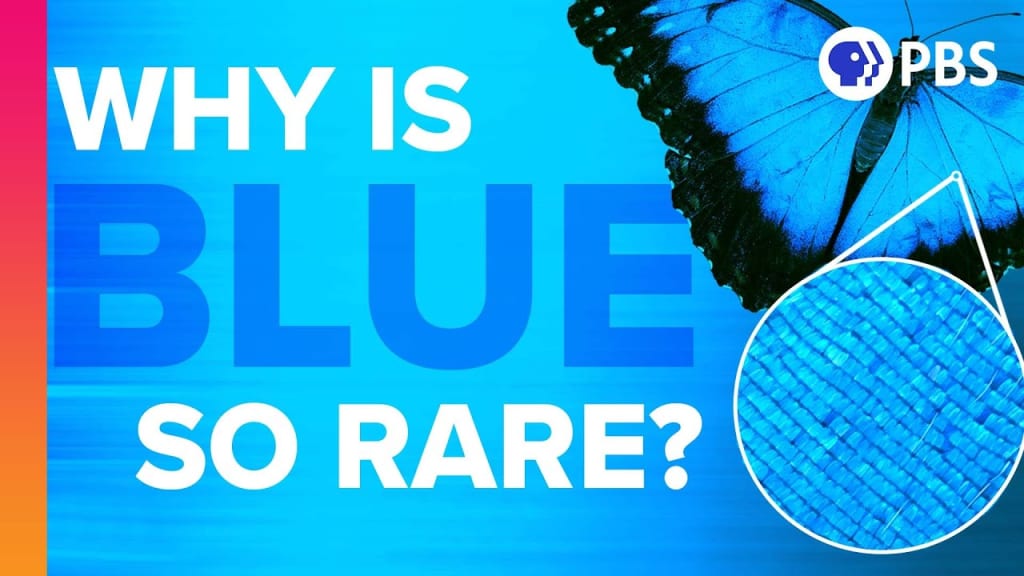
Unlike other colors, which are often the result of pigments, blue is typically created through intricate structures found on wings, feathers, or skin. These structures, like microscopic prisms or gratings, interact with light in a way that selectively reflects or scatters blue light waves, giving rise to the perception of blue color.
Remarkable Examples of Structural Blue
The Blue Morpho butterfly is one of the most stunning examples of structural blue coloration. Its wings are adorned with microscopic ridges that resemble tiny Christmas trees. When light strikes these ridges, blue light is preferentially reflected, creating the butterfly's signature iridescent blue color. This intricate structure, evolved over millions of years, is a testament to the remarkable engineering capabilities of nature.
Another example of structural blue is found in the blue jay feather. The color arises from microscopic beads embedded within the feather's barbs. These beads scatter and absorb light in a way that cancels out all colors except blue, resulting in the feather's characteristic blue hue. The precise arrangement of these beads, like a microscopic mosaic, is a testament to the intricate design of nature.
Peacock tail feathers, too, employ a structural approach to generate their vibrant blue color. The feathers contain microscopic structures that resemble a crystal lattice, which selectively reflects blue light from certain angles, creating the mesmerizing shimmer that has captivated humans for centuries. The evolution of these complex structures is a testament to the selective pressures that have shaped the peacock's plumage.
The Power of Natural Selection
The rarity of blue in nature's palette is a reminder of the remarkable diversity and ingenuity of life on Earth. While other colors can be achieved through relatively simple chemical processes, creating blue using structural mechanisms requires a precise arrangement of microscopic elements. These intricate structures, evolved over millions of years, are a testament to the power of natural selection to produce some of the most captivating colors in nature.
The Blue Poison Dart Frog: A Warning in Blue
Interestingly, there are only a few known examples of animals that possess true blue pigments. One such example is the blue poison dart frog. Its skin contains a compound called biliverdin, which is also found in bile. Scientists believe that the evolution of this blue pigment in the blue poison dart frog may serve as a warning to predators, signaling the frog's toxicity.
Conclusion
The rarity of blue in nature's palette adds to its allure and beauty. It is a color that evokes a sense of mystery and wonder, reminding us of the intricate and often hidden mechanisms that underlie the diversity of life on Earth. As we continue to explore the natural world, we are sure to uncover even more fascinating examples of how blue is produced in nature, further enriching our understanding of the remarkable ingenuity of life.
About the Creator
Sovan Pech
Don't Panic!
Keep reading
More stories from Sovan Pech and writers in Art and other communities.
The true story of Oliver's
In the quiet town of Harmonyville, nestled amidst rolling hills and whispering pines, lived a young boy named Oliver. Oliver was a solitary figure, his heart shrouded in a veil of sadness. He carried the weight of a life without parents, orphaned at a tender age by a cruel twist of fate.
By Sovan Pech2 years ago in Fiction
21 Freelancing Tips to Build a Successful Career (From Someone Who Actually Did It)
TL;DR version (60 seconds read time) + Paypal receipt at the end of the blog. I’ve made thousands of dollars with freelancing. See screenshots at the end of the post. Everything I say to you, I’ve tested it first on myself.
By Dena Falken Esq2 days ago in Art


Comments
There are no comments for this story
Be the first to respond and start the conversation.