
Whispers of the Green Abyss
One Man’s Journey Through Nature’s Most Fearsome Trial
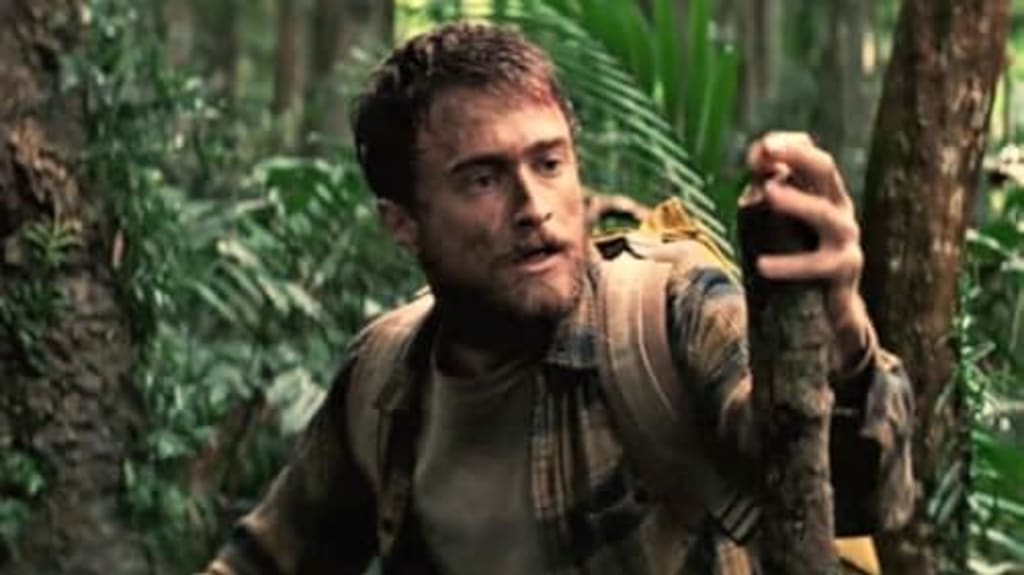
The sky was still dark when Ayaan stepped into the jungle. A heavy mist curled low over the forest floor, cloaking twisted roots and broken branches. Ancient trees stood like silent watchers, their thick trunks draped in moss and mystery. Each breath he took carried the scent of damp earth and wildness—a scent of something older than time.
This wasn’t an expedition for treasure. It was a pilgrimage for truth.
Months ago, Ayaan had been another name in the corporate crowd—suit, screen, success. But his soul was starved. The city echoed with noise but never with meaning. After his father’s quiet passing, he had found an old wooden box among his belongings. Inside were three things: a compass, a hand-drawn map with strange landmarks, and a faded journal with these words underlined:
> “The jungle doesn’t test your strength. It reveals your truth.”
His father had written about a journey he'd taken decades earlier, deep into a jungle unnamed. Not a tale of adventure—but awakening.
Ayaan didn’t understand then. But something inside him stirred—restless, thirsty for something real. That’s why he was here, walking into the unknown.
The first two days were strangely peaceful. He followed the map through tangled undergrowth, across rocky trails, and along a slow-moving river. Birds chirped in patterns he’d never heard before. Once, a monkey tossed fruit at him from above—mockery, perhaps a greeting. He laughed aloud. It felt strange. It had been months since he laughed without a screen in front of him.
But on the third day, the jungle changed.
The sky turned gray. It rained. Not a drizzle—an assault. The path turned to mud, and every step became war with the ground. Leeches found their way into his boots. A swarm of insects danced around his face like living shadows. His food spoiled. His flashlight died.
At night, the forest roared. Not with beasts, but with presence. He could feel it breathing around him—eyes in the dark, whispers in the leaves. The silence between the sounds was louder than anything.
He was alone. Truly alone. For the first time in his life.
That night, curled beneath a wide fig tree, his body shaking, Ayaan clutched his father’s compass. “Why did you come here?” he whispered to the sky.
No answer. Only wind, like a sigh.
Day four. Hungry, bruised, and doubting every step, he reached the first marker: The Three-Toothed Cliff. It rose before him like a broken crown—three jagged peaks towering over a plunging ravine. According to the map, he had to descend to find the next path. With nothing but a rope and trembling hands, he climbed down.
Halfway, he slipped. The fall wasn’t long, but sharp. His back scraped rock, and he hit the ground with a cry. For minutes, he couldn’t move. His breath came in painful bursts.
Lying there, staring at the canopy high above, he wanted to give up. This isn’t healing. This is madness.
Then he saw it.
Etched into a stone nearby was a symbol—an eye surrounded by waves. He’d seen it in his father’s journal. Beneath it, faint words:
> “When you feel broken, you are being rebuilt.”
He cried.
Not from pain, but something else. The kind of cry you don’t even know you need until it breaks out from the walls inside.
He pressed on.
The fifth day led him to The Weeping Tree—a massive, ancient tree whose bark seemed to shimmer with moisture, as if eternally crying. He rested against it, exhausted. And then it happened.
A wave of emotion overcame him—not from memory, but presence. The jungle was speaking. Not in words, but visions. He saw himself at fifteen, yelling at his mother. At twenty-five, betraying a friend for a promotion. At thirty, staring into his bathroom mirror, wondering why everything still felt empty.
The jungle didn’t scold him. It simply showed him. Who he was. What he had buried.
And for the first time, Ayaan didn’t turn away. He faced himself.
By day six, the jungle didn’t seem hostile anymore. It hadn’t changed—he had. Every step forward felt less like a struggle and more like surrender. He stopped fighting the vines and began flowing with them, walking as if the earth beneath him recognized his presence now.
Eventually, the trees began to thin. The darkness broke into fragments of gold. The river beside him brightened until it shone like glass poured from heaven. He had reached it: The River of Light.
The river curved around a clearing, and at the center stood a single stone altar—covered in moss, yet untouched by time. Ayaan walked to it, placed his hand on its surface, and whispered, “Thank you.”
He didn’t know who he was speaking to. The jungle? His father? God? Himself?
Maybe all of them.
That night, under a sky lit with stars that blinked like distant truths, Ayaan slept soundly. No fear. No dreams. Just stillness.
When he awoke on the seventh day, he felt no urge to rush back. He walked slowly, respectfully, each step a prayer.
When he finally emerged from the trees and into the edge of civilization, he was gaunt, bruised, and changed. A local man spotted him and rushed forward.
“Are you okay?” he asked in alarm.
Ayaan smiled, eyes calm like a quiet sea. “I am now.”
Back home, the jungle never left him. Not really. He walked lighter. Spoke softer. Listened more. On his wall, beside his father’s journal, he hung the old map and etched these words below:
> “I went into the jungle looking for answers.
I came out carrying only the right questions.”
About the Creator
Keep reading
More stories from Khalid khan and writers in Art and other communities.
The Clever Rabbit and the Cunning Fox
In the heart of Evergreen Forest, where the trees whispered secrets to the wind and the river sang its ancient tune, lived a rabbit named Rafi. He was small, with silky white fur, and had a mind sharper than a thorn bush. He wasn't the strongest, but everyone knew not to underestimate him.
By Khalid khan7 months ago in Art
Why Nietzsche Belongs in 2026
As the world moves toward 2026, it does not feel like a calm progression into the future—it feels like a collision. Rapid technological acceleration, cultural fragmentation, economic uncertainty, and a deep crisis of meaning define the modern condition. Traditional authorities are distrusted, ideologies compete aggressively, and individuals feel both empowered and exhausted by choice. In such a landscape, Friedrich Nietzsche’s philosophy emerges not as a comfortable guide, but as a necessary one. Unsettling, demanding, and brutally honest, Nietzsche may offer the most fitting philosophical framework for the year ahead.
By Fred Bradford6 days ago in Art
2026 Commercial Space Design:How Fbierglass Sculpture Drives Traffic
Today, offline commercial spaces are facing continuous pressure. With e-commerce offering convenient and fast services, physical stores must showcase unique features to attract customers. In this context, fiberglass sculptures are no longer merely decorative items; they have become visual focal points in shopping malls, brand stores, pop-up shops, and mixed-use commercial projects, playing a crucial role in increasing foot traffic.
By Shenzhen Ruiheng Craftsabout 18 hours ago in Art




Comments
There are no comments for this story
Be the first to respond and start the conversation.