
What Is The Future of Outsourced 3D Modeling In All Industries?
The Future of 3D Modeling Outsourced

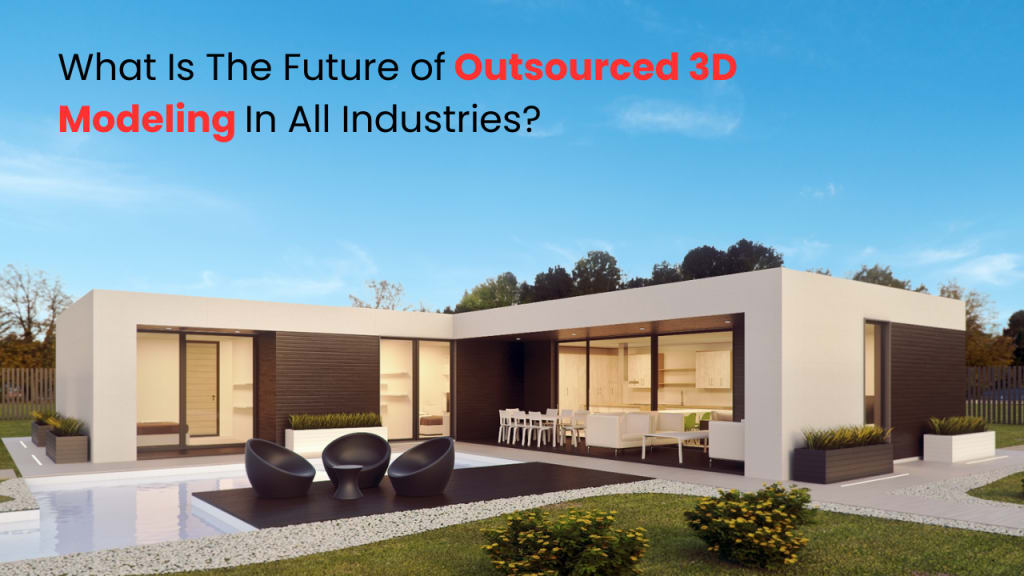
We all know that 3D modeling has slowly become the best way to showcase designs. Companies worldwide are looking for affordable 3D designers who can take their 2D iterations to the next level. Here is where outsourced 3D modeling comes into play.
Not only can you quickly get 3D models of your design or space, but you can also get custom 3D models of anything you require. Now that new technologies are shaping how we function, it is time that all industries slowly but surely start embracing outsourced 3D modeling.
Here are all the industries that are using 3D modeling and the new trends that are falling in their domain.
Industries Using Outsourced 3D Modeling & Emerging Trends
1. Eyewear Industry
The eyewear industry is the most recent industry that has started using 3D modeling to showcase their products realistically in an online environment. Everyone from manufacturers, designers, brands, and retailers has started using 3D model technology to reduce product development costs and increase sales conversion rates. Advanced 3D rendering also enhances online shopping experiences with realistic frame previews.
New Advancements:
- AI-Powered Virtual Try-On: Uses AI and AR for realistic frame placement and accurate PD measurement.
- 3D Configurators: Allows real-time frame design and material selection for brands and manufacturers.
- Web-Based 3D Viewers: Enables detailed visualization of frame textures and styles without additional software.
- Automated Facial Mapping: Enhances fit precision using real-time face tracking and biometric data.
2. Architecture & Real Estate
It is no surprise that the architecture and real estate sector was one of the first to use outsourced 3D modeling technology. The use of 3D modeling is crucial in this industry to make sure that the actual construction of buildings, interiors, and communities is safe and accurate.
Many have used 3D tools for better project planning, structural analysis, and marketing presentations.
New Advancements
- AI-Generated 3D Models: Uses AI to auto-generate realistic architectural elements
- VR Property Tours : Offers immersive, interactive property tours for clients and investors.
- Parametric Modeling : Enables dynamic, rule-based architectural design modifications.
- Cloud-Based Collaboration : Enhances remote teamwork with real-time model access and edits.
3. Automotive Industry
Making a vehicle from scratch is a tall task, especially without any visualization. The big giants of automotive industries have been using 3D modeling for millennia to design, test, and prototype what a vehicle will look like at the end stages of development.
Affordable 3D modeling has also helped them ensure safety, check fuel efficiency, and component durability for performance driven outcomes.
New Advancements
- AI-Driven CAD Modeling: Automates design adjustments based on performance data.
- Digital Twin Technology: Creates virtual replicas for real-time performance analysis.
- Generative Design: Uses AI to optimize lightweight and aerodynamic structures.
- XR for Virtual Prototyping: Uses AR/VR for real-time vehicle concept visualization.
4. Healthcare & Medical Devices
The newer equipment and techniques being explored in the healthcare industry are all possible due to 3D modeling. It has helped doctors and other medical staff for preoperative planning, while researchers develop custom medical devices with improved precision.
The use of 3D models has greatly helped with patient care, like surgical simulations, medical implants, and prosthetics.
New Advancements
- 3D Bioprinting: Creates patient-specific implants and tissues.
- AI-Based Organ Simulations: Predicts surgical outcomes using AI-enhanced 3D models.
- Haptic VR Surgery Training: Offers realistic, hands-on surgical practice.
- Personalized Prosthetics Design: Uses AI and 3D scanning for a precise anatomical fit.
5. Fashion & Apparel
With more and more designers embracing technological advancements, the better. You might see newer designs hit the market faster while maintaining the same level of quality. Brands use digital prototypes to refine clothing designs without physical samples, improving sustainability. This has helped many global labels improve their production times and material waste ratios.
New Advancements
- Digital-Only Fashion: Creates exclusive virtual clothing for online avatars.
- 3D Cloth Simulation: Mimics real-world fabric physics for lifelike draping.
- AI-Driven Pattern Optimization: Reduces material waste through AI-generated layouts.
- Virtual Showrooms: Enables brands to present collections without physical samples.
6. Gaming & Entertainment
The fastest-evolving industries have definitely been gaming and entertainment. The fact that 10 to 20 years ago we were all immersed in 2D games and the shift 3D offered is insane.
Now, the industries use outsourced 3D modeling for design characters, environments, and animations. The advancements in rendering technology has also helped with special effects, life-like models, and better visuals.
New Advancements
- AI-Generated Textures: Automates material creation for realistic visuals.
- Real-Time Ray Tracing: Enhances lighting and shadow realism.
- Procedural Content Generation: Uses algorithms to auto-generate game environments.
- Metaverse-Ready Avatars: Develops lifelike digital personas for virtual worlds.
7. Manufacturing & Product Design
Manufacturers have long struggled with physical prototyping and to justify the cost of them. The rapid progression in 3D modeling has been a blessing for them. The use of digital models has allowed engineers to evaluate product designs before production, reducing material waste and costs. Also, with the integration of 3D printing, companies create prototypes faster for better hyper-personalization.
New Advancements
- AI-Powered CAD Modeling: Automates complex design iterations.
- Generative Design Software: Enhances product efficiency and sustainability.
- 3D Printing Integration: Speeds up prototype-to-production workflows.
- Mixed Reality Product Testing: Combines AR/VR for interactive design reviews.
8. Aerospace & Defense
Imagine developing an entire aircraft without any 3D imaging. It's hard to fathom and the fact that development was all 2D years ago sounds absolutely wasteful. Because of these reasons, 3D models have been introduced into the aerospace and defense industries a long time ago. Engineers can create detailed digital twins of aircraft for performance testing, maintenance planning, and structural analysis, while outsourced 3D modeling reduces the prototyping costs.
New Advancements
- 3D-Printed Aircraft Parts: Enhances lightweight, durable component production.
- AI-Based Flight Simulations: Improves aerodynamics and fuel efficiency.
- Digital Twin Maintenance: Enables predictive aircraft servicing.
- Hypersonic Testing in VR: Simulates extreme-speed flight conditions.
Parting Words
Technology has stood the test of time more than once. The new improvements in outsourced 3D modeling have only been a great testament to how your industry either embraces the future or faces the consequences of the future.
We hope you understand which industries are right now using 3D modeling technology and what new advancements are helping them scale faster.
Read Our last Published Blog - 7 Key Benefits of Choosing to Outsource 3D Modeling in 2025
About the Creator
Leo Johnson
I am Leo Johnson, an enthusiastic frontend developer located in the United Kingdom. Fueled by a profound affection for everything related to the web, .hire virtual employees
Keep reading
More stories from Leo Johnson and writers in Art and other communities.
7 Key Benefits of Choosing to Outsource 3D Modeling in 2025
Why Businesses Are Turning to Outsource 3D Modeling The demand for high-quality 3D models continues to rise across industries such as architecture, gaming, product design, and manufacturing. Companies looking to stay competitive often find it challenging to maintain an in-house team due to high costs, limited expertise, and evolving software requirements.
By Leo Johnson10 months ago in Art
2026 Commercial Space Design:How Fbierglass Sculpture Drives Traffic
Today, offline commercial spaces are facing continuous pressure. With e-commerce offering convenient and fast services, physical stores must showcase unique features to attract customers. In this context, fiberglass sculptures are no longer merely decorative items; they have become visual focal points in shopping malls, brand stores, pop-up shops, and mixed-use commercial projects, playing a crucial role in increasing foot traffic.
By Shenzhen Ruiheng Crafts3 days ago in Art
Why Strategic Branding Is Essential for Long-Term Business Growth
In today’s fast-paced digital environment, businesses face constant pressure to stand out. Consumers are exposed to endless choices every day, making attention harder to earn and trust harder to keep. While quality products and services are important, they are no longer the only factors that determine success. Strategic branding plays a key role in helping businesses grow steadily and remain relevant over time.
By Ayush Bagwari3 days ago in Art


Comments
There are no comments for this story
Be the first to respond and start the conversation.