
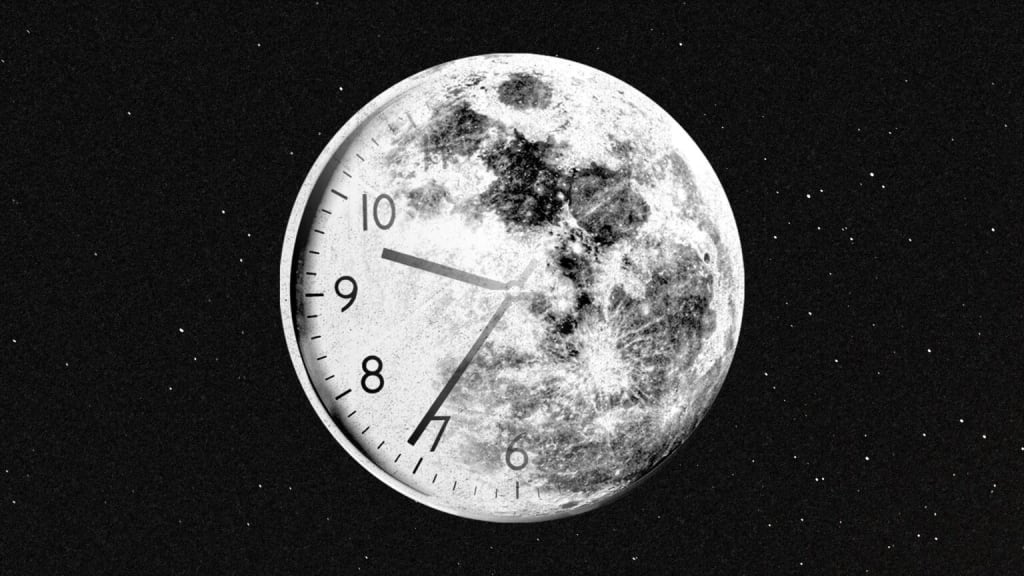
Telling time on the Moon is a complex issue due to several factors, including its rotational period, lack of a time zone system, and international agreements. Here's an overview of how time is managed in lunar contexts:
Lunar Day and Night Cycle
Lunar Day Length: The Moon has a day and night cycle that lasts about 29.5 Earth days. This means one lunar day (sunrise to sunrise) is equivalent to nearly a month on Earth.
Timekeeping Systems Used
Mission Time: During lunar missions, time is often kept according to the mission's specific timeline, typically synchronized with Coordinated Universal Time (UTC) or the mission control's local time (often Houston time for NASA missions).
Universal Lunar Time (ULT): There have been proposals for establishing a standard lunar time system, called Universal Lunar Time. This would help synchronize activities on the Moon regardless of the originating country or organization.
Current Practices
Scientific and Research Missions: Generally use UTC for coordination.
Future Settlements: As permanent human presence on the Moon becomes more likely, establishing a consistent timekeeping system will become more critical.
Challenges
Time Zones: Unlike Earth, the Moon does not have natural divisions that would make time zones practical.
Lunar Clock: A lunar clock might need to account for the slower rotation of the Moon, possibly using a different base for hours and minutes.
Conclusion: For now, time on the Moon is typically referenced against Earth time, particularly UTC. However, the development of a specialized lunar time system is an area of ongoing discussion and research.
About the Creator
luna
i am a university student and in my free time i like to write and create different stories related to physics and space.
The Other Way
The Other Way – Story No. 2878 Nader had a gold watch, a precious gift from his grandfather. “Sir! Please, just give me two hundred rupees. You can deduct it from my wages. For God’s sake, have mercy on me, I am poor!” Nasser’s eyes were filled with tears as he clutched the feet of Seth Qamaruddin, pleading desperately.
By Sudais Zakwanabout 2 hours ago in Art
In the Name of Allah
Ahmad Raza was a children’s author who specialized in mystery and detective stories. His tales were filled with suspense and wonder, captivating readers of all ages. At home, besides him, only one trustworthy servant, Akram, managed the household. Ahmad Raza’s wife had passed away years ago, and their only son, a doctor, lived in the United Kingdom.
By Sudais Zakwanabout 2 hours ago in Art




Comments
There are no comments for this story
Be the first to respond and start the conversation.