
The Timeless Power of Music: Why It Still Moves Us in the Digital Age
How Rhythm, Emotion, and Technology Keep Music Alive Across Generations

n every era of human history, music has played a central role in how we express ourselves, connect with others, and find meaning in the world around us. From ancient tribal drums to medieval chants, from vinyl records to TikTok remixes, music adapts, evolves, and persists. But even in today’s digital, fast-paced, algorithm-driven society, the core power of music remains as potent as ever.
So what is it about music that makes it so timeless—and why does it still move us in such profound ways?
The Universal Language
One of the most beautiful things about music is that it transcends barriers. It doesn’t matter where you’re from, what language you speak, or how old you are—music speaks to something deeper. You can feel the raw pain in a flamenco song, the triumph in a film score, or the joy in a pop anthem, even if you don’t understand a single lyric.
This is because music works on multiple levels. At a physical level, rhythm and tempo tap directly into our nervous systems. At an emotional level, melody and harmony can mirror our internal states. And at a cognitive level, lyrics and structure give us something to hold onto—a story or a message to decode.
Whether it’s a lullaby sung to a newborn or a national anthem sung by thousands, music communicates something that words alone often cannot.
Music and Emotion: A Deep Connection
Science backs up what many of us already feel intuitively: music affects our emotions. Listening to music releases dopamine—the same neurotransmitter linked to pleasure, motivation, and reward. That’s why your favorite song can give you chills, lift your mood, or even move you to tears.
Think about the way a particular song can instantly transport you back in time. Maybe it reminds you of a road trip, a breakup, a first dance, or a quiet moment of reflection. Music embeds itself in our memories in a uniquely powerful way.
Even more fascinating is how we use music to manage our emotions. We blast high-energy playlists to hype ourselves up at the gym. We turn to sad ballads after heartbreak. We wind down with ambient or lo-fi sounds to calm our racing minds. Music becomes a tool for emotional regulation—a kind of self-therapy that’s free, accessible, and deeply personal.
The Soundtrack of Culture
Every generation has its own musical identity. In the 1960s, rock and protest songs gave voice to political unrest. In the ’80s, synthesizers and pop glamorized excess and escape. Today, we have a musical landscape that’s more diverse and fragmented than ever before—hip-hop, K-pop, indie, Afrobeat, drill, hyperpop, electronic, country-trap fusions, and more.
Yet, even in this chaos, we see patterns. Music continues to reflect the cultural mood, the political climate, the hopes and fears of its listeners. Artists like Kendrick Lamar, Billie Eilish, Rosalía, Burna Boy, and BTS are not just making music—they’re shaping conversations around race, gender, identity, climate, and power.
The viral nature of music on platforms like TikTok also means songs can become cultural phenomena overnight. A 15-second snippet can spawn memes, challenges, and millions of views, turning unknown artists into overnight stars. But with this virality comes a new question: is music being reduced to content? Or is it just evolving with the times?
Technology’s Role in Music Evolution
From the phonograph to the streaming platform, technology has always reshaped the way we create, distribute, and experience music.
In the past, access to music was limited. You had to buy an album, attend a live performance, or tune into the radio. Today, with streaming services like Spotify, Apple Music, and YouTube, we have the world’s music library in our pockets 24/7.
Production has also been democratized. Anyone with a laptop and a DAW (Digital Audio Workstation) like Ableton or FL Studio can become a music producer. Bedroom pop is now a genre, and artists like Clairo and Steve Lacy have risen from DIY origins to international acclaim.
AI-generated music is the next frontier. Tools like Google’s MusicLM or OpenAI’s Jukebox can create original compositions based on prompts or emulate famous artists’ styles. This raises philosophical and legal questions: What does authorship mean in an age of machine creativity? Can AI ever feel music the way humans do?
Despite the advances, there’s a growing movement toward analog sounds and human imperfection. Vinyl sales are surging. Live shows are more popular than ever. It seems that even in a digital age, people still crave authenticity, physicality, and connection.
The Power of Live Performance
There’s something magical about seeing music performed live. It’s not just the sound—it’s the energy, the unpredictability, the shared experience with a crowd. A live show is one of the few places in modern life where hundreds or thousands of people can be fully present, connected by a single frequency.
Festivals like Coachella, Glastonbury, Afropunk, and Tomorrowland bring together people from all walks of life. Street performances, open mic nights, and underground gigs keep local scenes alive. And artists continue to tour because the stage is where music becomes something felt, not just heard.
Even virtual concerts—like Travis Scott’s groundbreaking Fortnite performance—are pushing the boundaries of what “live” can mean in the metaverse. Whether digital or physical, the desire remains the same: to gather, to listen, to feel.
Music as Healing
It’s no surprise that music therapy is a growing field. Studies show that music can reduce anxiety, alleviate depression, lower blood pressure, and even improve outcomes for people with dementia or PTSD. In hospitals, schools, prisons, and community centers, music is being used to heal trauma and build resilience.
On a more personal level, many people turn to music as a daily mental health practice. It’s a way to process grief, celebrate joy, or just cope with the chaos of modern life. Even a simple playlist can serve as a lifeline—a curated space of safety and self-expression.
What’s Next for Music?
The future of music is exciting—and uncertain. We’re seeing the rise of decentralized platforms, blockchain-based royalties, and fan-powered monetization. Artists no longer need labels to succeed, but the pressure to constantly produce and promote can be overwhelming.
We’re also grappling with questions around authenticity, saturation, and attention spans. In a world where thousands of songs are uploaded every hour, how do you stand out? How do you create something that lasts?
Perhaps the answer lies in returning to music’s roots—not stylistically, but spiritually. Music, at its core, is about connection. Whether you’re a virtuoso, a casual listener, or someone humming alone in the shower, music is an expression of what it means to be human.
Final Thoughts
Music isn’t just background noise—it’s a force. It shapes our moods, memories, and movements. It bridges gaps and builds worlds. In an age defined by distraction, music offers something rare: focus, emotion, and presence.
So the next time you press play, take a moment. Really listen. Feel it. Because in that sound, there’s something ancient, something modern, and something deeply, beautifully human.
About The Yume Collective
At the heart of everything we love about music—creativity, community, and bold storytelling—is The Yume Collective, an independent record label pushing the boundaries of sound and culture. Dedicated to supporting visionary artists, Yume bridges underground innovation with global reach, offering a platform for genre-defying talent in a fast-changing musical landscape.
Whether you're an artist looking for a home, a fan craving fresh sounds, or a creative seeking collaboration, The Yume Collective is building something different—something real.
🔗 Connect with us:
🌐 Linktree: https://linktr.ee/theyumecollective
📸 Instagram: https://www.instagram.com/the.yume.collective
📩 For inquiries or collaborations: [email protected]
Join the movement. Be part of the future of sound.
About the Creator
Keep reading
More stories from The Yume Collective and writers in Art and other communities.
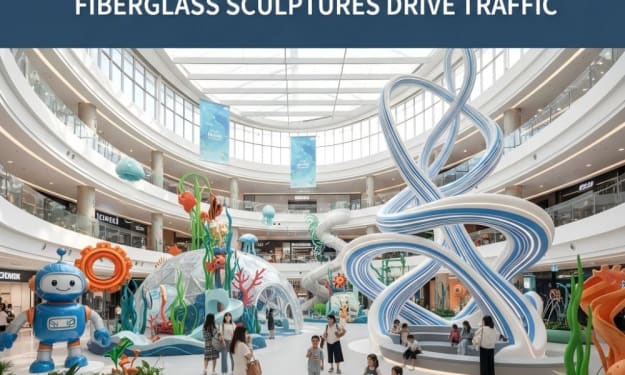
2026 Commercial Space Design:How Fbierglass Sculpture Drives Traffic
Today, offline commercial spaces are facing continuous pressure. With e-commerce offering convenient and fast services, physical stores must showcase unique features to attract customers. In this context, fiberglass sculptures are no longer merely decorative items; they have become visual focal points in shopping malls, brand stores, pop-up shops, and mixed-use commercial projects, playing a crucial role in increasing foot traffic.
By Shenzhen Ruiheng Crafts3 days ago in Art
Why Strategic Branding Is Essential for Long-Term Business Growth
In today’s fast-paced digital environment, businesses face constant pressure to stand out. Consumers are exposed to endless choices every day, making attention harder to earn and trust harder to keep. While quality products and services are important, they are no longer the only factors that determine success. Strategic branding plays a key role in helping businesses grow steadily and remain relevant over time.
By Ayush Bagwari3 days ago in Art



Comments
There are no comments for this story
Be the first to respond and start the conversation.