
The Timeless Allure of the Mona Lisa: A Journey Through Art and Mystery
Exploring the Enigmatic Smile of Leonardo da Vinci's Masterpiece

The Mona Lisa, known for her elusive smile and captivating gaze, is one of the most famous paintings in the world. This iconic work of art, created by Leonardo da Vinci during the Italian Renaissance, has fascinated and puzzled art lovers and scholars for centuries. The journey of the Mona Lisa from da Vinci's studio to its current home in the Louvre Museum in Paris is a tale filled with intrigue, mystery, and enduring allure.
The Genius Behind the Masterpiece
Leonardo da Vinci, born in 1452, was not only a master painter but also a brilliant inventor, scientist, and thinker. His diverse talents and relentless curiosity about the natural world greatly influenced his artistic work. Da Vinci began painting the Mona Lisa, also known as La Gioconda, around 1503, and it is widely believed that the portrait depicts Lisa Gherardini, the wife of a wealthy Florentine merchant.
Da Vinci employed a technique known as sfumato, which involves the delicate blending of colors and tones to create soft transitions between light and shadow. This method gives the Mona Lisa her lifelike quality and the mysterious smile that seems to change when viewed from different angles. The painting's exquisite detail and the play of light and shadow demonstrate da Vinci's profound understanding of human anatomy and his mastery of the art of portraiture.
The Mona Lisa's Journey Through Time
After da Vinci's death in 1519, the Mona Lisa was acquired by King Francis I of France and became part of the royal collection. It remained in various French palaces until the French Revolution, when it was moved to the Louvre Museum. The painting's fame grew over the centuries, but it was an event in 1911 that truly catapulted the Mona Lisa to global stardom.
In August 1911, the Mona Lisa was stolen from the Louvre by Vincenzo Peruggia, an Italian handyman who believed that the painting should be returned to Italy. Peruggia hid the artwork in his apartment for two years before attempting to sell it to a gallery in Florence. The sale led to his arrest and the painting's safe return to the Louvre. The theft garnered international attention, and the Mona Lisa became a symbol of cultural heritage and artistic excellence.
The Enigmatic Smile
The most captivating aspect of the Mona Lisa is undoubtedly her smile. Art historians and psychologists have long debated its meaning and the emotions it conveys. Some theories suggest that the smile represents contentment and serenity, while others believe it reflects a more complex range of emotions, including sadness or mystery. Da Vinci's use of sfumato plays a crucial role in this ambiguity, as the lack of definitive lines around the mouth allows viewers to perceive the smile in different ways.
Modern scientific analysis has revealed even more layers to the Mona Lisa's enigmatic expression. Infrared and multispectral imaging have shown that da Vinci made numerous changes to the painting during its creation, suggesting a deliberate effort to perfect the smile and other details. These findings highlight da Vinci's meticulous approach and his desire to achieve a lifelike and emotionally resonant portrait.
The Mona Lisa in Popular Culture
The Mona Lisa's impact extends far beyond the world of fine art. She has become an icon in popular culture, appearing in countless advertisements, films, and works of literature. Her image has been reproduced on everything from t-shirts to coffee mugs, making her one of the most recognizable faces in history.
Artists from Marcel Duchamp to Andy Warhol have created their own interpretations of the Mona Lisa, each adding to her mystique and enduring legacy. Duchamp's irreverent alteration, featuring a mustache and goatee, challenged traditional notions of art and beauty, while Warhol's colorful silkscreen prints celebrated her status as a cultural phenomenon.
The Everlasting Appeal
The Mona Lisa's timeless allure lies in her ability to captivate and intrigue viewers across generations. Leonardo da Vinci's masterpiece continues to be a source of inspiration and fascination, embodying the heights of artistic achievement and the enduring power of human expression. As long as there are eyes to behold her, the Mona Lisa will remain an enigmatic and cherished treasure in the world of art.
About the Creator
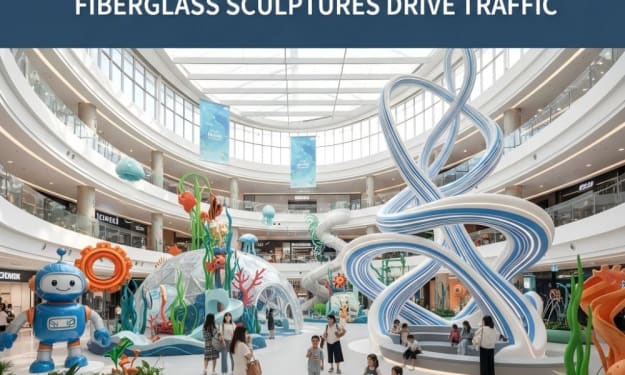
2026 Commercial Space Design:How Fbierglass Sculpture Drives Traffic
Today, offline commercial spaces are facing continuous pressure. With e-commerce offering convenient and fast services, physical stores must showcase unique features to attract customers. In this context, fiberglass sculptures are no longer merely decorative items; they have become visual focal points in shopping malls, brand stores, pop-up shops, and mixed-use commercial projects, playing a crucial role in increasing foot traffic.
By Shenzhen Ruiheng Crafts4 days ago in Art
Why Strategic Branding Is Essential for Long-Term Business Growth
In today’s fast-paced digital environment, businesses face constant pressure to stand out. Consumers are exposed to endless choices every day, making attention harder to earn and trust harder to keep. While quality products and services are important, they are no longer the only factors that determine success. Strategic branding plays a key role in helping businesses grow steadily and remain relevant over time.
By Ayush Bagwari4 days ago in Art



Comments (1)
Very well written.