


“Are you Mr. Behzad?”
The caller asked from an unfamiliar number. I replied yes and asked who was speaking.
“I am Aslam Sahib’s son.”
I immediately recognized the reference. “Oh, Aslam Sahib! How are you, son? Why did you call, and how is your father?”
My first thought was that he must need some help—perhaps a job. These days, that seems to be the only real problem young people face. I had lost contact with Aslam Sahib, so I assumed he had asked his son to contact me directly.
“Uncle… it has been almost six months since my father passed away.”
His words felt like cold water poured over me.
“To Allah we belong and to Him we return,” I said, then asked softly, “How did it happen?”
“It was sudden,” his voice trembled.
“Tell me, son, how can I help you?” I asked sincerely. At that moment, it felt like a moral duty to support him in any way I could.
“Please pray for us, Uncle. You were among my father’s good friends.”
Perhaps he said it innocently—or perhaps it carried a subtle reminder. Trying to mask my embarrassment, I replied, “Such good friends, yet I didn’t even know of his passing.”
“It’s alright, Uncle,” he said calmly. “Everyone is busy with their own lives these days.”
Then he asked, “Uncle, do you remember investing any money in business with my father?”
I tried hard to recall. “Yes… I think it was around one hundred thousand rupees.”
“How much exactly?” he asked.
“Most likely one hundred thousand,” I replied. In truth, I had completely forgotten about that money—it was almost a year old. I suddenly remembered how Aslam Sahib had once called me, telling me about a residential scheme in Lahore and offering me a chance to invest. He had promised profits proportional to the investment.
Now, remembering that amount, I felt regret. I thought that with Aslam Sahib’s death, my money was probably lost too.
“That was my only savings, son,” I said apologetically. “I have no other reserve.”
Before he could ask for anything, I had already made my excuse.
“After my father’s death, it took us time to recover,” he continued. “Recently, my uncle returned from America. Together, we reviewed all my father’s documents. That’s when we found your name. Thankfully, your phone number hadn’t changed.”
He explained that many people who had partnered with his father had changed their numbers, so he had written letters to their addresses.
“According to the business records,” he said, “when my father sold the plots, your one hundred thousand rupees earned a profit of thirty-six thousand. Please tell me which account I should transfer your principal and profit to.”
I was stunned. I couldn’t utter a single word.
He added, “Uncle, please don’t mind. When the plots were sold, my father passed away shortly afterward. But he had documented everything carefully. We waited for my uncle so we could verify all the accounts before informing everyone.”
I sent him my bank details. Within an hour, I received confirmation that the money had been transferred.
I told this story to dozens of people afterward, deeply impressed by the honesty of this young man and the values his parents had instilled in him.
Later, while returning home, he called again. I hesitated, fearing he might say that the extra thirty-six thousand had been transferred by mistake.
When I answered, he said, “Uncle, I’m calling to apologize. There was a small mistake in the calculation.”
My heart sank. I had already made plans with that money.
“Yes, son?” I asked nervously.
“Actually, Uncle, you are owed fourteen thousand rupees more. Your total profit is fifty thousand.”
I breathed a sigh of relief and thanked him.
“Should I transfer the amount to your account?” he asked.
“No, son,” I replied. “I will come and collect it myself.”
Not because I doubted him—but because I wanted to meet this rare young man. In today’s world, people like him are hard to find.
Praise be to Aslam Sahib and his wife for raising such a child. I met him and learned that he was still a student, struggling to cope with his father’s loss, yet already the guardian of his widowed mother and siblings.
May Allah grant him a long life, strength, and happiness. Young people like him are our hope for the future.
About the Creator
Sudais Zakwan
Sudais Zakwan – Storyteller of Emotions
Sudais Zakwan is a passionate story writer known for crafting emotionally rich and thought-provoking stories that resonate with readers of all ages. With a unique voice and creative flair.
Keep reading
More stories from Sudais Zakwan and writers in Art and other communities.
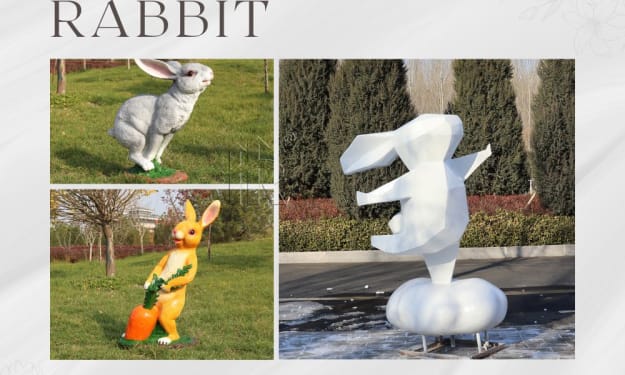
What does a rabbit statue symbolize?
Rabbit statues are more than cute decorative elements; they carry rich symbolism that has been valued across different cultures for centuries. From associations with luck and prosperity to meanings related to gentleness and creativity, rabbit imagery adds emotional depth and cultural context to a space.
By Shenzhen Ruiheng Craftsabout 20 hours ago in Art



Comments
There are no comments for this story
Be the first to respond and start the conversation.