
The Story of Sangrai
A Marma community new year celebration

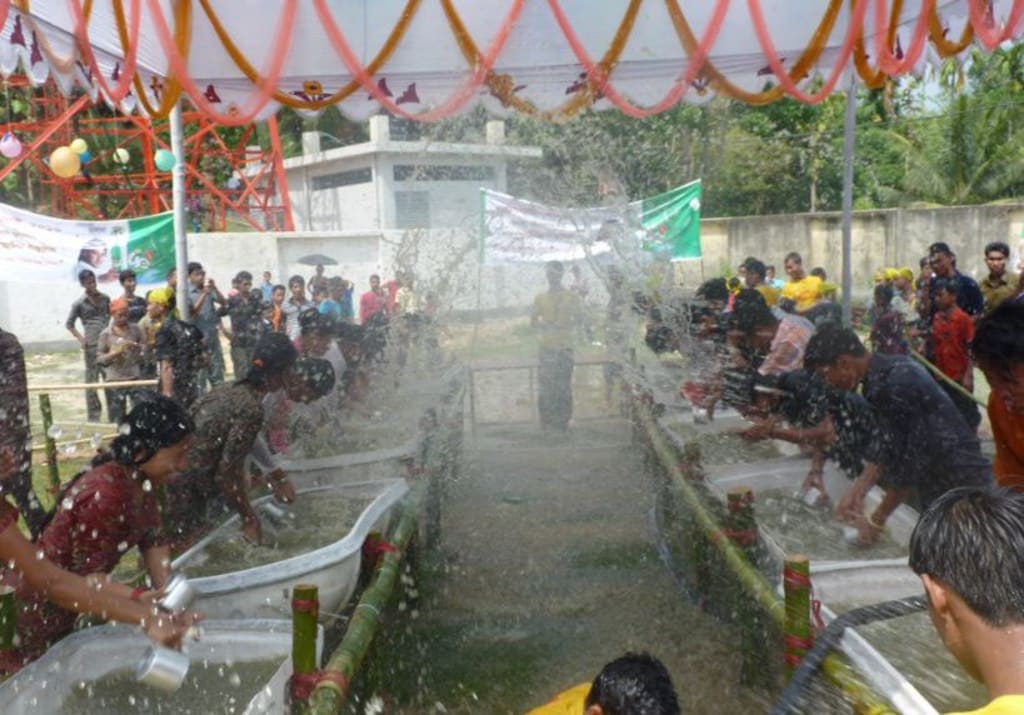
Once upon a time, in the serene hills of southeastern Bangladesh, the Marma people eagerly awaited the arrival of Sangrai, the grand festival that marks the New Year. It was a time when nature itself seemed to join in the celebrations—flowers bloomed, laughter echoed through the valleys, and streams sparkled with the playful splashes of water.
Sangrai wasn’t just a day—it was a three-day journey of joy, tradition, and renewal. According to the ancient Marma calendar, Mraima Sakraoy, the last two days of the old year and the first day of the new one were sacred. The celebration now begins on April 13 each year, bringing it into line with the modern calendar. The festival began with Pangchowai, also known as Flower Sangrai. On this magical night, the youth of the community stayed awake, organizing cultural events, playing traditional games, singing, dancing, and preparing special pastries called Pitha. They did everything in their power to prevent sleep. The hills were alive with footsteps just before dawn as young Marma people went into the forest in small groups to find a unique flower called Sangrai Paing. The center of the celebration was this cloud-colored, soft flower. With care, they brought the flowers home and gave them to their mothers. The women then made stunning garlands with needles and thread. The first flower was offered to Buddha, and every doorway was decorated with the blooms. From these flower-laced doors, anyone passing by could tell—Sangrai had begun.
But the hills also held whispers of mystery. Elders warned the children of Frujuma, a mystical forest witch who might lure little ones into the jungle, never to return before daylight. Tales of Frujuma’s Trap filled the air, adding a touch of excitement and fear to the night of Pangchowai.
Then came the most exciting day of all—the water festival, known as Ri Long Poye. On the final day of Sangrai, the whole community joined in a joyous water fight. Young and old carried bottles and buckets, splashing each other freely. Every drop of water was a blessing, a sign of good fortune, and a symbol for removing the old and welcoming the new, so no one got mad. Sangrai was more than a celebration—it marked a fresh start. No weddings happened between the Maghi full moon and Sangrai. Farming restarted, lives renewed, and hearts filled with hope. With the mountains as their witness and tradition as their guide, the Marmas welcomed the New Year with open arms, laughter, and love.
And thus, each year, as the flowers bloom and water dances in the sun, the story of Sangrai is told again—not through words alone, but through smiles, songs, and the gentle splash of water.


About the Creator
Akya Marma
Welcome!
This page is more than words—it’s about feelings and stories.
If the start speaks to you, the rest will stay with you
Keep reading
More stories from writers in Art and other communities.
Soon-Young (Shownal) Han: The Casting Director Redefining Global Collaboration
In an era where content knows no borders, casting has become more than selecting faces for the screen—it has become an act of cultural translation. Few understand this better than Soon-Young Han, also known professionally as Shownal Han, a global casting director whose work is quietly reshaping how Hollywood, Korean content, and international brands collaborate.
By Alpha News Network3 days ago in Art


Comments
There are no comments for this story
Be the first to respond and start the conversation.