
The Silent Takeover
How AI is Killing the VFX Industry

The visual effects (VFX) industry has long been a testament to human ingenuity, artistic skill, and technological advancement. From breathtaking CGI in Hollywood blockbusters to seamless digital enhancements in TV and advertisements, VFX has transformed storytelling. However, the rapid rise of artificial intelligence (AI) is now reshaping the industry in ways that could spell disaster for thousands of artists.
## The Rise of AI in Visual Effects
AI has gradually infiltrated the VFX industry, evolving from a mere tool to a game-changer. With breakthroughs in machine learning, neural networks, and generative adversarial networks (GANs), AI can now handle complex tasks like facial tracking, deepfake technology, and procedural content generation. These advancements, once considered science fiction, are now mainstream and widely used by major studios.
## Automation vs. Creativity: A Double-Edged Sword
AI’s ability to automate tedious tasks such as rotoscoping, animation, and texturing has undeniably improved efficiency. Studios can produce content faster and at a lower cost, but this comes at a price — human artists are being sidelined. The core of VFX has always been artistic vision, but AI-generated content, while impressive, often lacks the emotional depth and authenticity that human creativity brings.
## The Studios’ Perspective: Cost vs. Artistry
For studios, AI presents an attractive financial proposition. Cutting costs and accelerating production timelines are key incentives, pushing VFX companies to integrate AI-driven workflows. Major Hollywood studios and tech giants like Google and NVIDIA are leading this shift, further reducing reliance on human talent. AI is streamlining pre-production and post-production processes, potentially eliminating the need for extensive human intervention.
## The Death of Entry-Level Jobs in VFX
Traditionally, VFX artists began their careers in entry-level positions such as roto artists and match-move specialists, gradually working their way up. AI is rapidly automating these foundational roles, making it increasingly difficult for newcomers to gain industry experience. This could lead to a talent gap, where only a handful of high-level artists remain, and fewer opportunities exist for fresh talent.
## AI’s Impact on Real Productions: A Case Study Approach
Several recent projects illustrate AI’s growing dominance in VFX. Marvel’s de-aging technology, AI-generated crowd simulations in large-scale battle scenes, and deepfake applications have all demonstrated AI’s potential. However, while AI enhances efficiency, it also raises questions about the diminishing role of human artists in these productions.
## The Artist’s Struggle: Surviving AI-Driven Change
VFX artists are now faced with a difficult choice — adapt or become obsolete. Many are transitioning into AI-specialized roles, learning new software, and embracing hybrid workflows. However, for those who have lost jobs due to automation, the financial and emotional toll is undeniable. The freelance landscape is also shifting, making it harder for independent artists to secure projects.
## The Future of VFX: A Lost Art?
Some fear that AI-driven content will eventually replace traditional VFX artistry. Practical effects and handcrafted CGI may become obsolete as AI-generated content becomes the norm. However, there is hope — audiences are becoming more discerning, and there may be a resurgence in demand for human creativity as filmmakers seek authenticity in storytelling.
## Fighting Back: Can VFX Artists Adapt?
Despite AI’s encroachment, there are ways for artists and studios to push back. Hybrid workflows, where AI complements human creativity rather than replaces it, may be a viable solution. Industry regulations, advocacy groups, and unions must step in to protect human artists. New business models that empower artists to leverage AI without losing their creative control could also emerge.
## The Ethical Dilemma of AI in Creativity
As AI-generated content becomes more common, ethical concerns arise. Who owns AI-generated work? Can AI be truly creative, or is it merely replicating human input? Deepfake technology, copyright issues, and the ethical responsibilities of studios using AI must all be addressed as the industry moves forward.
## Education and Training: Preparing for an AI-Dominated Future
To stay relevant, artists must adapt their skill sets. Schools and training programs must evolve to incorporate AI-driven workflows, ensuring that upcoming artists are prepared for this new era. Lifelong learning will become essential as the industry continues to shift towards AI integration.
## Conclusion: AI’s Unstoppable Influence on VFX
The rise of AI in VFX is inevitable, but its impact on human artists remains uncertain. Will AI completely take over, or will there be a balance between technology and artistry? The industry must find a way to integrate AI without erasing human creativity. The future of VFX depends on how artists, studios, and society choose to navigate this unprecedented transformation.
While AI is revolutionizing the industry, it is up to us to ensure that it enhances rather than replaces human artistry.
About the Creator
Keep reading
More stories from Anuj Bhandari and writers in Art and other communities.
AI Tools in the VFX Industry
The Visual Effects (VFX) industry has always been at the cutting edge of technological innovation, pushing the boundaries of what’s possible in film, television, and gaming. Over the years, the industry has seen dramatic advancements in software and hardware that enable artists to create stunning visuals that captivate audiences. In recent years, Artificial Intelligence (AI) has made its way into the VFX world, bringing a new level of efficiency, creativity, and innovation.
By Anuj Bhandari11 months ago in Art
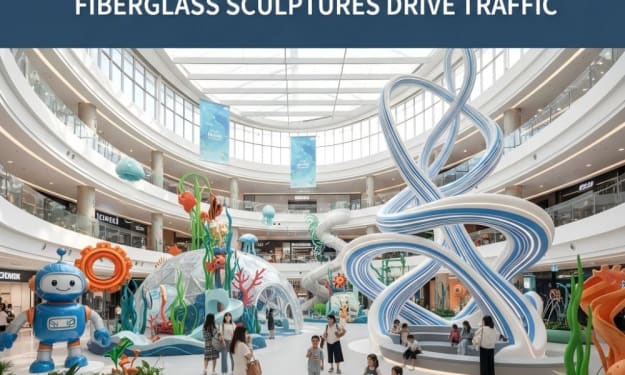
2026 Commercial Space Design:How Fbierglass Sculpture Drives Traffic
Today, offline commercial spaces are facing continuous pressure. With e-commerce offering convenient and fast services, physical stores must showcase unique features to attract customers. In this context, fiberglass sculptures are no longer merely decorative items; they have become visual focal points in shopping malls, brand stores, pop-up shops, and mixed-use commercial projects, playing a crucial role in increasing foot traffic.
By Shenzhen Ruiheng Crafts7 days ago in Art
Why Strategic Branding Is Essential for Long-Term Business Growth
In today’s fast-paced digital environment, businesses face constant pressure to stand out. Consumers are exposed to endless choices every day, making attention harder to earn and trust harder to keep. While quality products and services are important, they are no longer the only factors that determine success. Strategic branding plays a key role in helping businesses grow steadily and remain relevant over time.
By Ayush Bagwari7 days ago in Art



Comments (1)
Wow! They took over quietly! Great story!