
The Silent Brushstroke
How One Painting Uncovered a Century-Old Secret and Changed an Artist's Life Forever
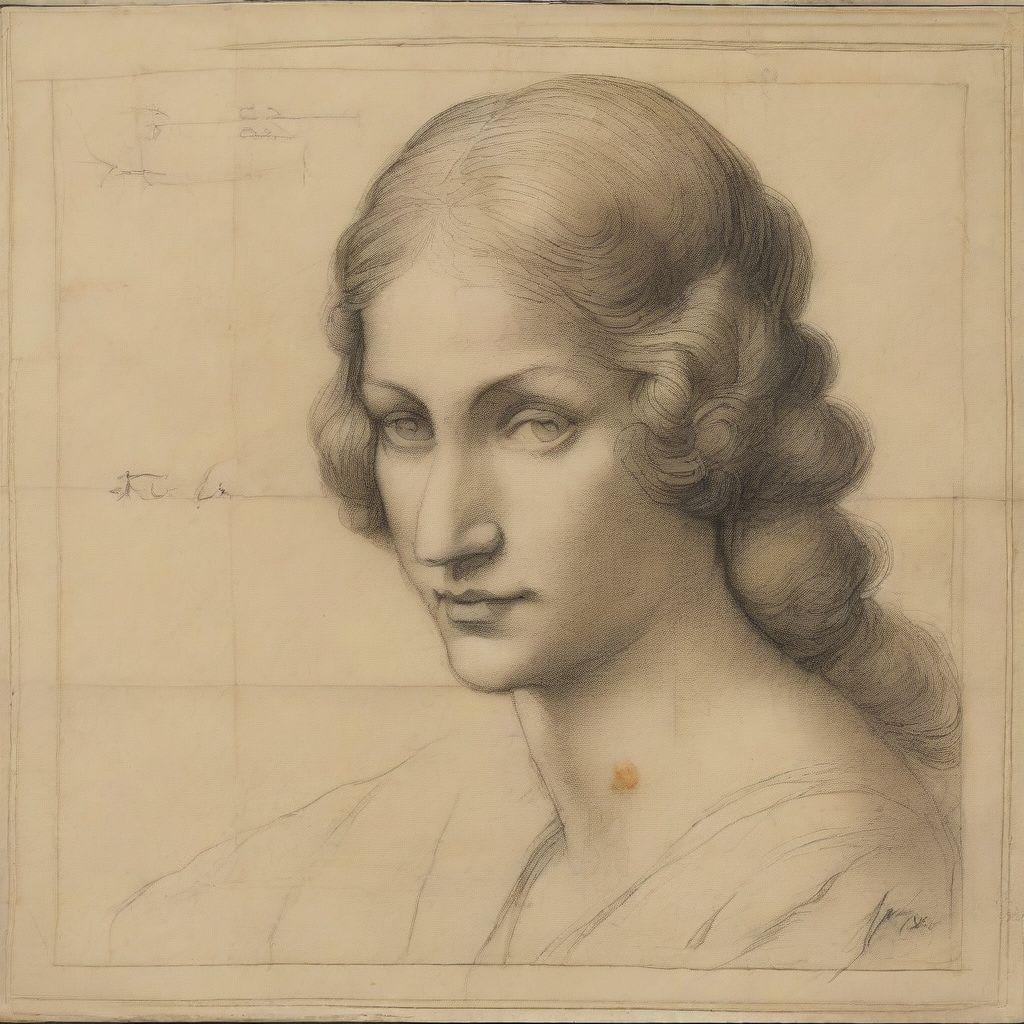
The rain hit the cobbled streets of Florence like a whisper memory, echoing centuries of art and history soaked into its stones. In a tucked-away alley not far from the bustling crowds at the Uffizi Gallery, stood a forgotten gallery called Galleria dell’Ombra—Gallery of Shadows. It rarely saw visitors, except for the occasional wanderer or eccentric collector. That rainy Thursday, it saw someone different: a struggling Pakistani artist named Zoya Fareed.
Zoya had come to Florence for inspiration. At 27, her work was still unknown, her canvases sold cheaply online to cover rent and rice. She had talent—raw and emotional—but no recognition. Her father, once a calligrapher in Lahore, had died young, leaving her with only his paintbrushes and a dream that felt increasingly distant.
That day, drawn by the gallery’s mysterious name, Zoya stepped inside.
The gallery was dim, lit by shafts of natural light cutting through cracked windows. Dust hung in the air like ancient spirits. The walls held peculiar pieces—half-finished paintings, moody sketches, forgotten faces—but in the center of the room stood one painting.
It wasn’t large, but it pulled. A woman stood beside a window, her face turned slightly away, painted with such haunting softness that her eyes—though barely visible—seemed to look directly at the viewer. The style was familiar, almost echoing Da Vinci’s chiaroscuro, but something in the lines was different. It whispered sadness. Silence. Secrets.
A plaque beneath the painting read:
“La Donna Silenziosa” — Anonymous, c. 1520
The Silent Woman.
Zoya was spellbound. Hours passed as she sat on the cold bench, sketching the mysterious woman. Each pencil line she drew felt like a conversation—like the woman was telling her something no one had ever heard. A gallery curator, an elderly man named Marcello, noticed her reverence and approached gently.
“You feel her, don’t you?” he asked, eyes twinkling behind his glasses.
Zoya nodded. “She’s speaking. But in silence.”
Marcello smiled. “That painting… it’s not supposed to exist.”
Zoya turned to him, curiosity sparked. Marcello explained that La Donna Silenziosa had been discovered behind a false wall during renovations a decade ago. There were no records of it—no artist’s signature, no documentation. Art historians tried tracing it through style and pigments, suspecting a student of Raphael or perhaps even an unknown female artist of the Renaissance, but they found nothing.
“No matter how much we study her,” Marcello said, “she remains silent.”
Zoya left the gallery with a storm inside her. That night, she painted furiously, as if the woman had reached through the centuries and touched her hand. Her strokes became softer, deeper, her figures suddenly held sorrow and mystery. It was as if she had discovered a hidden door within her own soul.
She returned every day, sitting for hours in front of La Donna Silenziosa, sketching and absorbing. Over time, Marcello began to trust her. One afternoon, he brought out an old, fragile journal that had been found near the painting.
“It's mostly in cipher,” he said. “Unreadable. But maybe you’ll see something we’ve missed.”
Zoya wasn’t a historian, but growing up in Pakistan, she had spent hours with her father studying Islamic calligraphy and ancient geometric patterns. She recognized something in the structure of the cipher—a rhythm, a repetition. She took photos and, night after night, deciphered fragments using old calligraphy techniques.
Weeks later, a phrase finally emerged:
"My voice silenced by the brush of a man who called me muse, but stole my soul."
Zoya’s heart pounded. This wasn’t just art—it was a confession. The painting wasn’t merely an anonymous work; it was the voice of a woman whose story had been buried by time.
Digging deeper, Zoya uncovered more: a name—Lucia Bellini—a Renaissance woman rumored to have been a gifted painter but dismissed as a model or mistress by male artists. Zoya traced manuscripts and obscure letters and found mentions of Lucia’s works, all mysteriously attributed to men of her time.
She brought her findings to an art historian at the University of Florence, who was skeptical at first. But Zoya’s deciphered passages and stylistic comparisons made a compelling case. Tests were run—pigment analysis, carbon dating, brushstroke analysis—and slowly, the pieces aligned.
The painting was declared a revolutionary discovery. For the first time, the world heard the name Lucia Bellini not as a muse, but as a master.
Zoya’s role in the discovery made international headlines. Interviews followed. Art critics lauded her insight and praised her own work, now clearly influenced by Lucia’s emotional depth. She was invited to exhibit her new series—The Silent Voices—in Florence and later in New York.
About the Creator
Keep reading
More stories from Danyal Hashmi and writers in Art and other communities.
The Story of Evolution
## **Introduction: A Revolutionary Idea** The story of evolution is one of the most profound scientific discoveries in human history, reshaping our understanding of life on Earth. At the heart of this story is **Charles Darwin**, a British naturalist whose voyage aboard the HMS *Beagle* and subsequent research led to the groundbreaking theory of **evolution by natural selection**. His seminal work, *On the Origin of Species* (1859), challenged long-held beliefs about the origins of life and laid the foundation for modern biology.
By Danyal Hashmi7 months ago in Humans
Ink & Imagination
In a small town named Inkwood, nestled between hills and rivers, there existed a peculiar bookshop called “The Imagination Hub.” The shop was run by a kind old man named Mr. Penrose. He was the type of person who could bring stories to life with just a few words. Every child in Inkwood believed that Mr. Penrose had a magical power. They would gather around him every Saturday to hear tales of adventure, bravery, and far-off worlds.
By Hamad Afridi a day ago in Art


Comments
There are no comments for this story
Be the first to respond and start the conversation.