
The Secret Language of Art: How Hidden Symbols Shape Masterpieces
The Hidden Codes and Messages Behind History’s Greatest Paintings


Title: The Secret Language of Art: How Hidden Symbols Shape Masterpieces
Subtitle: The Hidden Codes and Messages Behind History’s Greatest Paintings
Art has always been more than just a visual experience. Beneath the surface of many famous paintings lie hidden symbols, secret codes, and messages that only the most observant viewers can decipher. From Renaissance masterpieces to modern works, artists have embedded secret meanings that transform their paintings into puzzles, waiting to be solved. These hidden messages often reflect political rebellion, personal struggles, or even mystical beliefs. Today, we’ll uncover some of the most astonishing hidden details in art history—secrets that even the most dedicated art lovers might have overlooked.
The Mona Lisa’s Secret Layers
Leonardo da Vinci’s Mona Lisa is perhaps the most famous painting in history, but few people know that it contains mysterious elements that have puzzled historians for centuries. Researchers using infrared technology have discovered that beneath the surface of the painting are multiple layers, each revealing different stages of its creation. Some experts believe that da Vinci may have originally painted a different version of the Mona Lisa before making crucial alterations.
Even more intriguing, researchers have found microscopic letters and numbers hidden within Mona Lisa’s eyes. Some speculate that these markings could be a secret code left by da Vinci himself, possibly containing messages about lost inventions or hidden knowledge. While no one has definitively cracked the code, the idea that da Vinci embedded a secret message in his most famous painting continues to inspire theories and speculation.
Van Gogh’s Hidden Star Maps
Vincent van Gogh, known for his bold and expressive brushstrokes, often infused his paintings with celestial secrets. In his famous work The Starry Night, astronomers have identified the exact arrangement of the stars and planets on the night it was painted—June 19, 1889. Van Gogh’s interest in astronomy was more than artistic; it was deeply personal. He frequently studied celestial charts and incorporated them into his paintings.
One of the most fascinating discoveries is that his lesser-known painting Café Terrace at Night also contains an accurate star map. The stars in the sky perfectly match the constellation Virgo, and some researchers believe that the twelve figures in the painting represent the twelve apostles, suggesting a hidden religious meaning. Van Gogh, who struggled with mental illness, may have used the stars as a way to bring order to the chaos he felt inside.e Sistine Chapel. In The Creation of Adam, God is depicted reaching out to touch Adam’s hand, a moment of divine inspiration. However, when closely examined, the flowing red cloth surrounding God and the angels forms the precise shape of a human brain.
Some scholars believe that Michelangelo, who secretly dissected cadavers to study anatomy, deliberately included this hidden detail as a statement about the power of human intellect. By embedding a brain within the image of God, Michelangelo may have been suggesting that divine inspiration comes through human thought and reason—a bold idea for his time.
The Mystery of Salvador Dalí’s Persistence of Memory
- If you want to read the second part, subscribe and comment.
Surrealist
M
Ban
Fro
The
About the Creator
SHAKIB
Shakib – Storyteller & Creative Writer
Passionate about storytelling, I bring unique and engaging narratives to life. Whether it’s historical mysteries, horror thrillers, or heartfelt dramas, riv
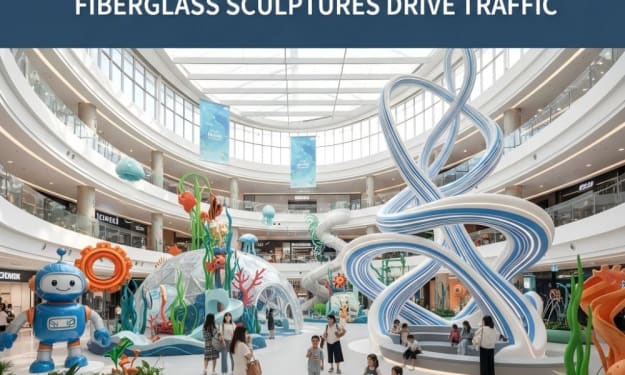
2026 Commercial Space Design:How Fbierglass Sculpture Drives Traffic
Today, offline commercial spaces are facing continuous pressure. With e-commerce offering convenient and fast services, physical stores must showcase unique features to attract customers. In this context, fiberglass sculptures are no longer merely decorative items; they have become visual focal points in shopping malls, brand stores, pop-up shops, and mixed-use commercial projects, playing a crucial role in increasing foot traffic.
By Shenzhen Ruiheng Crafts3 days ago in Art
Why Strategic Branding Is Essential for Long-Term Business Growth
In today’s fast-paced digital environment, businesses face constant pressure to stand out. Consumers are exposed to endless choices every day, making attention harder to earn and trust harder to keep. While quality products and services are important, they are no longer the only factors that determine success. Strategic branding plays a key role in helping businesses grow steadily and remain relevant over time.
By Ayush Bagwari2 days ago in Art



Comments
There are no comments for this story
Be the first to respond and start the conversation.