
The Sculpture That Became a Reef
How Jason deCaires Taylor Turned Art into an Underwater Ecosystem

A Vision Beyond the Canvas
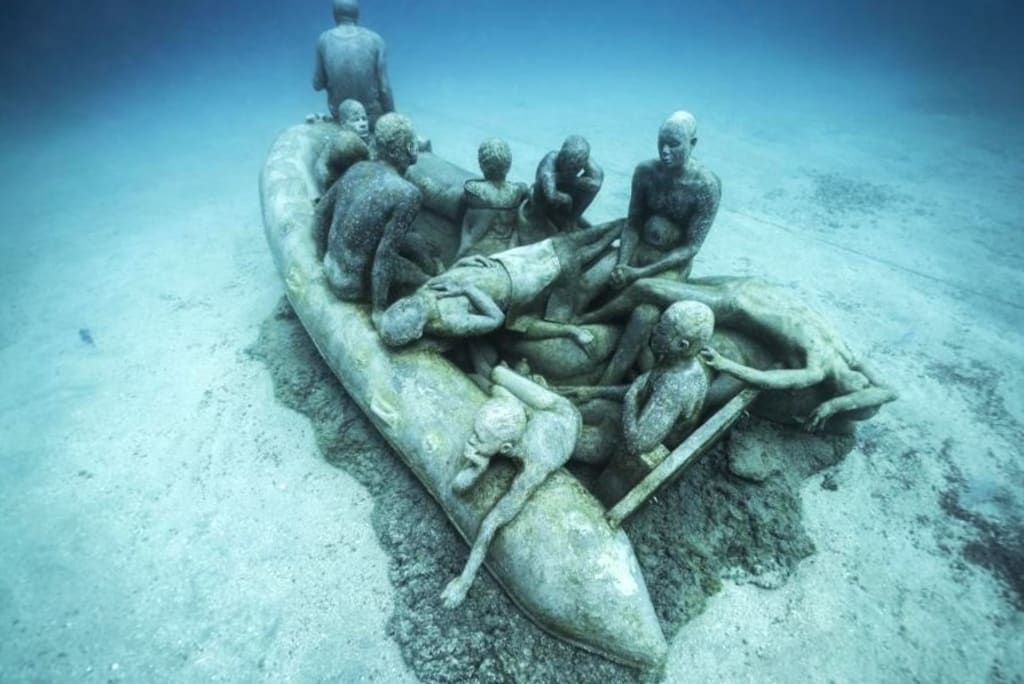
Jason deCaires Taylor is not your typical sculptor. Instead of galleries or museums, his works are found on the ocean floor, slowly becoming one with the sea. Taylor has redefined the boundaries of art by inviting nature itself to be a collaborator. His underwater sculptures are not just installations; they are living, breathing ecosystems that grow and change over time, transforming static human figures into thriving marine habitats.
Art Meets Ecology: The Silent Evolution
One of Taylor’s most iconic projects, The Silent Evolution (2010), saw over 400 life-sized human figures submerged in the turquoise waters off the coast of Cancún, Mexico, as part of the MUSA (Museo Subacuático de Arte). But these statues were not merely meant to be admired by divers; they were crafted with purpose. Made from pH-neutral cement, they were designed to attract coral and foster marine life, turning art into an ecological sanctuary.
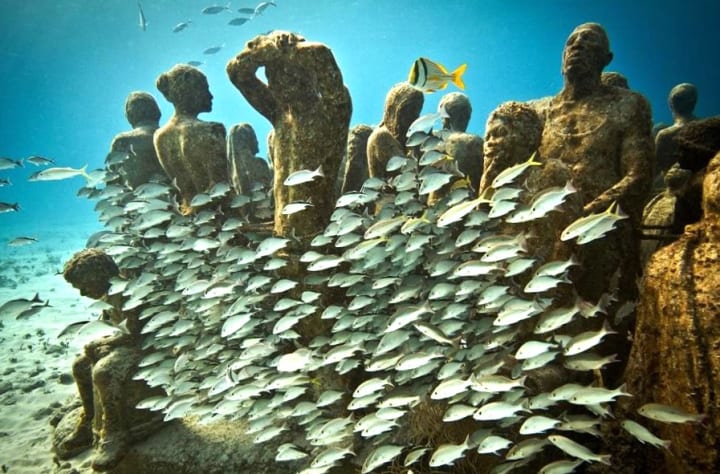
Each figure was carefully created with grooves, hollows, and surfaces that would encourage coral growth and provide a safe haven for fish and other marine creatures. The goal was clear: to offer an alternative site for coral colonization, helping to alleviate the pressure on natural reefs that have been decimated by pollution, climate change, and human activity.
The Natural Transformation
As the years passed, nature took over Taylor’s work. Coral began to blossom, fish sought shelter in the hollowed spaces of the statues, and an entire underwater community started to flourish. The once pristine human forms slowly became encrusted with corals, barnacles, and seaweed, creating an intricate tapestry of marine life. What began as an art installation evolved into an ecological refuge, a testament to the power of nature when given the chance to thrive.
Taylor’s vision wasn’t just to create a new type of sculpture; it was to blur the lines between art and nature, to allow his work to be reclaimed and reshaped by the sea. Over time, his figures transformed into something otherworldly, embodying both human craftsmanship and nature’s resilience. These underwater sculptures became ghostly yet beautiful reminders of how art can help heal the environment.
Symbols of Resilience
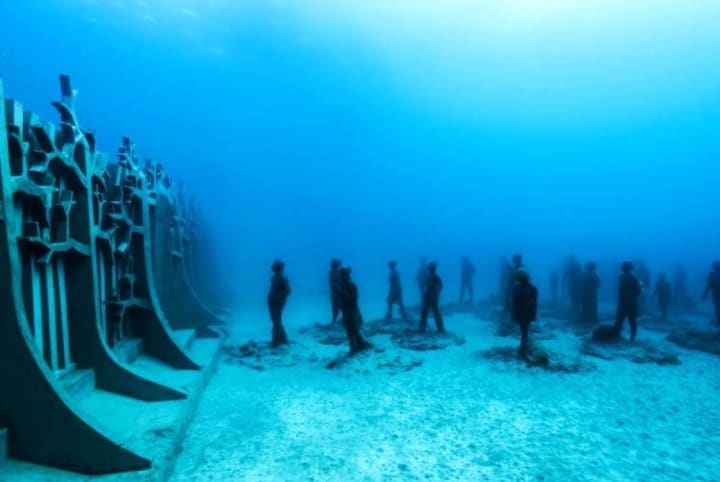
More than just an artistic statement, Taylor’s work stands as a powerful symbol of resilience and renewal. It highlights nature’s extraordinary ability to reclaim and redefine human-made structures. Amidst the growing threat to marine environments worldwide, these submerged sculptures offer hope, a message that collaboration between humanity and nature is not only possible but essential.
Taylor’s underwater art challenges us to reconsider our relationship with the natural world. It invites us to be participants, not just spectators, in the health of our planet. His work is a call to action, reminding us of our responsibility to nurture and protect the ecosystems we so often take for granted. Through art, Taylor has given us a glimpse of what is possible when creativity and conservation come together.
A Future in Balance
Taylor’s sculptures are a vivid representation of harmony between humanity and the underwater world. They remind us that, while human impact can be destructive, it can also be regenerative. His installations serve as ongoing experiments in marine conservation, offering a hopeful vision for the future, a future where the natural world is not something to be exploited but something to be cherished and protected.
Whether viewed by divers in person or through photographs that have captured imaginations worldwide, Taylor’s work speaks to the need for balance. His underwater galleries are not just artistic wonders; they are blueprints for how we might build a more sustainable coexistence with the environment. They show us that art can be more than beauty, it can be a catalyst for change.
About the Creator
Antonino La Vela
Contemporary artist & blogger writer, exploring themes not just in my paintings. You can find more about my work and thoughts on my personal website http://www.antoninolavela.com and my blog http://www.antoninolavela.it.
Keep reading
More stories from Antonino La Vela and writers in Art and other communities.
The House Swallowed by the Sand: Dune-Inspired Art in Namibia
In the heart of the Namib Desert, Kolmanskop stands as a testament to the impermanence of human endeavors, a place where architecture and nature merge to create a work of art that speaks to both history and ephemerality. Once a bustling diamond mining town, Kolmanskop was built in the early 20th century, attracting fortune-seekers and creating a slice of European opulence in the arid wilderness of Namibia. But as the diamond boom waned, so too did the life of the town, leaving it abandoned to the forces of the desert. And it is here, in this desolate abandonment, that a new kind of art emerged, an art sculpted not by human hands but by the relentless embrace of nature.
By Antonino La Velaabout a year ago in Art
A Matter of Coincidence
Tuesday, 3 September 2024 Ayesha Fareed Ahmed, Mirpur Khas Sheeda was a simple and innocent man. One day, he was going to his wife’s village to bring her back. On the way, he saw some donkeys grazing on grass at a certain place. Eventually, he reached his in-laws’ house. His wife’s brother asked him to sit in the guest room.
By Sudais Zakwanabout 8 hours ago in Art


Comments
There are no comments for this story
Be the first to respond and start the conversation.