
The Psychology Behind the Art of Attraction
How Emotion, Perception, and Behavior Shape Human Connection

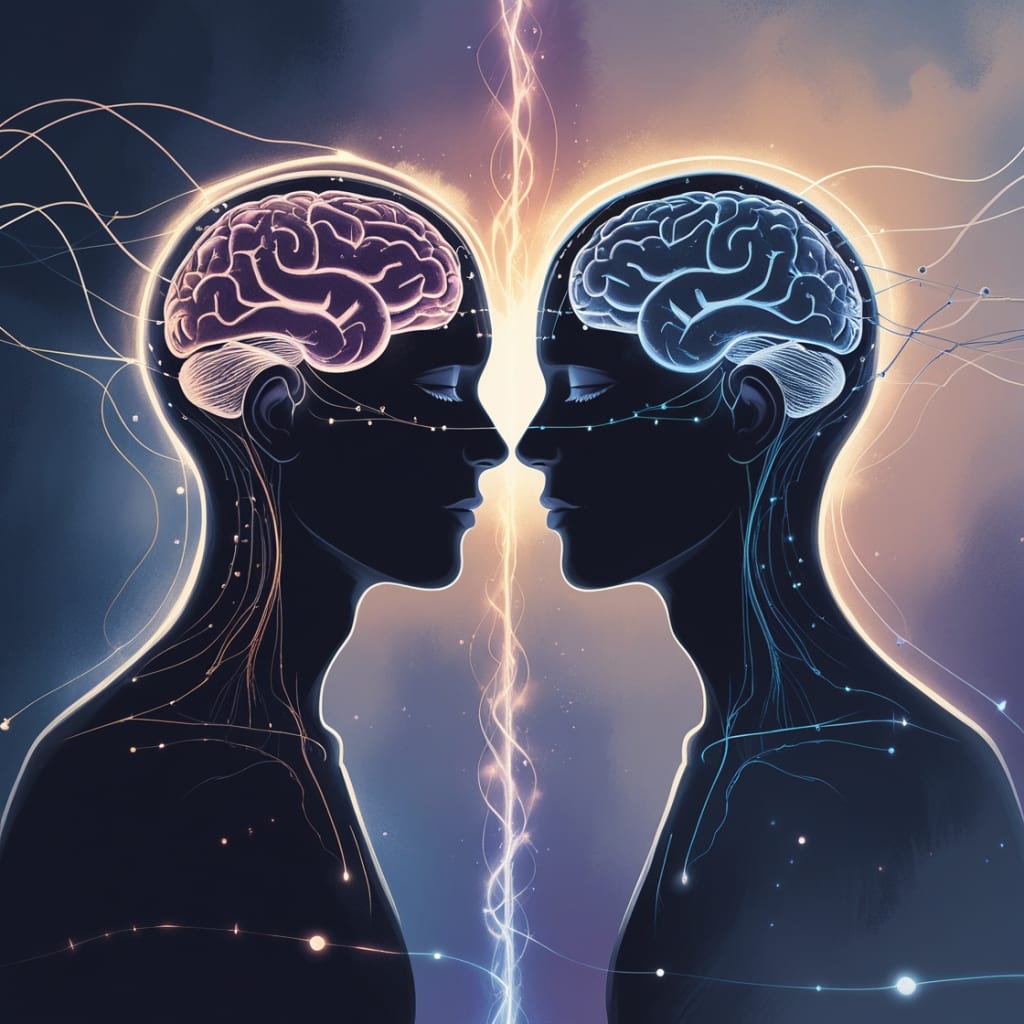
Attraction, to many, is a mystery — a silent force that draws two people together, often without clear logic or reason. Is it chemistry? A look? A tone of voice? Or something deeper — something hidden within the folds of the mind?
For centuries, poets have romanticized it, artists have painted it, and philosophers have debated it. But today, psychologists and neuroscientists are digging beneath the surface to uncover what truly drives attraction. This is the story of those discoveries — told through science, emotion, and real human experience.
Chapter 1: The First Spark — Beyond Looks
When Rami met Ayesha at a university seminar on behavioral psychology, there was no dramatic music, no instant love story. But there was a glance — brief, intentional, electric.
“I don’t know what it was,” Rami recalled later, “something about her voice, her confidence... it pulled me in before I realized it.”
That’s where attraction begins for many people — in the subtle cues our brain processes in milliseconds. While popular culture often emphasizes physical appearance, psychology tells us there’s much more beneath the surface.
According to studies in evolutionary psychology, initial attraction is often triggered by facial symmetry, eye contact, and body language. But more than what someone looks like, it’s how they make us feel that leaves a lasting impression.
The dilation of pupils
A slight lean forward
A warm tone of voice
These tiny signals trigger neural responses that whisper, “This person is safe, interesting... maybe even special.”
And sometimes, the brain makes its decision before we're consciously aware.
Chapter 2: Familiarity and the Mirror Effect
As Rami and Ayesha began studying together more often, their attraction deepened — even though they were complete opposites in lifestyle and temperament. He was methodical, reserved. She was expressive, spontaneous.
Psychologists might say that what was at play here is the mere exposure effect — the phenomenon where people tend to develop a preference for things or people that they are exposed to repeatedly.
The more time Rami spent around Ayesha, the more familiar she became. But familiarity, in psychology, often goes hand-in-hand with another factor: similarity — or at least the perception of it.
In one study, participants rated others as more attractive when they shared common values, humor, or even mirrored their posture or expressions — a phenomenon known as “mirroring”. This unconscious mimicry builds comfort and rapport.
It wasn’t just her smile or his voice. Their conversations, their laughter, even the pauses between words began to sync. And as their brains mirrored each other, so did their emotional connection.
Chapter 3: Chemistry — The Role of Neurobiology
Attraction is not just psychological — it’s chemical.
When we feel drawn to someone, the brain releases a cocktail of neurotransmitters:
Dopamine: The “pleasure” hormone that creates feelings of reward and desire.
Oxytocin: Known as the “bonding” hormone, released during hugs, touch, and deep conversation.
Serotonin: Impacts mood, and often drops during the early phase of romantic attraction (explaining the “lovesick” feeling).
Adrenaline: Elevates heart rate and causes sweaty palms when someone we’re attracted to is nearby.
In short: our bodies betray us. Even when we try to hide attraction, biology reveals it.
Rami once told a friend, “I don’t even understand why I feel this drawn to her. I just do.”
And in truth, that’s not far off from what neuroscience suggests. Much of attraction is subconscious, influenced by everything from childhood attachments to scent preferences encoded in our genes.
Chapter 4: The Role of Personality and Vulnerability
Over time, the surface-level spark either fades or deepens — and it’s here where the real art of attraction begins.
Ayesha once opened up about her fear of public speaking. Despite her confident exterior, it was a deeply held insecurity. Rami, who had admired her poise, suddenly saw a more human, vulnerable side of her.
That moment changed everything.
Psychologists call this self-disclosure — the act of revealing personal thoughts or emotions. It builds intimacy. When done gradually and reciprocally, it strengthens attraction.
Studies show that couples who engage in meaningful conversation early on (not just small talk) report stronger long-term connection. It’s not the dates or the dinners that matter most — it’s the emotional bridges built through openness.
In that space of trust, attraction becomes attachment.
Chapter 5: Unseen Influences — Attachment Styles and Early Experience
What we’re attracted to is shaped not just by the present, but by the past — especially our earliest experiences of love and care.
Psychologist John Bowlby’s theory of attachment styles suggests that the way we connect with romantic partners often mirrors our childhood bonds:
Securely attached people tend to build trusting, stable relationships.
Anxiously attached individuals crave closeness but fear abandonment.
Avoidantly attached people may distance themselves emotionally.
Ayesha had grown up in a supportive household. Rami, on the other hand, had been raised in a home where affection was rare and achievements were everything.
When they argued or grew distant, these hidden patterns emerged. Ayesha would reach out. Rami would withdraw. It was not incompatibility — it was unconscious programming.
Attraction, after all, is not just about who we like. It’s also about what feels familiar, even if it’s not always healthy.
True connection often requires unlearning — not just loving someone, but learning how to be loved back.
Chapter 6: The Myth of “The One”
Many people grow up believing in soulmates — the idea that there's one perfect person meant for us. But psychology paints a different picture.
Attraction is not fixed. It’s influenced by timing, environment, shared experiences, and mutual growth. More than a spark, it’s a choice — one that must be renewed.
When Rami got a research opportunity abroad, the couple faced the challenge of distance. They doubted their connection, questioned their future.
But through honest communication, shared goals, and support, they stayed together. Their bond didn’t rely on fate — it relied on effort.
They learned that attraction is not about being flawless, but about being willing to grow together. It’s about listening, adapting, and choosing each other — again and again.
Conclusion: The Invisible Threads
Attraction may begin in a moment — a glance, a laugh, a shared interest — but its roots run deep. It’s a blend of biology and belief, science and soul. It’s messy, mysterious, and magnificently human.
In the end, the psychology behind the art of attraction teaches us that love is not just something that happens to us. It’s something we build, one moment, one connection, one choice at a time.
So the next time your heart races or your mind lingers on someone’s words, remember:
There’s a silent world behind that spark — a world where neurons fire, hormones swirl, childhood memories echo, and something timeless unfolds.
That is the art.
That is the science.
That is attraction.
About the Creator
FAROOQ HASSAN
Expert in "Content writting" in every language 100% human hand writting
Reader insights
Outstanding
Excellent work. Looking forward to reading more!
Top insights
Compelling and original writing
Creative use of language & vocab
Easy to read and follow
Well-structured & engaging content
Excellent storytelling
Original narrative & well developed characters
Expert insights and opinions
Arguments were carefully researched and presented
Eye opening
Niche topic & fresh perspectives
Heartfelt and relatable
The story invoked strong personal emotions
Masterful proofreading
Zero grammar & spelling mistakes
On-point and relevant
Writing reflected the title & theme
Keep reading
More stories from FAROOQ HASSAN and writers in Art and other communities.
The Art of Learning: A Journey Through Curiosity, Challenge, and Growth
Learning is often seen as a classroom-bound activity — a chalkboard, a teacher, a test. But learning, real learning, is far more than memorizing facts or passing exams. It’s a living, breathing journey — one that begins with curiosity, grows through challenge, and blossoms with growth.
By FAROOQ HASSAN6 months ago in Art
Why Strategic Branding Is Essential for Long-Term Business Growth
In today’s fast-paced digital environment, businesses face constant pressure to stand out. Consumers are exposed to endless choices every day, making attention harder to earn and trust harder to keep. While quality products and services are important, they are no longer the only factors that determine success. Strategic branding plays a key role in helping businesses grow steadily and remain relevant over time.
By Ayush Bagwari5 days ago in Art
Ida shaghoian and the Inner Geography of Painting
In contemporary painting, the most compelling work often resists easy definition. It lingers, unfolds, and asks the viewer to participate emotionally rather than observe from a distance. Ida shaghoian belongs to this tradition. Her paintings explore the fluid relationship between memory, feeling, and the natural world, creating spaces that feel both deeply personal and widely resonant. Through a refined balance of abstraction and suggestion, her work challenges conventional ideas of place, time, and perception.
By Ida Shaghoian6 days ago in Art



Comments (1)
Gorgeous