
The Legend of the Lantern Festival: How Kindness Lit Up China
From a lonely maid’s sorrow to a dazzling celebration of light, discover the ancient tale behind China’s beloved Lantern Festival.

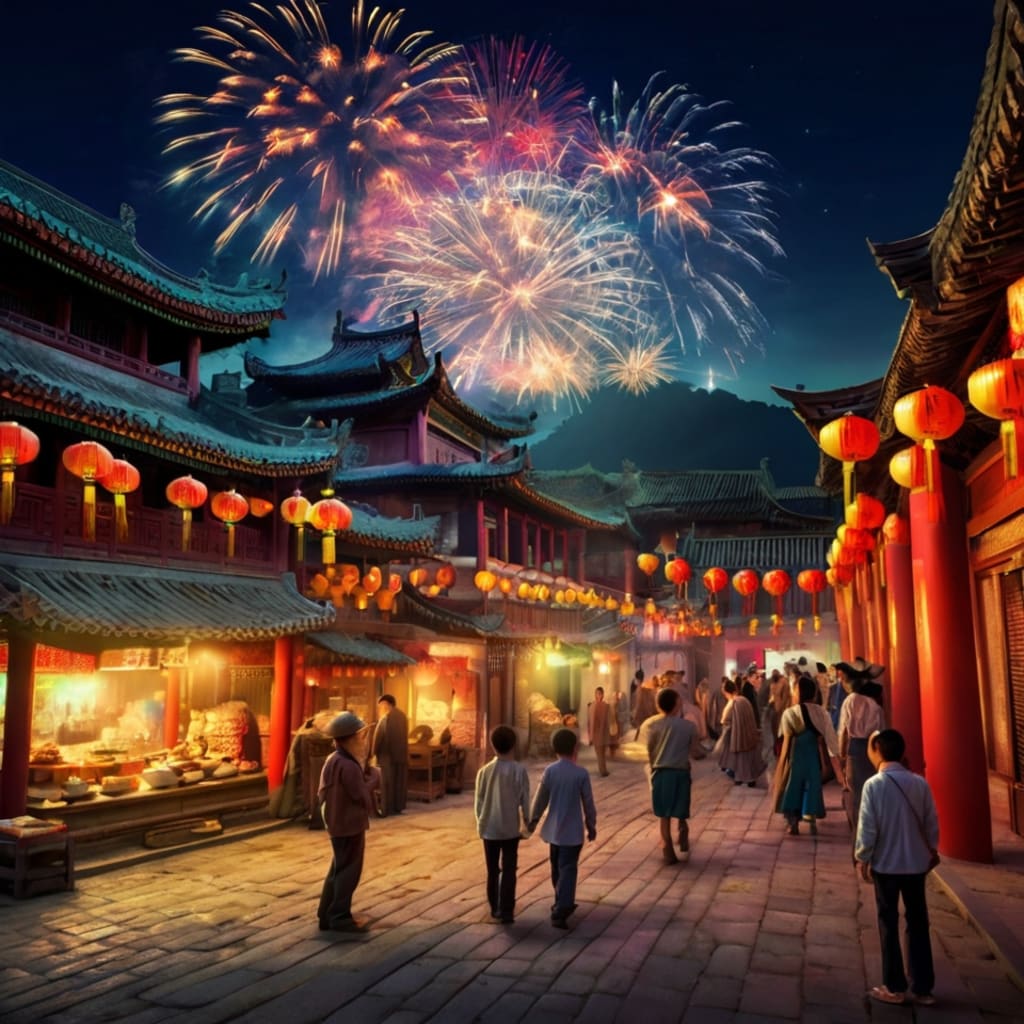
The Legend of the Lantern Festival
BY:Ubaid
Nearly two thousand years ago, during the reign of the Han Dynasty in Western China, Emperor Han Wudi had a minister who was admired for his kindness and cheerful personality. His name was Dongfang Shuo, and he often entertained the court with his wit and wisdom.
One particularly harsh winter, after days of heavy snowfall, the skies finally cleared. Dongfang decided to stroll through the imperial gardens, where the plum blossoms were beginning to bloom despite the cold. He picked a few flowers, thinking they might inspire the emperor’s next painting. As he wandered, he noticed a young maid standing by the well. Tears streamed down her face, and she looked ready to throw herself into the water.
Dongfang rushed over and stopped her just in time. “Why would you do such a thing?” he asked gently.
The girl, whose name was Lantern, told him her heartbreaking story. “I was chosen to serve here in the palace, but my family lives far away in a small village. I have not seen my parents or my younger sister since I was brought here. Every year when the Spring Festival arrives, I miss them so deeply that I feel life has no meaning. If I cannot serve them, if I cannot even see them, then why should I live?” She sobbed again and made another attempt to leap, but Dongfang firmly held her back.
His heart ached with compassion. “Listen, child,” he said. “Ending your life will only bring grief to your family. If you trust me, I will find a way to reunite you with them. I promise.”
The next day, Dongfang devised a clever plan. Disguising himself as a fortune teller, he set up a stall in the busy marketplace of Chang’an, the capital. To every customer who came, he delivered the same ominous prophecy:
“On the sixteenth day of the new year, a terrible fire will engulf the city of Chang’an.”
Whispers of doom spread like wildfire. Fear gripped the people, and soon the emperor himself heard the rumor. He immediately summoned the fortune teller to the palace—unaware it was Dongfang in disguise.
“Tell me,” demanded the emperor, “what is the meaning of this prophecy?”
“Your Majesty,” Dongfang replied solemnly, “last night I dreamed of a furious spirit. She vowed to set the city ablaze because no one offered her sweet dumplings during the festival. If nothing is done, disaster will strike on the fifteenth night of the new year.”
The emperor’s face paled with dread. Dongfang bowed and continued, “There is still hope. If Your Majesty commands the maid named Lantern to prepare dumplings as an offering, perhaps the spirit will be appeased. Furthermore, the people of the city should also make dumplings and share them with one another. To drive away evil, every household must light lanterns, set off fireworks, and decorate the streets with bright lights. Invite even the villagers from outside the city to join—let the entire land share in this act of devotion.”
The emperor, relieved to have a solution, agreed at once and ordered preparations to begin.
When the fifteenth night of the first lunar month arrived, Chang’an glowed with brilliance. Lanterns of every shape and size illuminated the streets, casting a magical light over the city. Firecrackers cracked in the night air, and people laughed as they wandered through the decorated avenues. Families and strangers alike shared steaming dumplings, which filled the city with warmth and joy.
Among the many visitors from distant villages were Lantern’s parents and younger sister. As they walked through the capital in awe, their eyes suddenly caught sight of enormous palace lanterns inscribed with their daughter’s name. Overcome with emotion, they cried out, “Lantern! Lantern!” Their voices carried through the crowd until, at last, they were reunited with their beloved daughter. Tears of joy replaced years of sorrow.
The night passed peacefully. No fire swept through the city, no spirit appeared. People smiled and whispered that perhaps the spirit had been too busy eating dumplings or admiring the beautiful lights to cause any harm.
The emperor, deeply pleased by the outcome and touched by the story of the maid Lantern, proclaimed that the fifteenth night of the new year would forever be celebrated as a festival. Every year, families would light lanterns, eat sweet dumplings, enjoy fireworks, and welcome visitors from afar.
The dumplings made by Lantern were so delicious that people named the holiday after her, calling it the Lantern Festival. Because her name had been written on the palace lights, the glowing decorations themselves came to be known as lanterns. In the years that followed, people crafted their own lanterns from colorful paper, shaping them into flowers, animals, and intricate designs. This art spread far beyond China, enchanting people across the world.
Even today, the Lantern Festival remains one of China’s most cherished traditions. On this day, families gather, friends reunite, and strangers walk side by side beneath the glow of countless lanterns. They pray for health, happiness, and peace in the coming year. What began as a minister’s compassion for a lonely maid became a cultural treasure that has endured for centuries.
The legend of Dongfang Shuo and the maid named Lantern reminds us of the power of kindness and imagination. A clever plan, born from empathy, transformed sorrow into joy and gave rise to a festival of light. And so, every year, on the fifteenth night of the lunar new year, cities still shine with lanterns—honoring not only tradition but also the hope that compassion can light even the darkest night.
About the Creator
2026 Commercial Space Design:How Fbierglass Sculpture Drives Traffic
Today, offline commercial spaces are facing continuous pressure. With e-commerce offering convenient and fast services, physical stores must showcase unique features to attract customers. In this context, fiberglass sculptures are no longer merely decorative items; they have become visual focal points in shopping malls, brand stores, pop-up shops, and mixed-use commercial projects, playing a crucial role in increasing foot traffic.
By Shenzhen Ruiheng Crafts4 days ago in Art
Why Strategic Branding Is Essential for Long-Term Business Growth
In today’s fast-paced digital environment, businesses face constant pressure to stand out. Consumers are exposed to endless choices every day, making attention harder to earn and trust harder to keep. While quality products and services are important, they are no longer the only factors that determine success. Strategic branding plays a key role in helping businesses grow steadily and remain relevant over time.
By Ayush Bagwari4 days ago in Art




Comments
There are no comments for this story
Be the first to respond and start the conversation.