
The Intelligence Uprising: How AI is Transforming Our World
Tracing the Journey from Simple Code to Thinking Machines
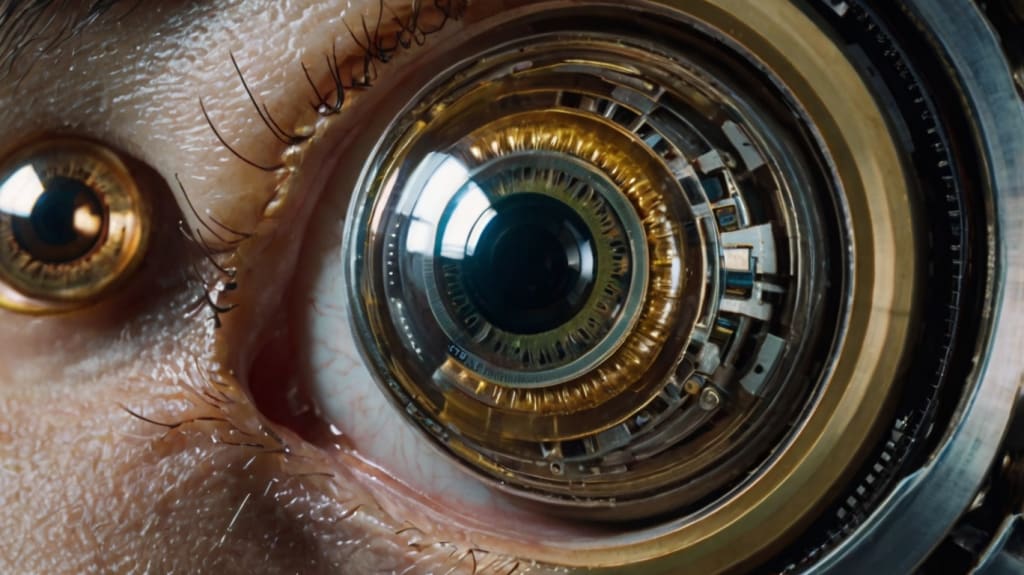
In just a few decades, artificial intelligence has gone from a niche academic concept to one of the most transformative forces shaping our future. What was once limited to science fiction is now embedded in our smartphones, our cars, our businesses—and increasingly, in the very fabric of our daily lives.
The rise of AI isn’t just a technological trend. It’s a new era, unfolding rapidly and redefining what it means to be human, intelligent, and connected in a digital world.
The Beginning: Humble Lines of Code
AI’s roots stretch back to the 1950s, when pioneers like Alan Turing, John McCarthy, and Marvin Minsky began theorizing machines that could think and learn like humans. Early attempts were slow, limited by computing power and data. The idea of “thinking machines” was intriguing, but reality lagged behind imagination.
Fast-forward to the 21st century, and those initial building blocks have exploded into vast neural networks, deep learning systems, and AI models capable of generating art, writing poetry, diagnosing diseases, and driving cars.
So, what changed?
The Turning Point: Data, Algorithms, and Raw Power
Three core forces have driven the AI revolution:
1. Data – The internet, smartphones, and digital sensors have created an explosion of information.
2. Algorithms – Breakthroughs in machine learning, especially deep learning, have enabled machines to interpret data with human-like accuracy.
3. Processing Power – GPUs and specialized AI chips have accelerated the ability to train massive models.
Together, these elements created a perfect storm. AI was no longer an experiment—it became a competitive advantage. Tech giants like Google, Amazon, Meta, and Microsoft poured billions into AI research, racing to dominate what they saw as the future of computing.
AI’s Expanding Footprint
Today, AI touches nearly every aspect of our lives:
Healthcare: AI helps detect cancers earlier, predict patient risks, and even assist in surgeries.
Finance: Algorithms monitor markets, detect fraud, and provide personalized investment advice.
Education: Intelligent tutoring systems adapt lessons in real-time to suit individual learning styles.
Transportation: Autonomous vehicles are navigating real roads, guided by AI-powered perception and decision-making.
Entertainment: Streaming platforms use AI to recommend what we watch. AI can even compose music and write movie scripts.
Perhaps the most public (and controversial) leap has been in generative AI—tools like ChatGPT, Midjourney, and DALL·E. These systems don’t just analyze data—they create. They blur the line between human and machine creativity, prompting new questions about originality, authorship, and the nature of intelligence.
The Power—and the Problem
With great power, of course, comes great responsibility—and growing concern.
As AI becomes more autonomous and influential, ethical dilemmas multiply:
Job Displacement: AI is automating tasks from customer service to software development, threatening millions of jobs.
Bias & Fairness: AI systems reflect the data they’re trained on, often amplifying existing inequalities or biases.
Surveillance: Facial recognition and predictive policing technologies raise serious privacy and civil liberties issues.
Control: Who governs AI? How do we ensure transparency and accountability in decisions made by machines?
These are not abstract debates. Already, AI has been implicated in wrongful arrests, discriminatory hiring practices, and market manipulation.
Governments, academics, and industry leaders are scrambling to develop frameworks for AI governance, but the technology is evolving faster than regulation can keep up.
The Global AI Race
Another major layer to AI’s rise is geopolitics. AI is no longer just about tech—it’s a strategic asset.
The U.S., China, and the EU are in a digital arms race, each investing heavily in AI research, infrastructure, and talent. Control of AI means economic dominance, military advantage, and global influence.
China’s state-driven AI push includes mass surveillance, smart cities, and autonomous weapons systems. Meanwhile, the U.S. remains a hub for innovation and entrepreneurship in AI, though talent shortages and ethical challenges persist.
The AI race isn’t just about winning—it’s about shaping the future in one image or another.
Beyond the Hype: What’s Next?
Despite the rapid progress, we are still far from Artificial General Intelligence (AGI)—a machine with human-like reasoning, self-awareness, and emotional understanding. But we are edging closer to AI systems that can mimic more complex cognitive functions.
The next few years will likely bring:
More human-machine collaboration in creative and technical fields.
Increased use of AI in climate modeling, drug discovery, and space exploration.
Deeper integration of AI into social media, e-commerce, and everyday decision-making.
And possibly… the first whispers of AI systems with emergent behaviors we didn’t predict.
Human + Machine: A Shared Future
One of the most important shifts in thinking is this: AI is not just a tool. It’s a partner. A collaborator. A force multiplier.
Rather than viewing AI as a threat or savior, we might do better to see it as a reflection of ourselves. It’s our code, our ethics, our creativity, and our bias that shape the systems we build.
The question isn’t just, “What can AI do?”
It’s “What kind of world do we want AI to help us create?”
---
Final Thoughts
The rise of artificial intelligence isn’t a distant horizon—it’s here, woven into the apps we use, the decisions we make, and the stories we tell. Its power is immense. Its potential is still unfolding.
We stand at a crossroads where our greatest asset is not the technology itself, but our collective wisdom in guiding it.
The machines are rising—not to replace us, but to challenge us to be more intentional, ethical, and visionary than ever before.
About the Creator
Keep reading
More stories from Iqbal hussain and writers in Art and other communities.
Roar and Whispers: A Tale of the Lion and the Child
In the heart of a vast and sunlit savannah, where the grasses danced with the wind and the trees whispered ancient stories, lived a mighty lion named Kovu. His mane was as golden as the morning sun, and his roar could shake the skies. All the animals respected him—not only for his strength but also for his wisdom. Kovu was the undisputed king of the jungle, a ruler with a heart as deep as the horizon.
By Iqbal hussain9 months ago in Art
John LoPinto on Travel as Perspective
Travel is often viewed as leisure or escape, but John LoPinto sees it as something more purposeful. For him, travel is a tool for perspective. By exploring new markets, cultures, and operating environments, leaders sharpen their strategic thinking and gain insights that are difficult to access from a distance. Exposure to unfamiliar contexts challenges assumptions and strengthens decision making.
By John LoPinto6 days ago in Art



Comments
There are no comments for this story
Be the first to respond and start the conversation.