
The Harmony of Physical and Digital Art:
A Dance of Two Worlds


By Declan Murphy-Doyle
In the ever-evolving landscape of art, the dichotomy between physical and digital mediums often sparks intense debate. As an artist deeply rooted in the traditions of physical painting while embracing the possibilities of digital art, I find that these two worlds are not adversaries, but rather harmonious partners that can coexist beautifully.
Growing up amidst the picturesque landscapes of Westport, County Mayo, my early artistic expressions were firmly planted in the physical world. The tactile sensation of brush on canvas, the smell of oil paints, and the physical engagement with my materials were all intrinsic to my creative process. These experiences are irreplaceable, forming a deep, sensory connection between the artist and the artwork.
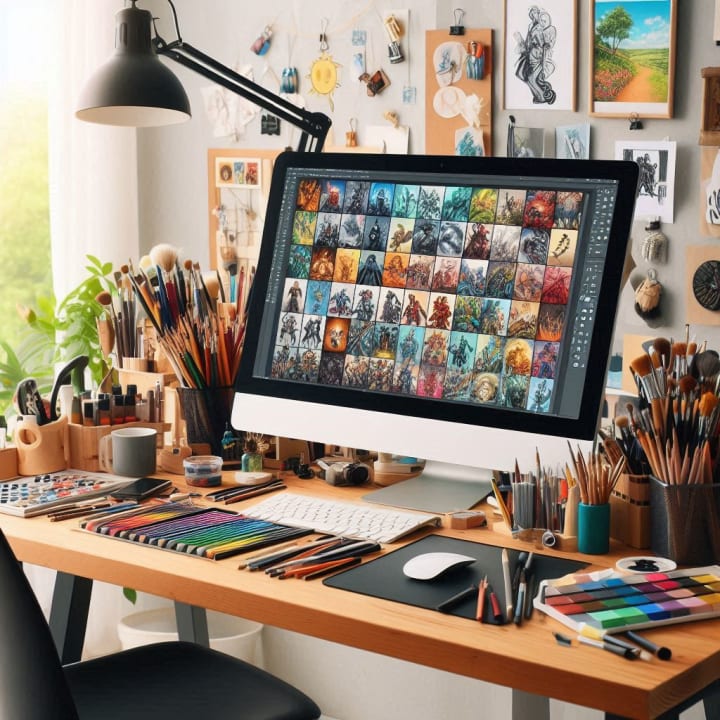
However, as technology advanced, I found myself increasingly curious about the digital realm. The ability to manipulate images, experiment with colours, and explore new techniques offered by digital tools was both exciting and liberating. But the transition was not without its challenges. The digital world can feel detached, lacking the tangible intimacy of physical art. It was here that I realized the key to successfully blending these mediums lies in the process itself.
Creating art, whether physical or digital, demands respect for the process. It requires an understanding of the tools at hand, a commitment to quality, and an unyielding dedication to one’s artistic vision. When approached with care and attention, both mediums can enhance each other, offering endless possibilities for innovation and expression.
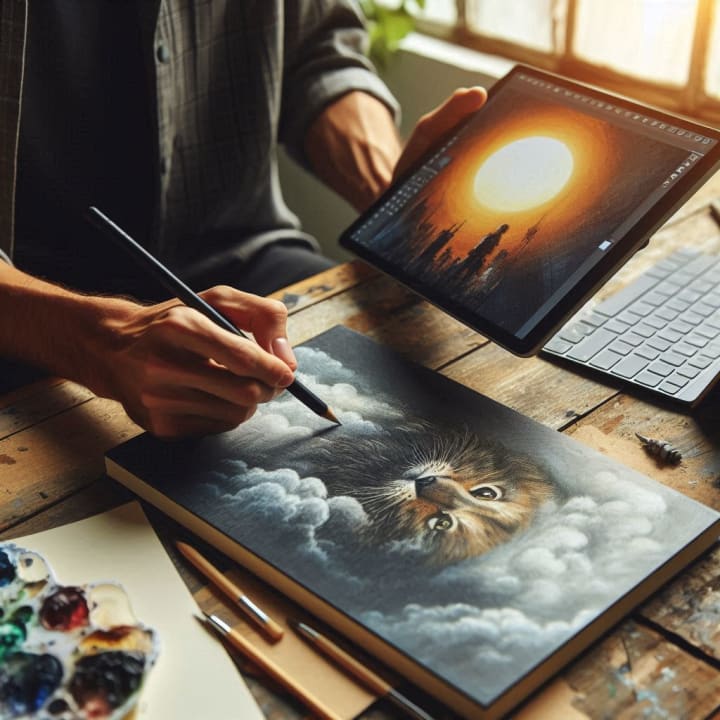
In my work, I often start with a physical sketch or painting. The initial creation process is deeply tactile, allowing me to connect with the piece on a fundamental level. Once the foundation is laid, I transition to digital tools, adding layers of complexity, experimenting with different effects, and refining the piece. This hybrid approach allows me to leverage the strengths of both mediums, creating artworks that are rich in texture, depth, and emotion.
The fusion of physical and digital art is not just about convenience or efficiency; it is about expanding the boundaries of creativity. Digital tools can amplify the reach of physical art, allowing for variations and adaptations that would be difficult to achieve otherwise. Conversely, physical elements can ground digital art, providing a tangible authenticity that resonates with viewers.
It is crucial, however, to maintain a balance. The creative process should never be rushed or compromised for the sake of convenience. Artists must stay true to their vision, ensuring that each piece, whether physical or digital, is a genuine expression of their artistic journey. Losing sight of this can lead to art that feels hollow and disconnected from its creator.
I invite fellow artists to explore the intersection of physical and digital art. Embrace the possibilities each medium offers, and allow them to inform and inspire one another. By respecting the creative process and staying true to our artistic roots, we can create works that are not only innovative but also deeply personal and meaningful.
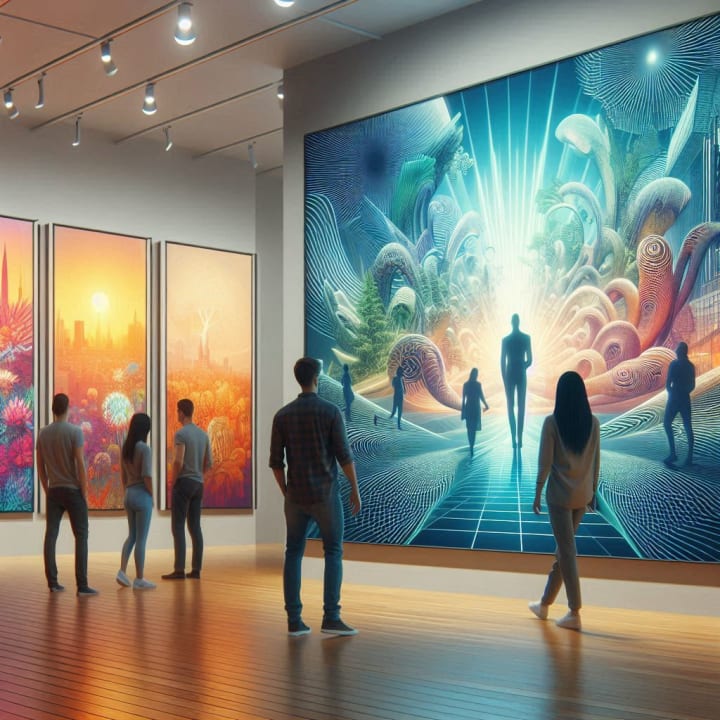
In a world where boundaries between the physical and digital continue to blur, let us celebrate the harmony of these two worlds. Together, they can elevate our art, enrich our experiences, and remind us why we create in the first place.
About the Creator
Declan Murphy-Doyle
Irish artist, creates one-of-a-kind, original artworks. From Westport, County Mayo, his unique style blends realism with mysticism.
Keep reading
More stories from writers in Art and other communities.
Arnold Clark Photography… The Pinnacle in High School Senior Portraits
Arnold Clark Photography sits on 24th Street in Omaha Nebraska, its front windows glowing softly long after most shops have gone dark. From the outside, it looks timeless with clean lines and framed portraits that hint at decades of stories. Inside, it is anything but stuck in the past.
By ArnoldClark Photography6 days ago in Art
Why John LoPinto Values Intentional Travel Over Speed and Volume
In a world that celebrates movement and accumulation, travel has increasingly become about speed and volume. More destinations, tighter itineraries, and constant motion are often seen as markers of experience. John LoPinto takes a different approach. He values intentional travel over rapid consumption, believing that depth of experience matters far more than distance covered. For him, travel is most meaningful when it creates understanding, not just memories.
By John LoPinto5 days ago in Art
🅼🅸🅳🅽🅸🅶🅷🆃 🆂🅽🅰🅲🅺🆂
"It's 10 in Tuscon! We all know what that means... It's Time for Midnight Snacks with your man, Gerald Gee! Ready to spend the night together? Me too! I'm full of snacks and can't wait to regurgitate them all back into your hungry ears. Crack a brew! Pop some corn! Anything to get ready for one hell of a show where the talk maybe cheap but the words cut deep...
By Lamar Wiggins5 days ago in Fiction


Comments
There are no comments for this story
Be the first to respond and start the conversation.