
The Beauty That Refuses to Be Framed: When Art Breaks the Canvas
Exploring the Limitless Evolution of Art Beyond Traditional Boundaries
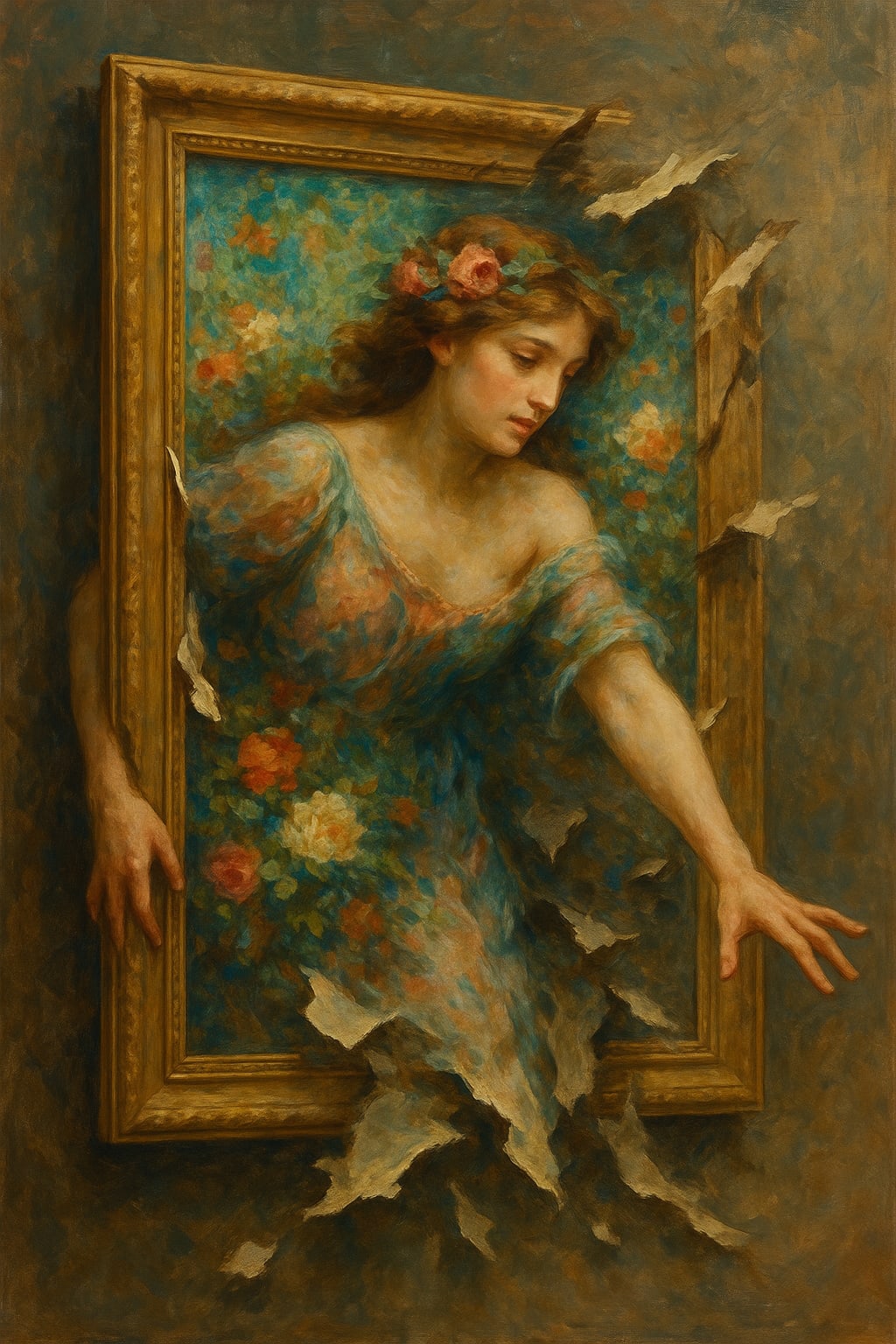
Art has long been confined—sometimes comfortably, sometimes controversially—within the four edges of a canvas. From Renaissance masterpieces to abstract expressionism, frames have signified not just boundaries of composition, but barriers of perception. But what happens when beauty outgrows its frame? When creativity spills beyond wood and linen, and refuses to be contained by gallery walls or aesthetic conventions?
We are now living in an era where art breaks the canvas—literally and metaphorically—and challenges the way we view beauty, authorship, and the very purpose of creation.
The Frame as a Symbol: Containment or Celebration?
Frames have traditionally been seen as tools of presentation, elevating artwork and protecting it. But they are also symbols of containment. They tell the viewer, “Look here—this is where the art begins and ends.” In this way, the frame becomes a limitation: it separates the world within from the world beyond.
Historically, artists worked within these frames both literally and ideologically. Portraits, landscapes, still lifes—all were bound to the dimensions of their medium. The “beauty” of art was expected to exist inside those borders. But this expectation also created a tension: real life is messy, expansive, and emotionally uncontainable. Eventually, artists began to rebel.
When Art Escapes: From Brushstroke to Immersion
The 20th century witnessed a bold shift. Movements like Dadaism, Surrealism, and Abstract Expressionism began to question not just what art is, but where it can be. Jackson Pollock laid canvases on the floor, letting the act of painting itself become performance. Yayoi Kusama filled entire rooms with dots, mirrors, and infinity. Banksy stenciled satirical images on public walls, challenging the gallery elite.
Each of these artists refused to be framed—not only in physical terms, but conceptually. Their work speaks to something deeper: that beauty, like truth, is ungovernable. It is not something that can always be isolated, sold, or hung on a wall.
Digital Disruption: The Canvas Becomes a Code
Today, the canvas has not just been broken—it’s been digitized, decentralized, and disintegrated. With the rise of digital art, NFTs, and immersive technologies, beauty now exists in forms that cannot be hung or held. Artists like Refik Anadol transform data into living sculptures. Beeple’s $69 million NFT sale proved that a JPEG can hold as much cultural value as an oil painting.
Virtual reality, augmented reality, and AI-generated art blur the line between creator and consumer, experience and exhibition. Here, the “frame” becomes fluid—sometimes an app, sometimes a headset, sometimes just a screen. And the beauty? It’s everywhere, nowhere, and always in motion.
Art in Protest: Breaking Frames for a Purpose
Some of the most powerful unframed beauty comes from resistance. Protest art, street murals, textile installations, performance demonstrations—these forms exist in public spaces, created not for sale, but for statement. Think of the murals painted after George Floyd’s murder, or the guerilla projections during protests in Iran. These pieces are ephemeral, uncommodified, and often erased. But their impact is lasting.
They are proof that art that refuses to be framed is art that demands to be felt, not just admired. It engages people emotionally, socially, and politically. It is not curated for comfort but constructed for confrontation.
The Personal Frame: How We Frame Beauty in Our Lives
But this conversation isn’t just about paint or pixels. It’s about how we frame beauty in our everyday lives. Social media filters frame our faces. Algorithms frame our tastes. Capitalism frames our consumption. We are constantly taught to frame ourselves in ways that are palatable, profitable, and polished.
To embrace the unframed is to embrace imperfection, vulnerability, and chaos. It is to let your story spill outside the box society gave you. It is to honor the beauty that doesn’t fit, doesn’t sell, and doesn’t go viral.
Conclusion: When the Frame Breaks, the Truth Emerges
When art breaks the canvas, we begin to see that beauty isn’t a product—it’s a process. It lives in the making, the breaking, and the becoming. It’s in the corners of the world that don’t get captured. It’s in graffiti on alley walls, in dance routines in metro stations, in children’s chalk drawings on sidewalks.
The next time you see a work of art, ask yourself: What would it look like unframed? What would it sound like, feel like, or mean if it existed beyond the expectations of its display?
Because maybe, just maybe, the most breathtaking beauty is the kind that refuses to be framed.
About the Creator
Idea hive
Article writer and enthusiast sharing insight and knowledge on nature, human behavior, technology, health and wellness, business, culture and society and personal development.
The Best Philosophy in the World Is the One You Can Live
Ask ten philosophers what the best philosophy in the world is, and you will receive at least ten different answers—possibly delivered with footnotes, counterarguments, and mild contempt for the other nine. This disagreement is not a flaw of philosophy; it is its essence. Philosophy was never meant to be a universal prescription handed down like a rulebook. It exists to help human beings live better lives. By that standard, the best philosophy in the world is not the most elegant or complex—it is the one that can be lived.
By Fred Bradfordabout 12 hours ago in Art


Comments
There are no comments for this story
Be the first to respond and start the conversation.