
The Art of Healing
Finding Strength, Color, and Peace Through Brokenness

The Art of Healing: Finding Strength, Color, and Peace Through Brokenness
The first thing Alina noticed when she returned to her childhood home was how still everything was. Dust had settled on the windowsills, the scent of old books lingered in the hallway, and the walls—once bright and full of family portraits—now looked tired, like they had seen too much.
Her mother had passed six months ago, and the house had been left untouched since. Her father had retreated into silence, and her siblings had moved abroad. But Alina came back—not just to sort through memories, but to find something she had lost along the way.
Her hands, once steady with a paintbrush, hadn’t touched a canvas in almost two years. The accident had taken more than just her mobility for a time—it had stolen her confidence, her voice, and the joy she once found in color. Even though her physical scars had faded, the emotional ones still felt raw.
On her first night back, she found her mother’s art room locked. The key hung silently on a rusted nail near the kitchen window, as if waiting for her.
She turned it slowly, the creak of the door greeting her like an old friend.
The room was just as she remembered. Canvases stacked along the walls, dried paint on the floorboards, brushes standing upright in jam jars. Her mother had been an art teacher—gentle, patient, always encouraging her to “paint what hurts, so you can heal it.”
Alina sat down on the stool her mother once used and stared at the blank canvas. The silence in the room was deafening. She closed her eyes and whispered, “Show me how to begin again.”
The next morning, she opened the window, letting the cold breeze mix with the scent of turpentine and wood. She found her old paint set—dried, but usable. As her hands moved instinctively, something inside her stirred.
She didn’t paint flowers or portraits. Instead, she painted what she felt—fractures, storms, and shadows. Each stroke was jagged, uncertain, but honest.
Days turned into weeks.
Her routine became simple: paint, cry, breathe, repeat.
Sometimes she’d throw a canvas away, frustrated at how broken it all looked. But slowly, she began to see patterns in the mess—shapes that resembled healing, not hurt. The pain didn’t disappear, but it softened, like the blending of two harsh colors into a gentle gradient.
One afternoon, while sorting through her mother’s sketchbooks, Alina found a journal hidden beneath a stack of unfinished paintings. Inside were letters addressed to her.
Each one was filled with words of encouragement, reminders of her strength, and stories of her mother’s own struggles—how she too had faced grief, how art saved her again and again.
One line stood out:
“You’re not broken, my love. You’re becoming.”
Tears fell freely then—not from pain, but from something else. Relief. Connection. A sense of being seen, even from beyond.
The next day, Alina painted something different.
A golden light breaking through a crack in the canvas.
Then a woman, seated with a brush, surrounded by colors she once feared.
Then a garden blooming through concrete.
With each painting, a piece of herself returned—not who she was before, but someone stronger, someone softer, someone more whole.
Neighbors began to notice. Some would stop by with flowers, others just to see the art. They said the house no longer felt empty—it was alive again.
An old friend, Sameer, who had once shared her love of painting, returned from the city to visit. He stood quietly in the studio, taking in her work.
“You’re not just healing yourself,” he said. “You’re helping others feel too.”
She looked at her walls, now filled with color and story, and realized he was right. Pain had taught her how to see beauty more clearly. Loss had taught her the value of presence. And art—art had become her way of honoring it all.
Sameer suggested an exhibit in the town’s old library. Hesitant at first, Alina agreed. She named it “Becoming: The Art of Healing.”
People from all over came—young and old, strangers and neighbors. Many wept. Some smiled. A few left notes behind:
“Your painting reminded me of my mother.”
“Thank you for showing that pain can become beauty.”
“I haven’t painted in 10 years. Tomorrow, I’ll begin again.”
As the exhibition ended, Alina stood quietly near the entrance. She didn’t need applause. She didn’t need recognition. What she had needed, she had already found—peace.
She turned to Sameer and smiled.
“Art didn’t save me,” she said. “But it walked with me through the dark.”
And for the first time in years, Alina knew—she was home. Not in the house, but within herself.
About the Creator
Keep reading
More stories from Muhammad Ansar and writers in Art and other communities.
Colors of the Soul
Colors of the Soul: Unveiling the Hidden Shades of the Human Heart Amara always believed she saw the world differently. While others talked about blue skies, green fields, and gray rain, she spoke of emotions in colors. To her, sorrow was a smoky indigo, love was a burnished gold, and hope shimmered in soft hues of lilac. Since childhood, she had sensed people’s feelings not through words but through the colors that surrounded them—an aura only she could see.
By Muhammad Ansar8 months ago in Art
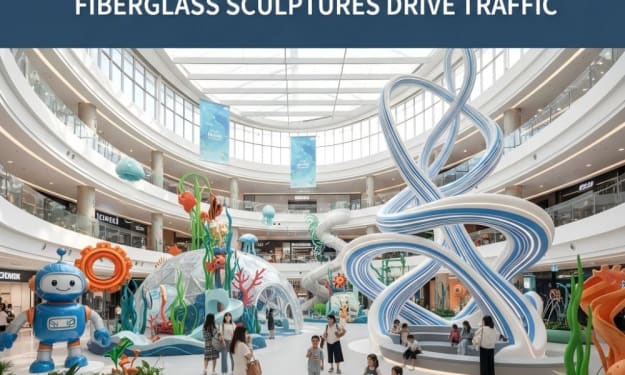
2026 Commercial Space Design:How Fbierglass Sculpture Drives Traffic
Today, offline commercial spaces are facing continuous pressure. With e-commerce offering convenient and fast services, physical stores must showcase unique features to attract customers. In this context, fiberglass sculptures are no longer merely decorative items; they have become visual focal points in shopping malls, brand stores, pop-up shops, and mixed-use commercial projects, playing a crucial role in increasing foot traffic.
By Shenzhen Ruiheng Crafts2 days ago in Art
Why Strategic Branding Is Essential for Long-Term Business Growth
In today’s fast-paced digital environment, businesses face constant pressure to stand out. Consumers are exposed to endless choices every day, making attention harder to earn and trust harder to keep. While quality products and services are important, they are no longer the only factors that determine success. Strategic branding plays a key role in helping businesses grow steadily and remain relevant over time.
By Ayush Bagwari2 days ago in Art



Comments (1)
Nice