
Survival First Aid: Be Prepared for Any Situation
Essential First Aid Techniques for Outdoor, Urban, and Disaster Scenarios

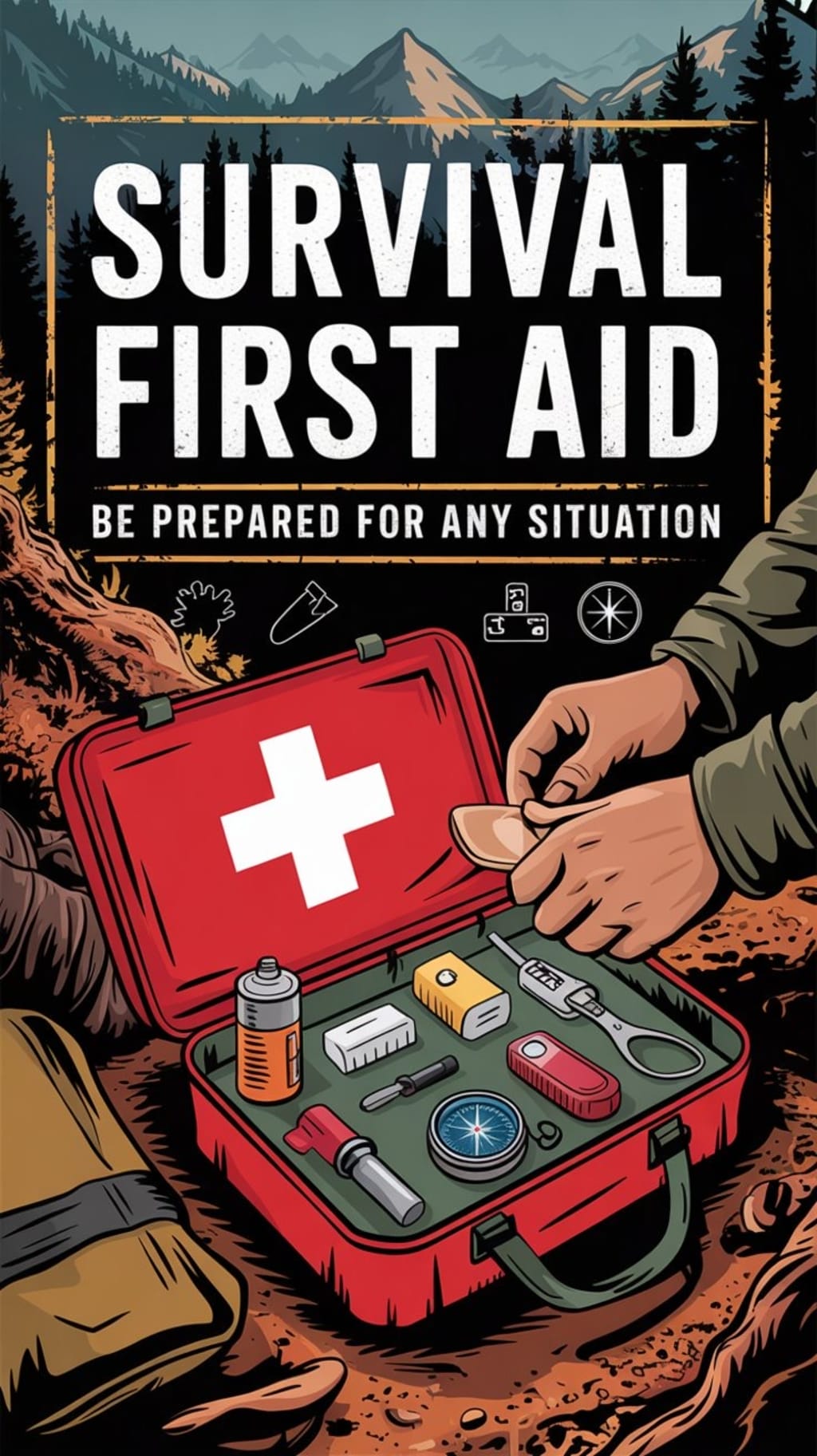
The Introduction Being prepared is not just a skill; it is a necessity in a world where emergencies
can strike at any time. Whether you’re hiking in the wilderness, traveling to remote areas, or
facing unexpected disasters, knowing how to administer first aid can mean the difference
between life and death. The definitive guide to handling medical emergencies when
professional assistance is far away is Survival First Aid: Be Prepared for Any Situation. This
book is designed for everyone—beginners, outdoor enthusiasts, travelers, and families—who
want to learn practical, life-saving skills. You don’t need to be a medical professional to save a
life; you just need the right knowledge and a calm mind. We'll break down essential first aid
techniques into easy-to-follow steps on the following pages. This guide will give you the
confidence to respond quickly and effectively in any crisis, whether you need to treat burns,
fractures, or snake bites. Keep in mind that survival necessitates a combination of preparation,
knowledge, and the capacity to maintain composure in the face of adversity. Let's get started on
your path to becoming an expert in first aid.
What is Survival First Aid?
When someone is injured or suddenly ill, survival first aid is providing immediate care,
especially in situations where medical assistance is unavailable. Stabilizing the patient until
professional assistance arrives or until you can transport them to a hospital is the goal. The goal
is to prevent the condition from worsening and to promote recovery.
You might not have access to cutting-edge medical equipment or medications in survival
situations. To provide effective care, it is essential to acquire knowledge of basic supplies and
natural resources. Making quick decisions, improvising when necessary, and remaining calm
under pressure are all part of survival first aid.
The Crucial Role of preparation Home, the road, or the wilderness, emergencies can occur
anywhere. Having the knowledge and tools necessary to handle unexpected circumstances is
part of being prepared. A well-stocked first aid kit is essential, but it’s equally important to know
how to use the items in it.
Learning CPR, wound care, and how to deal with shock are all part of preparation. These
abilities can save lives, especially in remote locations where assistance may not arrive for hours
or even days. By taking the time to learn and practice survival first aid, you can protect yourself
and your loved ones in times of crisis.
How to make a Survival first aid kit
A good first aid kit is the foundation of survival first aid. Here’s what your kit should include:
Bandages, gauze, and adhesive tape are used to stop bleeding and cover wounds.To clean
wounds and prevent infection, use antiseptic ointments and wipes. For cutting bandages,
removing splinters, and self-protection, use scissors, tweezers, and gloves.
"Pain relievers" and
"antihistamines": These are used to control pain and allergic reactions.
Emergency Blanket and flashlight
For staying warm and signaling for help.
Customize your kit based on your needs. For example, if you’re hiking in an area with snakes,
include a snake bite kit. Add additional supplies like a multi-tool and water purification tablets if
you are traveling to a remote area.
Evaluating the Situation
When an emergency happens, the first step is to assess the situation. Maintain your
composure and search for any threats, such as wild animals, fire, or unstable terrain. Don't put
yourself in danger; instead, put your safety first. Next, assess the person's health. Are they
aware of it? Breathing? Bleeding? Shake their shoulders gently and inquire about their
well-being if they are unconscious. Call for assistance as soon as possible and begin CPR if
necessary if they do not respond. Concentrate first on stopping the bleeding if the person is
bleeding heavily. Make sure their airways are clear if they are having difficulty breathing.
Remember, the goal is to stabilize the person until professional help arrives.
Treating wound and cuts
In survival situations, cuts and wounds are common. How to treat them is as follows: 1. Clean
the wound: Wipe it clean with antiseptic pads or clean water. 2. Stop the bleeding by applying
pressure with a clean cloth or bandage to the wound. 3.Cover the wound: Use a sterile dressing
or bandage to protect it from infection.
Seek medical attention right away if the wound is deep or won't stop bleeding. In the interim,
maintain pressure and elevate the injured area whenever you can.
Dealing with Burns
Burns can be painful and dangerous if not treated properly. What you need to do is: 1.Cool the
burn: For 10-15 minutes, run cool water over the burn. Ice shouldn't be used because it can hurt
the skin. 2.Cover the burn: Use a non-stick bandage or clean cloth to protect the area.
3.Manage pain: If the person needs it, give them painkillers. Get medical attention right away if
you have severe burns that affect large areas or deep tissue. Applying butter or ointments or
popping blisters can make infection more likely.
Dealing with Sprain and Fractures
Fractures (bones that have broken) and sprains (ligaments that have stretched or torn) require
careful handling: 1.Immobilize the area: Apply a splint or sling to the injured area to prevent it
from moving. 2. Applying a cold pack or cloth to the area will help reduce swelling.3. Elevate
the injury:To lessen swelling, keep the injured area elevated. Don't move the person if you think
they have a spinal injury. Hold out for professional assistance to arrive.
Controlling Shocks
Shock is a life-threatening condition that can occur after severe injury or trauma. Symptoms
include pale skin, rapid breathing, and confusion. Here's how you can help: 1.Lay the person
down:Unless they have a head or spinal injury, keep them flat on their back. 2.Elevate their legs:
To increase blood flow, raise their legs about 12 inches. 3.Keep them warm: Cover them with a
blanket to prevent hypothermia.
Stay with the person and reassure them until help arrives.
CPR and Rescue Breathing
When a person stops breathing or when their heart stops, CPR (Cardiopulmonary
Resuscitation) is used. Here's how to go about it:1. Shake the individual and yell,
"Are you
okay?" to check for responsiveness. 2. Call for assistance: If they do not respond, dial 911 for
immediate assistance. 3.Start chest compressions by pressing hard and quickly in the middle of
the chest (between 100 and 120 times per minute). 4.Give rescue breaths:If trained, give two
breaths after every 30 compressions.
Continue CPR until the person starts breathing or help arrives.
Special Circumstances
*snakes Bites* Keep the person calm, immobilize the bitten area, and seek help immediately.
*Heat Strokes* Transfer the individual to a cool location, hydrate them, and cover them with
cool cloths- Hypothermia: Use blankets and warm beverages to gradually warm the individual.
Keeping infection
Out Infections can complicate injuries and delay healing. To keep infections at bay: Before
treating a wound, always wash your hands or use hand sanitizer. Dress wounds with clean or
sterile materials.
- Watch for signs of infection (redness, swelling, pus) and seek medical help if
needed.
Keeping Your Cool Under Pressure In emergencies, staying calm is crucial. Focus on the task
at hand, take deep breaths, and put the most serious injuries first. The injured person can be
reassured and assisted in remaining stable by your calm demeanor.
---
Developing first aid skills
It's all about practice! Try role-playing emergencies with family or friends. Take a first aid
course to boost your self-esteem. Make sure your first aid kit is always up to date and checked
regularly.
Everyone thought to acquire the ability to perform survival first aid. You can safeguard yourself
and those you care about in times of emergency by being prepared. Keep in mind that the
objective is not to replace professional medical care but rather to provide immediate assistance
when it is most needed.
1.Taking Care of Animal Sting and Bites- Clean the wound with soap and water.
- Apply a cold pack to reduce swelling.
- Watch for signs of infection or allergic reactions.
2.handling Allergic reaction
- If an EpiPen (epinephrine auto-injector) is available, use it.
- Administer antihistamines for mild
reactions.
- Seek medical help for severe reactions (anaphylaxis).
3.Responding to Poisoning- If you can, identify the poison.
- For assistance, contact a poison
control center. Unless instructed, do not induce vomiting.4.Managing Diabetes related
Emergencies.In the event of hypoglycemia, or low blood sugar, take glucose or sugar tablets.
-
For high blood sugar (hyperglycemia), seek medical help.
5.Taking Care of Eye injuries - Wash the eye for at least 15 minutes with clean water.
- Cover
the eye with a sterile dressing.
- In case of serious injuries, seek medical attention.6.handling head injuries
- Keep the person still and monitor their breathing.
- Swelling can be reduced by applying a cold pack.
- In the event of unconsciousness or severe
symptoms, seek medical attention.7.How to Handle Chest pain - Order the individual to
recline.
- Assist them with taking the medication they have been given, such as nitroglycerin-
Call for emergency help immediately.
8.Treating Nosebleeding
- Make the individual sit straight up and slightly lean forward.
- For 10 to 15 minutes, pinch the
nose's soft part.
- If the bleeding does not stop, see a doctor. 9.Managing Seizures**
Get rid of anything that could be harmful.
- To prevent the person from choking, place them on
their side. They should not be restrained or given anything to eat.10.Handling Drowning
Incidents
Carefully remove the individual from the water. Check for breathing and start CPR if necessary.
About the Creator
Samiullah
I am Dr.Samiullah from Pakistan and i am also a Professional Writter and Article Writter Hope u will like my article and stories thank u
My Sweet-Thang: Loving You in the Quiet Spaces
Love is often described through grand gestures—flowers, promises, and dramatic declarations. But real love, the kind that settles deep into the bones, rarely announces itself loudly. It arrives softly. It stays quietly. And somehow, it changes everything. That is what you are to me, my sweet-thang. You are not the noise in my life. You are the calm that follows it. In a world that constantly demands attention, speed, and perfection, you exist like a pause—a breath I didn’t know I was holding until you showed me how to release it. Loving you does not feel rushed or forced. It feels natural, like something my heart always knew how to do, even before it knew you. What makes you special isn’t something that can be easily explained. It’s in the way you listen—not just to my words, but to the silences between them. It’s in how you notice the small shifts in my mood before I even understand them myself. It’s in the comfort you offer without being asked, and the patience you show without keeping score. You love me in ways that don’t need proof. With you, I’ve learned that love doesn’t have to be loud to be powerful. It can exist in shared glances, late-night conversations, and the simple reassurance of knowing someone is there. Even when nothing extraordinary is happening, being with you feels enough. That’s a rare thing. There are days when the world feels heavy—when responsibilities pile up, when doubts creep in, when exhaustion settles deeper than sleep can fix. On those days, you don’t try to fix me. You don’t rush me toward positivity or pretend everything is fine. You sit with me in the discomfort, and somehow, that makes it lighter. That’s love in its truest form. I don’t love you because you complete me. I love you because you understand me. You allow me to be myself—unpolished, uncertain, and still worthy of care. With you, I don’t feel the need to perform or pretend. I can simply exist, and that existence is met with warmth instead of judgment. You’ve shown me that love is not about possession, but presence. Being with you has changed the way I see affection. It’s no longer about constant excitement or dramatic highs. It’s about stability. About choosing each other, again and again, even on ordinary days. Especially on ordinary days. Because ordinary days are where life truly happens. My sweet-thang, you are the kind of love that doesn’t fade when the excitement settles. You are the kind that deepens. The kind that grows roots. The kind that feels safe enough to last. I don’t know what the future holds. I don’t pretend love guarantees certainty or perfection. But I do know this: loving you feels honest. It feels real. And in a world full of temporary things, that reality is rare and precious. You are not just someone I love. You are someone I choose. Every day. In quiet ways. With a steady heart. And that, my sweet-thang, is everything.
By Zahid Hussainabout 17 hours ago in Art


Comments
There are no comments for this story
Be the first to respond and start the conversation.