
Shaun Greenwald's Scenic Design Tips: Crafting Spaces that Tell Stories
Transforming Narratives into Spaces: Shaun Greenwald’s Scenic Design Mastery


Shaun Greenwald, a celebrated scenic designer, has built a career around transforming physical spaces into immersive, narrative-driven environments. With experience spanning theater and film, Greenwald’s expertise lies in creating sets that don’t merely support the story—they are an integral part of it. Known for his innovative use of materials, spatial dynamics, and his commitment to collaboration, Greenwald offers invaluable advice for aspiring scenic designers who seek to bring depth and authenticity to their work. Here, we delve into his key insights and design principles that help elevate storytelling on stage and screen.
1. Embrace the Power of Research and Concept Development
According to Greenwald, every successful design begins with thorough research and a clear concept. The initial stages of any project should involve understanding the story’s themes, historical context, and emotional undertones. “When I start a new project, I immerse myself in the world of the story,” Greenwald explains. “I research the setting, era, and cultural nuances, which help me conceptualize a design that’s grounded in reality but tailored to the narrative’s needs.” This attention to detail allows him to create environments that feel authentic and resonate with the audience.
Greenwald encourages designers to explore beyond the obvious, looking for unique angles that can add depth to the setting. For instance, a Victorian-era home might incorporate worn textures or slight asymmetry to subtly hint at family conflicts or social unrest within the story. By bringing these layered details into the set, Greenwald’s designs become rich with meaning and atmosphere, creating spaces that audiences can feel as well as see.
2. Use Spatial Dynamics to Guide Emotion
Greenwald’s approach to scenic design often involves manipulating space to influence how the audience feels about a scene. He suggests thinking about how the layout and physicality of a space can mirror the emotional tone of the story. For example, a cramped, closed-in set can evoke feelings of tension or confinement, while open, expansive spaces can represent freedom or possibility. “Think of space as an extension of the characters’ internal world,” he advises. “The arrangement and structure of a set can speak volumes about the mood and tone.”
By using spatial dynamics effectively, Greenwald’s sets go beyond being mere backdrops; they become dynamic storytelling elements that engage the audience emotionally. He recommends experimenting with vertical space, entrances, exits, and sightlines to add layers of meaning. By creating pathways that characters can interact with in meaningful ways, scenic designers can subtly guide the audience’s focus and amplify the emotional impact of each scene.
3. Select Materials that Reflect Theme and Texture
Material selection is a critical part of Greenwald’s design process. Each material he uses is chosen not only for aesthetic appeal but also for its ability to convey a certain feeling or atmosphere. “A set is as much about texture as it is about color and shape,” he explains. “The tactile qualities of a material can bring another dimension to the storytelling.” Greenwald advises designers to think carefully about how textures and finishes impact the audience’s perception of a space. For instance, rough wood and worn fabrics can evoke a sense of history or hardship, while polished metals and sleek surfaces can represent wealth or modernity.
In addition to traditional materials like wood, metal, and fabric, Greenwald encourages designers to experiment with less conventional choices. Incorporating elements like translucent panels, reflective surfaces, or distressed finishes can add layers of complexity to a set. “Don’t be afraid to push boundaries with your material choices,” he says. “Innovation often comes from the unexpected, and unique materials can make a design memorable and impactful.”
4. Collaborate with the Creative Team
Greenwald emphasizes that scenic design is inherently collaborative. Working closely with directors, lighting designers, costume designers, and other creatives is essential to developing a cohesive visual language for a production. “The set is only one part of the overall story,” Greenwald points out. “By collaborating, you can ensure that all elements—from costumes to lighting to props—work in harmony to support the narrative.”
He advises designers to approach collaboration with an open mind and a willingness to adapt. While every creative has a unique vision, the most successful productions are those in which the entire team aligns on a shared goal. “Scenic design isn’t about imposing your vision; it’s about enhancing the director’s vision,” Greenwald says. He suggests holding regular meetings, sharing sketches and ideas openly, and remaining receptive to feedback. This collaborative mindset not only strengthens the design but also fosters a more dynamic and supportive creative environment.
5. Harness the Potential of Technology
As an innovator in his field, Greenwald has embraced modern technology to expand the boundaries of scenic design. Projection mapping, 3D modeling, and augmented reality are just a few tools he uses to add new layers to his sets. He encourages designers to familiarize themselves with these tools, as they offer exciting opportunities for creativity and flexibility. “Technology allows us to achieve things that were once impossible,” he explains. “It can bring an added layer of depth, create immersive environments, and adapt sets dynamically in real-time.”
However, Greenwald cautions against relying too heavily on technology. “Tech should enhance the story, not overshadow it,” he says. “Use it purposefully to support the design concept rather than distract from it.” His advice is to use technology as a tool to serve the narrative rather than as a focal point. Projection mapping, for instance, can be used to change scenes or convey movement without altering physical set pieces, creating an adaptable and engaging set that enhances the storyline.
6. Design for Audience Connection
For Shaun Greenwald, the ultimate goal of scenic design is to connect with the audience on an emotional level. He advises designers to always keep the audience in mind when making design choices. “Ask yourself: How will this set make the audience feel? Will it help them engage with the characters or understand the story more deeply?” This audience-centered approach is central to Greenwald’s philosophy, guiding him as he crafts spaces that resonate on a personal level.
In particular, he recommends considering sightlines and stage perspective. Elements placed close to the audience, for example, can create an intimate feel, while more distant scenery can give a sense of grandeur or detachment. Lighting, too, plays a role in creating connection; Greenwald often collaborates with lighting designers to create nuanced, mood-driven environments that enhance the audience’s emotional experience.
7. Refine and Reassess
Greenwald believes in the importance of refinement and reassessment, even as the set takes shape. He recommends that designers revisit their initial concepts and adjust them based on practical considerations and feedback. “The design process is iterative,” he explains. “It’s essential to stay flexible and open to change, ensuring that the final result serves the story effectively.”
This commitment to refinement allows Greenwald’s sets to remain true to the narrative while evolving through the production process. He suggests that designers approach each project with humility and curiosity, allowing themselves to learn and grow with each experience.
Final Thoughts
Shaun Greenwald’s advice reflects his commitment to scenic design as a powerful storytelling tool. By focusing on research, spatial dynamics, materials, collaboration, technology, audience connection, and refinement, Greenwald’s approach provides a comprehensive blueprint for creating immersive, meaningful sets. His guidance encourages scenic designers to think deeply about their work and reminds them that every detail, from texture to sightline, plays a role in shaping a memorable audience experience. Through his insights, Greenwald continues to inspire designers to craft spaces that resonate, captivate, and transport.
About the Creator
Shaun Greenwald
Shaun Greenwald, a visionary artist from Los Angeles, captivates audiences worldwide with his innovative and thought-provoking creations.
Keep reading
More stories from Shaun Greenwald and writers in Art and other communities.
Unveiling the Vision: The Artistic Odyssey of Shaun Greenwald
Shaun Greenwald is not what one would call an artist. He is more of a visionary who has defied all norms to make sure that whatever message he is trying to convey is passed across, touching at least one person in some part of the world. Creativity, inventiveness, and pure skill in one have tallied him amongst the leading persons in the current art setup. Now, halfway through, Greenwald's life has been a testimony to change and limitless opportunity that human imagination can muster.
By Shaun Greenwald2 years ago in Art
Why Nietzsche Belongs in 2026
As the world moves toward 2026, it does not feel like a calm progression into the future—it feels like a collision. Rapid technological acceleration, cultural fragmentation, economic uncertainty, and a deep crisis of meaning define the modern condition. Traditional authorities are distrusted, ideologies compete aggressively, and individuals feel both empowered and exhausted by choice. In such a landscape, Friedrich Nietzsche’s philosophy emerges not as a comfortable guide, but as a necessary one. Unsettling, demanding, and brutally honest, Nietzsche may offer the most fitting philosophical framework for the year ahead.
By Fred Bradford7 days ago in Art
2026 Commercial Space Design:How Fbierglass Sculpture Drives Traffic
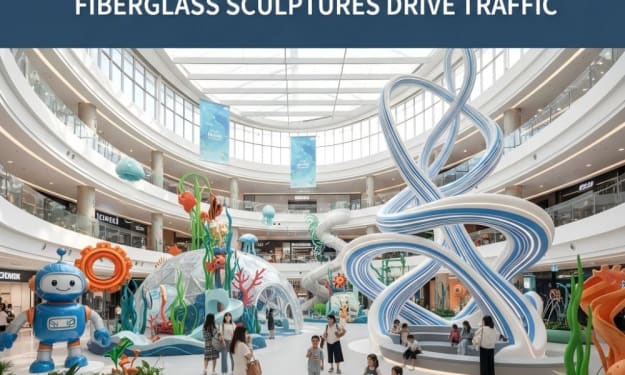
Today, offline commercial spaces are facing continuous pressure. With e-commerce offering convenient and fast services, physical stores must showcase unique features to attract customers. In this context, fiberglass sculptures are no longer merely decorative items; they have become visual focal points in shopping malls, brand stores, pop-up shops, and mixed-use commercial projects, playing a crucial role in increasing foot traffic.
By Shenzhen Ruiheng Crafts2 days ago in Art



Comments
There are no comments for this story
Be the first to respond and start the conversation.