

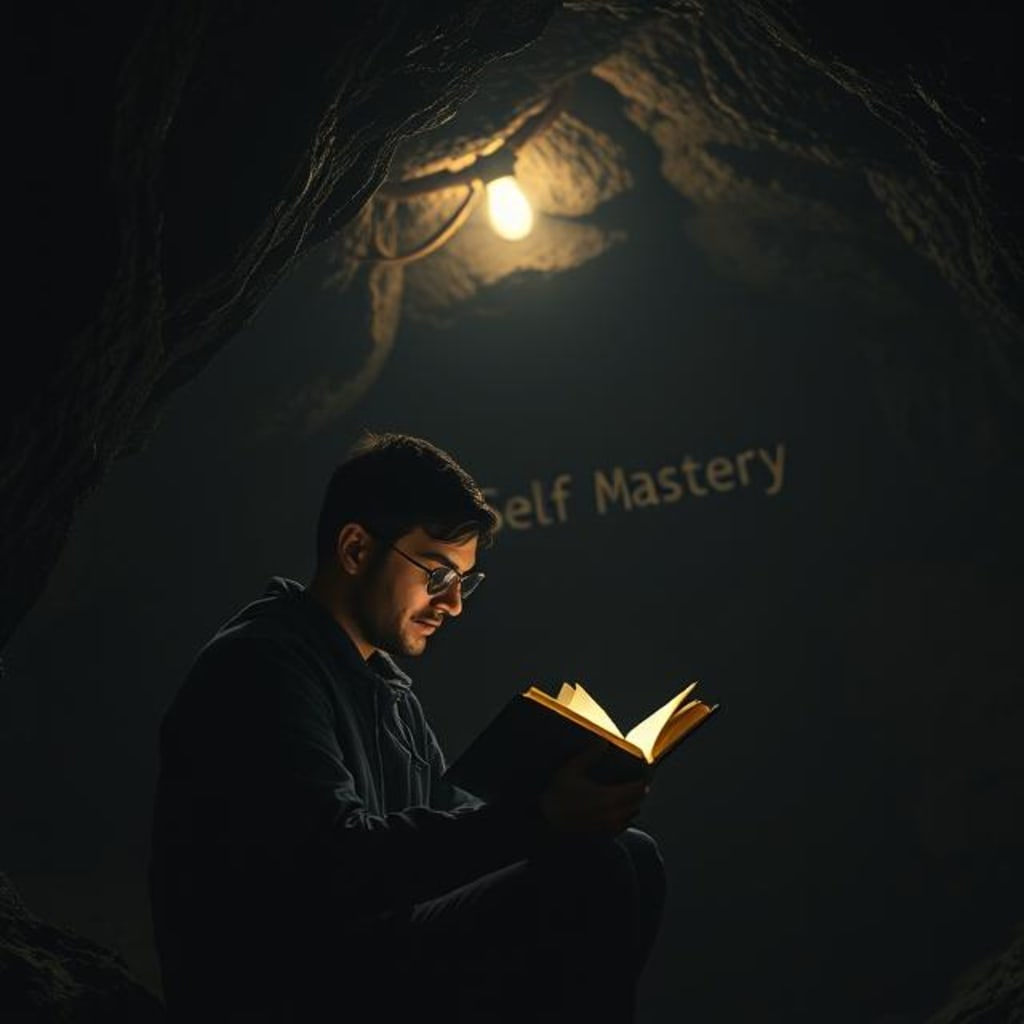
Self-improvement is not merely a trend or a fleeting obsession with productivity hacks and life hacks. It is an ancient and deeply human endeavor, rooted in the timeless question: How can I live a good life? To embark on the path of self-improvement is to engage in a philosophical dialogue with oneself, to question the nature of existence, and to strive toward becoming the fullest expression of who you are. It is not about perfection but about progress, not about reaching a destination but about embracing the journey.
At its core, self-improvement is an act of self-love and self-respect. It is the recognition that you are a work in progress, a living, breathing masterpiece that is never quite finished. But how do we begin this journey? And what does it mean to truly improve oneself? Let us explore these questions through the lens of philosophy, psychology, and the wisdom of the ages.
1. Know Thyself: The Foundation of Growth
The ancient Greek maxim "Know thyself," inscribed at the Temple of Apollo at Delphi, remains one of the most profound pieces of wisdom ever uttered. Self-improvement begins with self-awareness. You cannot change what you do not understand. To know yourself is to confront your strengths and weaknesses, your desires and fears, your values and contradictions.
Take time to reflect on your life. Ask yourself: Who am I? What do I truly want? What are the patterns that hold me back? Journaling, meditation, and honest conversations with trusted friends can help you uncover the layers of your identity. This process is not always comfortable—it requires courage to face the shadows within—but it is essential. As Carl Jung famously said, "Until you make the unconscious conscious, it will direct your life, and you will call it fate."
2. Embrace the Stoic Dichotomy of Control
The Stoic philosophers, such as Epictetus and Marcus Aurelius, taught us that much of our suffering comes from trying to control what is beyond our power. The key to peace and progress lies in understanding the dichotomy of control: some things are within our control (our thoughts, actions, and attitudes), while others are not (external events, other people's opinions, the past).
Self-improvement requires focusing your energy on what you can control. Instead of lamenting circumstances or blaming others, ask yourself: What can I do right now to move forward? This shift in perspective empowers you to take responsibility for your life. It is not about ignoring the external world but about cultivating an inner resilience that allows you to navigate it with grace.
3. Cultivate Virtue: The Path to Eudaimonia
Aristotle believed that the ultimate goal of life is eudaimonia, often translated as "flourishing" or "the good life." He argued that eudaimonia is achieved through the cultivation of virtue—qualities like courage, wisdom, temperance, and justice. Virtue is not innate; it is developed through practice and habituation.
Self-improvement, then, is not just about achieving external success but about becoming a better person. Ask yourself: What kind of person do I want to be? Then, align your actions with that vision. Every decision, no matter how small, is an opportunity to practice virtue. Over time, these choices shape your character and lead you closer to eudaimonia.
4. Embrace the Process: The Paradox of Self-Acceptance
One of the great paradoxes of self-improvement is that it requires both self-acceptance and a desire for change. You must accept yourself as you are while simultaneously striving to become more. This balance is delicate but crucial. Without self-acceptance, you risk falling into self-criticism and despair. Without the desire for change, you stagnate.
The Japanese concept of kaizen, or continuous improvement, offers a helpful framework. Kaizen emphasizes small, incremental changes rather than dramatic overhauls. It is about progress, not perfection. Celebrate your small wins, learn from your failures, and keep moving forward. Remember, growth is not linear. It is a spiral, with moments of breakthrough and moments of regression. Be patient with yourself.
5. Connect with Others: The Role of Community
No one improves in isolation. We are social beings, and our growth is deeply intertwined with our relationships. Surround yourself with people who inspire and challenge you. Seek mentors who can guide you, friends who can support you, and communities that share your values.
At the same time, remember that self-improvement is not a competition. Comparing yourself to others is a surefire way to undermine your progress. Instead, focus on your own journey and celebrate the successes of others. As the African proverb says, "If you want to go fast, go alone. If you want to go far, go together."
6. Live with Purpose: The Ultimate Aim
Viktor Frankl, a Holocaust survivor and psychiatrist, wrote in Man's Search for Meaning that the primary drive of human beings is not pleasure or power but meaning. To live a fulfilling life, you must discover your purpose. This purpose does not have to be grand or world-changing; it simply needs to resonate with your deepest values and passions.
Ask yourself: What gives my life meaning? How can I contribute to the world in a way that aligns with who I am? When you live with purpose, self-improvement becomes not just a personal endeavor but a way of serving something greater than yourself.
Conclusion: The Infinite Journey
Self-improvement is not a checklist or a race to the finish line. It is an infinite journey, a lifelong commitment to growth and self-discovery. Along the way, you will encounter setbacks, doubts, and moments of despair. But you will also experience moments of clarity, joy, and profound transformation.
Remember, the goal is not to become someone else but to become more fully yourself. As the poet Rumi wrote, "You are not a drop in the ocean. You are the entire ocean in a drop." Embrace the beauty of your potential, and take one step at a time toward the person you aspire to be. In the end, the art of becoming is not just about improving yourself—it is about honoring the miracle of your existence.
So, begin today. Reflect, act, and grow. The journey awaits.
About the Creator
Fred Bradford
Philosophy, for me, is not just an intellectual pursuit but a way to continuously grow, question, and connect with others on a deeper level. By reflecting on ideas we challenge how we see the world and our place in it.
Keep reading
More stories from Fred Bradford and writers in Art and other communities.
Steps to Build Resilience and Conquer Setbacks
Life is an unpredictable journey, filled with peaks of joy and valleys of challenge. While we cannot control every twist and turn, we can control how we respond to them. Resilience—the ability to bounce back from setbacks, adapt to change, and keep moving forward—is a skill that can be developed and honed over time. It’s not about avoiding difficulties but about facing them with courage, grace, and a growth mindset. Here’s how you can cultivate and practice resilience in your daily life.
By Fred Bradford11 months ago in Art
Male Tattoo Artist Roles in Contemporary Tattoo Culture
Walking into a studio today feels very different from the old days of loud music and tough talk. Modern tattoo shops can be calm, warm and welcoming, and the person guiding you through the whole process is often a male tattoo artist who takes his job very seriously.
By Tools of Trade Studios6 days ago in Art
What Happened to Keith Porter?
I am writing this letter with a heavy heart and an unwavering commitment to justice. On New Year’s Eve, our community lost a beloved father, son, and friend—Keith Porter Jr., a 43-year-old Black man whose life was tragically cut short at his Northridge apartment complex. Keith was not just a name in the news; he was a loving father, a “girl dad,” and a man who brought joy and kindness to everyone who knew him. His mother, Franceola Armstrong, described him best:
By Organic Products about 20 hours ago in Art


Comments
There are no comments for this story
Be the first to respond and start the conversation.