
Salahuddin Ayyubi: The Noble Warrior King of Islam
Chivalry, Faith, and Brilliance in Battle – The Story of a True Islamic Hero

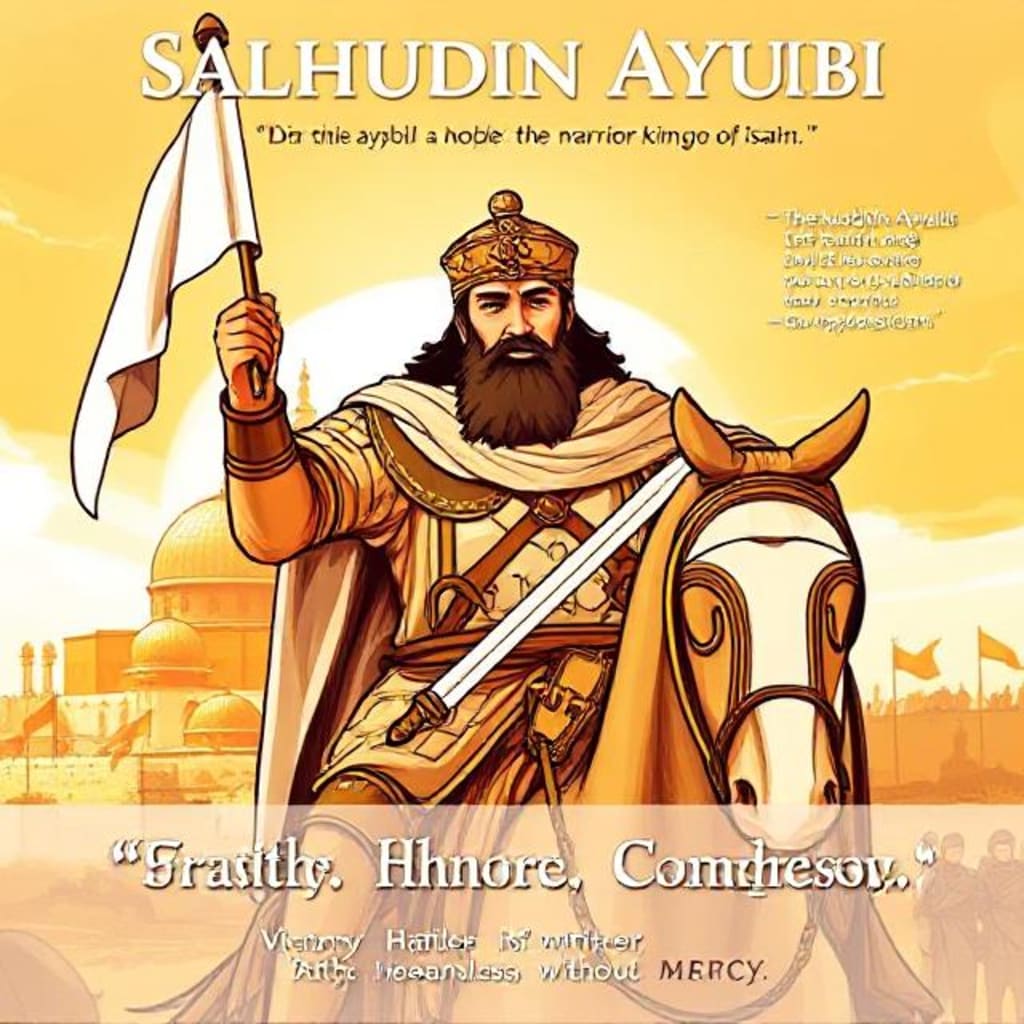
In the rich tapestry of Islamic history, few names shine as brightly as Salahuddin Ayyubi, known in the West as Saladin. Revered by both Muslims and non-Muslims alike, he was a powerful Muslim king, a skilled military commander, and a man of deep faith and exceptional character. His legacy is not only remembered for his victories, but also for his sense of honor, justice, and compassion—even in times of war.
At a time when conflict between empires and religions shaped the world, Salahuddin’s example stood as a beacon of what true leadership looked like. His life was not merely about battles, but about healing, unity, and mercy.
Early Life and Rise to Power
Salahuddin was born in 1137 CE in the town of Tikrit, in present-day Iraq. His full name was Ṣalāḥ ad-Dīn Yūsuf ibn Ayyūb. Although his family was Kurdish, his life's mission and influence would tie him forever to the heart of the Arab and Islamic world.
Raised in a family of warriors and statesmen, Salahuddin received not only military training but also religious education. He was known for his love of Islamic scholarship and poetry—an unusual trait for someone destined to become a general and king.
During his youth, the Crusades raged across the region. European Christian forces, backed by the Pope and Western monarchs, launched waves of invasions into the Muslim heartlands, capturing cities, killing civilians, and controlling Jerusalem—Islam’s third holiest city.
Salahuddin’s early career began under the guidance of his uncle Shirkuh, a general in the service of Nur al-Din, the ruler of Syria. He accompanied his uncle on military campaigns into Egypt, which was under threat from both Crusaders and internal corruption. After Shirkuh's sudden death in 1169, Salahuddin took command and eventually became vizier of Egypt—a rare honor for a Sunni in a Shia-led Fatimid caliphate.
With political brilliance and careful diplomacy, Salahuddin consolidated power. When the Fatimid caliph died, he ended the Shia rule in Egypt and reestablished allegiance to the Sunni Abbasid caliphate. In time, he became Sultan of both Egypt and Syria, creating a united front against the Crusaders.
The Liberation of Jerusalem
Salahuddin’s most enduring legacy came in 1187, at the Battle of Hattin, near the Sea of Galilee. In a masterful military strategy, he surrounded and crushed the Crusader army led by King Guy of Lusignan. Thousands were captured, and the road to Jerusalem lay open.
Later that year, Salahuddin laid siege to Jerusalem—a city that had been under Crusader control for 88 years. While many expected bloodshed, Salahuddin shocked the world by offering peaceful surrender. The city’s Christian inhabitants were treated with dignity and allowed to leave safely upon paying a reasonable ransom. In many cases, when people couldn’t pay, Salahuddin paid on their behalf.
He ordered the protection of Christian and Jewish holy sites, reopening Jerusalem’s gates to Jews for the first time in decades. These actions astonished even his enemies and established his reputation as a just and merciful leader.
A Man of Honor and Humility
Salahuddin was not merely a warrior—he was a man of principle and piety. He performed his daily prayers, fasted regularly, and lived modestly despite his status. He preferred simple clothing and gave away much of his wealth to the poor and needy.
His chivalry even extended to his enemies. During the Third Crusade, when Richard the Lionheart, King of England, became seriously ill, Salahuddin sent him fresh fruit, snow from the mountains to reduce his fever, and his own personal physician. Such generosity, especially during wartime, was unheard of.
Even Richard, who respected few, referred to Salahuddin as a “great prince” and “truly noble adversary.” Though they fought fiercely on the battlefield, both leaders respected one another deeply.
When Salahuddin died in 1193 CE in Damascus, he left behind no castles, no treasure, and only a few gold coins. Everything else he had given in charity. It is said that the only possessions he had at death could not even pay for his own funeral.
Legacy and Influence
Salahuddin Ayyubi's influence spread far beyond the borders of his empire. He became a symbol of righteous leadership, not just in the Muslim world, but in European literature and folklore as well.
His name appears in countless books, poems, and even Western history lessons as a rare example of a military leader who embodied ethics, diplomacy, and humanity. Many historians agree that Salahuddin’s conduct during and after the Crusades helped lay the groundwork for a new kind of interfaith understanding—one based on mutual respect, not domination.
To this day, schools, streets, mosques, and hospitals across the Muslim world carry his name. Films, novels, and documentaries continue to tell his story. In Palestine, Syria, Egypt, Turkey, and beyond, Salahuddin remains a cultural and spiritual icon.
In an age marked by political division, religious violence, and greed, Salahuddin's example reminds the world that true greatness lies not in power alone—but in mercy, unity, and unwavering faith.
About the Creator
Sadiq Muhammad
storeys
Keep reading
More stories from Sadiq Muhammad and writers in Art and other communities.
💛 Me Before You – Jojo Moyes
Caleb had made peace with the silence. After the accident that left him paralyzed from the chest down, life slowed to a crawl. No more hiking. No more motorcycle rides along the cliffs. No more spontaneous road trips or late-night basketball games with his brothers. What remained was the steady hum of his wheelchair motor, scheduled nurse visits, and an endless loop of Netflix shows he no longer cared about.
By Sadiq Muhammad9 months ago in Art
How Tattoo Parlours in Cape Town Help Clients Feel Comfortable and Informed
Walking into a tattoo parlour in cape town for the first time can feel strange. You are trusting someone with your skin, your story, and a design you might wear for life. It is normal to feel excited and scared at the same time.
By Tools of Trade Studios3 days ago in Art
“What If It Happens?”
Monday, 11 April 2022 Ishrat Jahan One of our friends, Mr. Farooq, is a middle-aged man, yet he has still not been able to free himself from his deeply suspicious and fearful nature. These days, I happened to have some free time, so I thought it would be a good idea to meet him and try to untangle the puzzle of his constant worries. By coincidence, he himself arrived at my humble home, jolting along in a rickshaw.
By Sudais Zakwana day ago in Art



Comments
There are no comments for this story
Be the first to respond and start the conversation.