

Imagimations: Where Creativity Meets Animation
In the ever-evolving world of digital art and storytelling, a new term has emerged—**Imagimations**. A fusion of “imagination” and “animation,” this concept represents the limitless power of human creativity brought to life through animated media. Imagimations are not just animated stories; they are visual manifestations of thoughts, dreams, and abstract ideas that push the boundaries of conventional storytelling.
Defining Imagimations
Imagimations go beyond traditional animation. While animation often follows structured narratives with predefined characters and plots, imagimations embrace surrealism, innovation, and emotional depth. They allow artists and creators to explore metaphysical themes, fantastical worlds, and psychological landscapes. Whether it’s a short film, a digital painting in motion, or a virtual reality experience, imagimations prioritize the imaginative over the realistic.
This genre doesn’t rely solely on logic or coherence. Instead, it celebrates the surreal and the unexpected, often blurring the lines between fantasy and reality. It can be abstract, symbolic, or deeply personal—much like a dream translated into visual form.
Origins and Evolution
Though the term "imagimations" may be new, the spirit behind it has existed for decades. Surrealist animators like Jan Švankmajer, experimental directors such as David Lynch, and even classic Disney animations have all incorporated elements of imagination beyond logic. However, with the rise of digital technology, artificial intelligence, and virtual environments, the potential for imagimations has expanded exponentially.
Tools like Blender, Unreal Engine, and AI-assisted animation platforms allow individual creators to develop cinematic-quality works that would have required teams of professionals just a decade ago. This democratization of tools has birthed a new wave of artists who use imagimations to explore identity, mental health, cultural myths, and speculative futures.
Applications of Imagimations
1. **Art and Expression**: Artists use imagimations to express emotions that are hard to articulate through words. The blend of music, motion, and abstract visuals can evoke a visceral response in audiences.
2. **Education and Storytelling**: Imagimations are increasingly used in educational settings. Complex topics such as space-time, climate change, or emotional intelligence are explained through imaginative animations that make the content accessible and memorable.
3. **Therapy and Mindfulness**: In therapeutic contexts, imagimations are used to guide patients through visual meditations or help them confront internal struggles in a symbolic, less intimidating form.
4. **Entertainment and Gaming**: Indie games and virtual reality experiences now incorporate imagimative styles to create deeply immersive, often dreamlike environments that prioritize atmosphere and feeling over conventional gameplay mechanics.
Why Imagimations Matter
In a world saturated with content, originality has become a rare and valuable currency. Imagimations offer a breath of fresh air, allowing creators to escape the boundaries of formulaic design and instead craft something truly unique. For viewers, imagimations offer not just entertainment, but a journey into the creator’s mind—a chance to see the world through someone else’s imaginative lens.
They also serve as a powerful counterbalance to realism. While photorealistic graphics and documentary-style narratives have their place, imagimations remind us of the beauty of the unreal—the power of fiction, dreams, and symbols in shaping human experience.
The Future of Imagimations
As technology continues to advance, imagimations are likely to play a major role in the future of art, media, and communication. With AI contributing to generative animation and augmented reality allowing imaginations to spill into the physical world, the boundaries between creator and audience, dream and reality, will continue to blur.
In this future, imagimations won’t just be a form of art—they’ll be a language. A new way for people to connect, empathize, and imagine together.
About the Creator
Gayatri Nagpal
my thoughts
Keep reading
More stories from Gayatri Nagpal and writers in Art and other communities.
modeling
The World of a Professional Model: More Than Just a Pretty Face Behind the glossy pages of magazines, high-fashion runways, and flawless social media images lies the demanding and dynamic world of a professional model. While the industry often highlights glamour and beauty, the truth is that professional modeling is a full-time career that requires discipline, resilience, and a sharp understanding of business and branding. Far from being just about looks, being a model is about professionalism, adaptability, and hard work.
By Gayatri Nagpal9 months ago in Art
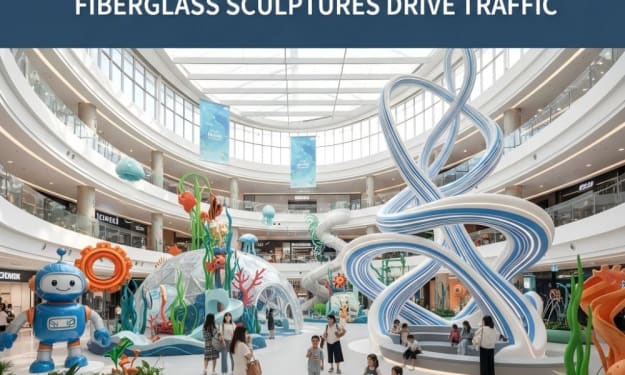
2026 Commercial Space Design:How Fbierglass Sculpture Drives Traffic
Today, offline commercial spaces are facing continuous pressure. With e-commerce offering convenient and fast services, physical stores must showcase unique features to attract customers. In this context, fiberglass sculptures are no longer merely decorative items; they have become visual focal points in shopping malls, brand stores, pop-up shops, and mixed-use commercial projects, playing a crucial role in increasing foot traffic.
By Shenzhen Ruiheng Crafts4 days ago in Art
Why Strategic Branding Is Essential for Long-Term Business Growth
In today’s fast-paced digital environment, businesses face constant pressure to stand out. Consumers are exposed to endless choices every day, making attention harder to earn and trust harder to keep. While quality products and services are important, they are no longer the only factors that determine success. Strategic branding plays a key role in helping businesses grow steadily and remain relevant over time.
By Ayush Bagwari4 days ago in Art



Comments
There are no comments for this story
Be the first to respond and start the conversation.