
Pope Francis (1936-2025): A Legacy of Compassion, Reform, and Global Engagement
Pope Francis

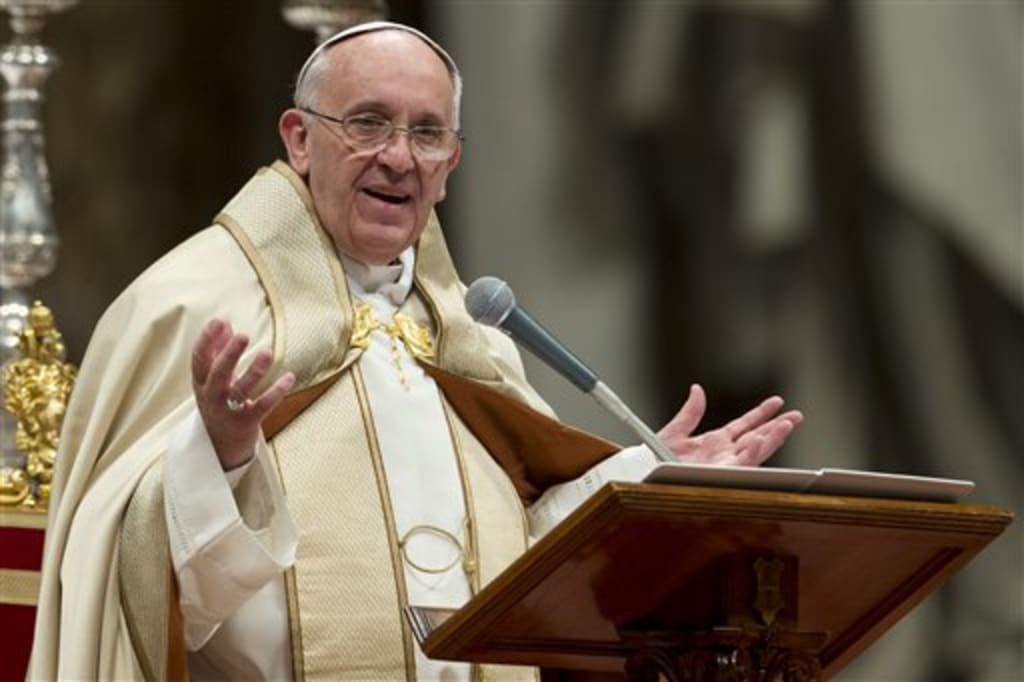
Pope Francis, born Jorge Mario Bergoglio on December 17, 1936, in Buenos Aires, Argentina, served as the 266th pontiff of the Roman Catholic Church from March 13, 2013, until his passing on April 21, 2025. As the first pope from the Americas, the Southern Hemisphere, and the Jesuit order, his papacy was marked by humility, a focus on the marginalized, and efforts to reform the Church and engage with global issues.Biography+2Wikipedia+2Be My Disciples+2
________________________________________
Early Life and Jesuit Formation
Born to Italian immigrants, Bergoglio pursued a path of religious vocation after recovering from a severe illness in his youth. He entered the Society of Jesus (Jesuits) in 1958, was ordained a priest in 1969, and became the Jesuit provincial superior in Argentina from 1973 to 1979. His leadership during Argentina's tumultuous political period was noted for its discretion and commitment to social justice.Wikipedia
________________________________________
Rise in the Church Hierarchy
Appointed Archbishop of Buenos Aires in 1998, Bergoglio was known for his simple lifestyle, often using public transportation and living modestly. Elevated to cardinal in 2001 by Pope John Paul II, he became a prominent figure in the global Church, emphasizing pastoral care and humility.Vatican+1Wikipedia+1
________________________________________
Papacy: A New Direction
Elected pope in 2013 following Pope Benedict XVI's resignation, he chose the name Francis in honor of Saint Francis of Assisi, reflecting his commitment to the poor and environmental stewardship. His papacy introduced a more informal and approachable style, opting to reside in the Casa Santa Marta guesthouse rather than the traditional papal apartments.Wikipedia
________________________________________
Key Initiatives and Global Impact
1. Advocacy for the Marginalized
Pope Francis prioritized the plight of migrants and refugees, making his first papal trip to Lampedusa in 2013 to highlight the Mediterranean migrant crisis. He consistently called for compassion and solidarity, famously stating, "We're all the same people," during encounters with migrants. His actions included bringing refugees to the Vatican and urging nations to adopt humane immigration policies. Reuters+1The Washington Post+1
2. Environmental Stewardship
In his 2015 encyclical Laudato Si', Francis framed environmental degradation as a moral issue, calling for global action against climate change. He emphasized the interconnectedness of humanity and nature, urging a collective response to environmental challenges.
3. Diplomatic Engagement
Utilizing the Vatican's extensive diplomatic network, Pope Francis played a role in significant global events, including facilitating the 2016 rapprochement between the United States and Cuba. He also brokered a 2018 agreement with China on the appointment of bishops, aiming to unify the Chinese Catholic community, though the deal received mixed reactions. The Washington Post
4. Church Reforms
Francis sought to decentralize Church governance, promote synodality, and increase the role of women in Church leadership. He appointed women to key Vatican positions and emphasized the importance of listening to local churches. His approach aimed to make the Church more inclusive and responsive to contemporary challenges.
________________________________________
Challenges and Criticisms
Despite his progressive stance, Pope Francis faced criticism from various quarters. Some conservatives viewed his reforms as too radical, while progressives felt they didn't go far enough. His handling of sexual abuse cases and the Vatican's financial transparency also drew scrutiny. Additionally, his diplomatic efforts, such as the China agreement, were seen by some as compromising Church principles. The Australian
________________________________________
Death and Legacy
Pope Francis passed away on April 21, 2025, at the age of 88, after suffering a stroke and cardiac arrest. His funeral, held at the Basilica of St. Mary Major, was attended by global leaders and the faithful, reflecting his widespread influence. In accordance with his wishes, he was buried in a simple tomb, symbolizing his lifelong commitment to humility and the poor. National Geographic+2Reuters+2Vatican News+2USCCB
________________________________________
Conclusion
Pope Francis's papacy was characterized by a profound commitment to social justice, environmental care, and Church reform. His efforts to bridge divides within the Church and the broader world left an indelible mark on the 21st-century Catholic Church. As the Church looks to the future, his legacy of compassion and inclusivity continues to inspire.
About the Creator
SearchEngineWays
SearchEngineWays - Your Trusted Partner in SEO Link Building + Content Marketing :) :)
High Authority Guest Postings,
and Web Development Services.
Keep reading
More stories from SearchEngineWays and writers in Art and other communities.
The Transformative Power of Gratitude: A Path to Happiness and Fulfillment
In a fast-paced world filled with stress, distractions, and constant demands, it’s easy to overlook the good things in life. Yet, one simple practice has the power to shift our perspective, improve our well-being, and even strengthen our relationships: Gratitude.
By SearchEngineWays10 months ago in Art
21 Freelancing Tips to Build a Successful Career (From Someone Who Actually Did It)
TL;DR version (60 seconds read time) + Paypal receipt at the end of the blog. I’ve made thousands of dollars with freelancing. See screenshots at the end of the post. Everything I say to you, I’ve tested it first on myself.
By Dena Falken Esqa day ago in Art
Wild Card Weekend Recap: What Happens Now?
I think I figured out why I love Wild Card Weekend so much. It's because it's the first playoff anything of the calendar year. The NFL season starts in the fall, and once upon a time, the champion was crowned either on or slightly before New Year's. The evolution of the NFL schedule has resulted in the playoffs starting just into the New Year, and currently, the final week of the season falls on the first weekend of the New Year, with Wild Card Weekend coming a week after that. So yes, chronologically, the NFL's Wild Card Weekend serves as the first playoff anything of the calendar year.
By Clyde E. Dawkins8 days ago in Unbalanced



Comments
There are no comments for this story
Be the first to respond and start the conversation.