
Patta Chitta Tamil: Understanding Land Ownership and the Significance of Land Records in Tamil Nadu
Patta Chitta Tamil:
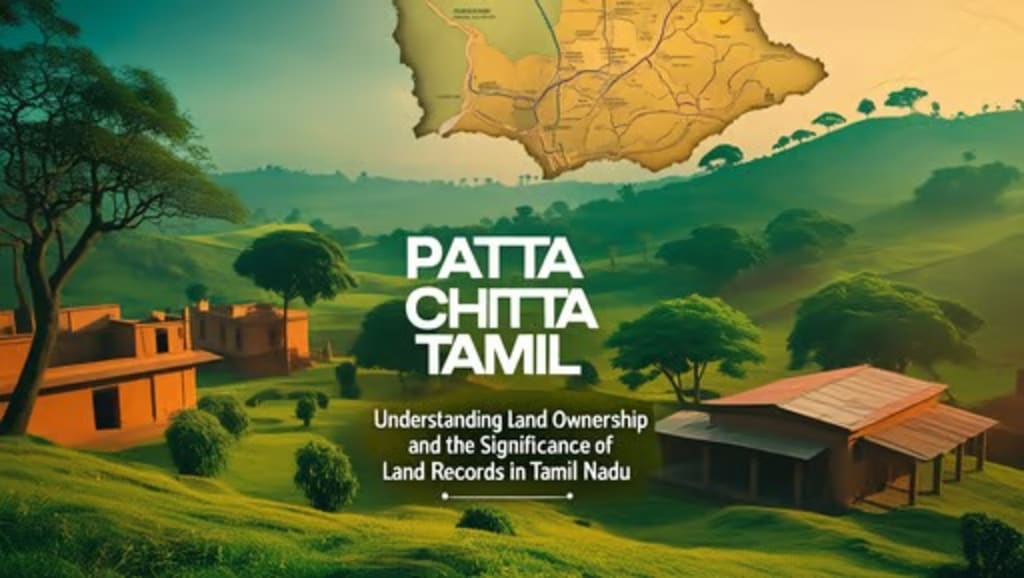
In Tamil Nadu, Patta Chitta is a crucial concept in land ownership and land records. These two documents hold immense significance in the state’s revenue and legal systems, serving as evidence of ownership, rights, and responsibilities over land. The state of Tamil Nadu, like many parts of India, has a long history of land-related issues and disputes. The Patta and Chitta, when understood and maintained correctly, can play an essential role in preventing land disputes, ensuring transparency, and protecting the rights of landowners.
What is Patta and Chitta?
Patta refers to the official document issued by the government that records the name of the person who is legally recognized as the owner of a particular piece of land. The Patta document serves as proof of land ownership and provides details such as the name of the owner, the type of land, the size of the land, and its location. In simpler terms, Patta is like a title deed that legally identifies the landowner.
On the other hand, Chitta is a related document that provides a detailed description of the land in question. It is primarily used to record the details of the land's boundaries, classification (whether it is agricultural, non-agricultural, etc.), and survey number. The Chitta also helps in identifying the land’s revenue classification, which determines the land's tax liabilities.
The two documents together play a pivotal role in determining land ownership and facilitating land transactions in Tamil Nadu.
The Importance of Patta Chitta in Tamil Nadu
1. Land Ownership Verification
The most critical role of Patta and Chitta is to serve as documents of proof for land ownership. Whether a person is buying, selling, or transferring land, Patta and Chitta act as the official records of ownership and boundaries. They help verify the legitimacy of land claims, ensuring that the person claiming ownership is legally recognized as the landholder by the government. Without these documents, it is difficult to establish legal ownership, which can lead to disputes.
2. Revenue Collection
The Tamil Nadu government uses Patta and Chitta to monitor and manage the collection of land revenue or taxes. By having accurate and up-to-date records of land ownership, the government can efficiently assess taxes based on the size, type, and location of land. Patta also ensures that the correct landowner is held responsible for paying the necessary taxes, which in turn helps the state maintain its revenue collection system.
3. Prevention of Land Disputes
Land disputes are common in India, and Tamil Nadu is no exception. Patta and Chitta serve as a preventive measure against such disputes. When these documents are registered correctly and updated regularly, they help prevent conflicts between individuals or communities regarding land ownership, boundaries, or usage. Furthermore, in cases of inheritance or succession, Patta and Chitta provide clear legal guidelines on the distribution of land among heirs.
4. Facilitating Land Transactions
In Tamil Nadu, any land transaction, whether it is a sale, purchase, mortgage, or lease, requires the presentation of Patta and Chitta. Without these documents, land transactions cannot proceed smoothly, as they provide the necessary legal backing for such dealings. When Patta and Chitta are clear and dispute-free, they facilitate quicker, more efficient property transactions and reduce legal complexities.
5. Land Settlement and Distribution
The Tamil Nadu government has historically used Patta and Chitta to settle land disputes, especially in rural areas. In cases where land reforms or redistribution are necessary, these documents help ensure that land is fairly allotted to individuals and that rights are recognized. Patta has also been instrumental in the implementation of government schemes, such as land allocation for the poor or landless families.
How to Obtain Patta and Chitta in Tamil Nadu?
The process of obtaining Patta and Chitta in Tamil Nadu is straightforward, although it may require some documentation and patience.
1. For New Landowners:
If a person has recently acquired land, they must apply for Patta and Chitta through the Revenue Department or the local Taluk office. The application typically requires proof of land purchase, a copy of the land’s survey number, and other relevant documents such as a sale deed or gift deed. After verifying the documents, the authorities will issue the Patta and Chitta.
2. For Updating Patta and Chitta:
If an existing landowner wishes to update their Patta or Chitta (for example, due to a change of name after marriage, inheritance, or land subdivision), they must submit an application with the necessary supporting documents to the respective authorities. The documents required may include a copy of the original Patta, identity proofs, and any documents related to the change in land ownership.
3. Online Access to Patta and Chitta:
Tamil Nadu has introduced online services to simplify the process of obtaining and verifying Patta and Chitta documents. Through the Tamil Nadu Government's official website, citizens can check the status of their Patta, request certified copies, or even make changes to their records. This move towards digitization has greatly improved accessibility and convenience for landowners.
4. For Land Conversion or Ownership Changes:
In cases where land usage needs to be changed (such as from agricultural to non-agricultural), the Patta and Chitta will require updates based on the new classification. The process includes submitting a formal request to the local authorities, along with a payment of fees and any additional documentation proving the change in land use.
Challenges in Managing Patta Chitta Records
Despite their importance, managing Patta and Chitta records has not been without challenges. Issues such as inaccurate land records, delays in issuing documents, and the complexities involved in land disputes have created barriers for landowners. There have been instances where records were not updated in a timely manner, leading to conflicts over ownership or boundary disputes. Additionally, manual errors in maintaining records at the local level have sometimes caused discrepancies, which can complicate land transactions and legal proceedings.
Conclusion
Patta and Chitta are indispensable in Tamil Nadu’s land management system, serving as primary documents for land ownership, revenue collection, and preventing disputes. The significance of these records cannot be overstated, as they ensure the smooth transfer of land rights and protect the legal interests of landowners. With the advent of digital services, the ease of accessing and updating these documents has increased, providing greater transparency and reducing bureaucratic hurdles.
However, there remains the challenge of ensuring that records are consistently accurate and up-to-date. As land-related issues continue to be central to India’s growth, proper management of Patta and Chitta documents will play a key role in the country’s ongoing development, fostering secure and fair land transactions
About the Creator
Keep reading
More stories from John David and writers in Art and other communities.
Hamraz:The Essence of Trust and Confidentiality
Introduction The word Hamraz is derived from Persian and Urdu, meaning "confidant" or "trusted companion." A Hamraz is someone who shares secrets, understands emotions, and provides unwavering support. The concept of being a Hamraz is deeply rooted in literature, culture, and human relationships. It signifies a bond of trust, confidentiality, and emotional connection, whether in friendships, family ties, or romantic relationships.
By John David12 months ago in Art
John LoPinto on Travel as Perspective
Travel is often viewed as leisure or escape, but John LoPinto sees it as something more purposeful. For him, travel is a tool for perspective. By exploring new markets, cultures, and operating environments, leaders sharpen their strategic thinking and gain insights that are difficult to access from a distance. Exposure to unfamiliar contexts challenges assumptions and strengthens decision making.
By John LoPintoa day ago in Art
📢 Raise Your Voice Thread: 01/22/2026
Our “Raise Your Voice Threads” are hosted most alternating Thursdays at 12PM ET to offer creators more avenues to uncover exceptional stories on Vocal. As we are continuously searching for fresh creators and inspiring stories, this thread provides an opportunity to exchange and discuss the stories that have moved and motivated us on Vocal.
By Raise Your Voice by Vocala day ago in Resources



Comments
There are no comments for this story
Be the first to respond and start the conversation.