
Pablo Picasso: The Revolutionary Genius of Modern Art
The great artist of the Earth

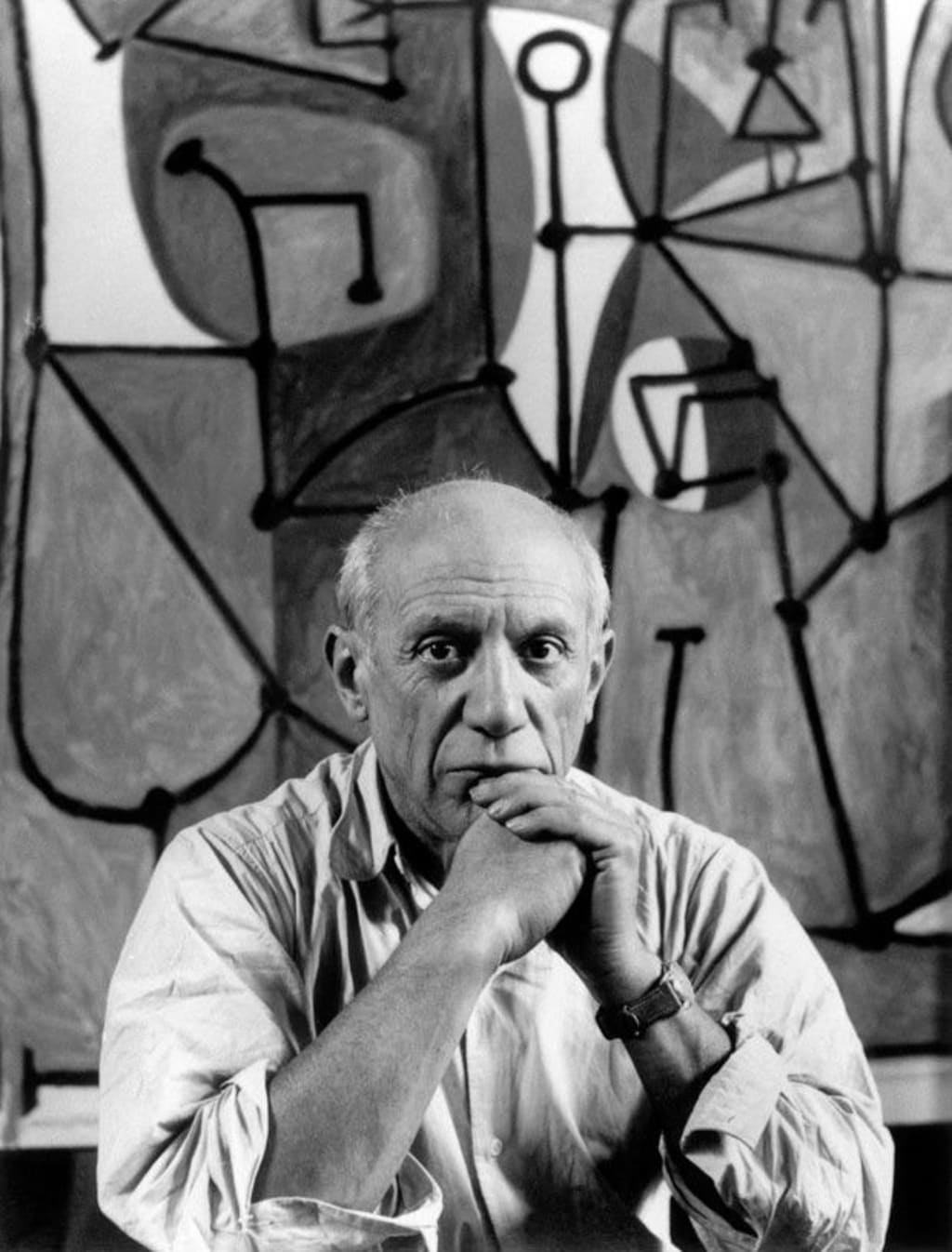
Pablo Picasso, born on October 25, 1881, in Málaga, Spain, remains one of the most influential artists of the 20th century. His vast body of work, innovative techniques, and boundless creativity revolutionized the art world and reshaped how people perceive artistic expression. With a career spanning over seven decades, Picasso was a painter, sculptor, printmaker, ceramicist, and stage designer who continually reinvented himself and challenged artistic conventions.
From a young age, Picasso exhibited prodigious talent. His father, an art teacher and painter, recognized his son's extraordinary abilities and provided him with formal training. By the age of 14, Picasso was already surpassing his teachers. His early works show mastery of classical techniques, which would later provide a foundation for his radical departures from tradition.
Picasso’s artistic journey can be divided into several distinct periods, each marked by unique styles and emotional depth. The Blue Period (1901–1904), named for its monochromatic palette of blue tones, reflected the artist’s somber state of mind during a time of personal hardship and poverty. These works, such as The Old Guitarist (1903), depict themes of loneliness, despair, and human suffering, capturing the emotional struggles of marginalized individuals.
Following the Blue Period, Picasso entered the Rose Period (1904–1906), which introduced warmer hues and more optimistic themes. During this time, he painted circus performers, harlequins, and acrobats, blending melancholy with a gentle romanticism. Notable works from this period include Family of Saltimbanques (1905), showcasing Picasso’s growing interest in classical composition and emotional nuance.
Perhaps the most groundbreaking phase of Picasso’s career began in 1907 with the development of Cubism, a radical artistic movement he co-founded with French painter Georges Braque. Cubism abandoned traditional perspective and sought to represent multiple viewpoints simultaneously. One of the most iconic works from this movement is Les Demoiselles d'Avignon (1907), a painting that shocked audiences with its distorted forms, fragmented space, and raw energy. This piece is often considered the precursor to modern art and marks a turning point in Picasso’s career.
Cubism evolved into different phases—Analytic and Synthetic. Analytic Cubism focused on deconstructing objects into geometric shapes and reassembling them in abstract forms, while Synthetic Cubism introduced collage and mixed media, incorporating elements such as newspaper clippings and fabric into the compositions. These innovations significantly influenced the trajectory of modern art and laid the groundwork for future movements like Futurism, Dadaism, and Surrealism.
Picasso’s versatility and restlessness as an artist led him to explore numerous other styles and mediums throughout his life. He delved into Neoclassicism in the 1920s, produced surrealist-inspired works in the 1930s, and even ventured into sculpture, ceramics, and printmaking. His ability to master different forms and continually push boundaries kept his work fresh and relevant across decades.
One of Picasso’s most politically powerful works is Guernica (1937), a monumental black-and-white mural that condemns the bombing of the Basque town of Guernica during the Spanish Civil War. The painting, filled with anguished figures and chaotic imagery, serves as a haunting symbol of the horrors of war and a passionate plea for peace. Guernica remains one of the most iconic anti-war artworks in history.
Picasso’s personal life was as complex and passionate as his art. He had numerous relationships, many of which significantly influenced his work. His muses—such as Fernande Olivier, Olga Khokhlova, Dora Maar, Françoise Gilot, and Jacqueline Roque—often appeared in his paintings, reflecting his changing emotional states and artistic approaches.
Throughout his life, Picasso created an estimated 50,000 artworks, including paintings, drawings, sculptures, and ceramics. His prolific output and constant reinvention have cemented his status as a towering figure in art history. He passed away on April 8, 1973, in Mougins, France, leaving behind a legacy that continues to inspire artists and audiences worldwide.
In conclusion, Pablo Picasso was not just a painter but a visionary who redefined the possibilities of art. His fearless experimentation, emotional depth, and creative genius transformed the course of modern art and left an indelible mark on the cultural landscape. From melancholic blue figures to geometric abstractions and political outcries, Picasso’s work speaks to the complexity of the human condition and the limitless potential of artistic expressio
About the Creator
Reader insights
Nice work
Very well written. Keep up the good work!
Top insights
Easy to read and follow
Well-structured & engaging content
Expert insights and opinions
Arguments were carefully researched and presented
Masterful proofreading
Zero grammar & spelling mistakes
On-point and relevant
Writing reflected the title & theme
Keep reading
More stories from Soumyadip Bose and writers in Art and other communities.
Exploring the Art Trends Defining 2025: A Fusion of Tradition Technology, and expression
As we navigate through 2025, the art world is experiencing a dynamic convergence of traditional techniques, technological advancements, and profound social commentary. Artists are pushing boundaries, blending mediums, and reflecting on contemporary issues, resulting in a vibrant tapestry of creative expression. Here's an in-depth look at the most compelling art trends shaping this year.
By Soumyadip Bose8 months ago in Art
Why Nietzsche Belongs in 2026
As the world moves toward 2026, it does not feel like a calm progression into the future—it feels like a collision. Rapid technological acceleration, cultural fragmentation, economic uncertainty, and a deep crisis of meaning define the modern condition. Traditional authorities are distrusted, ideologies compete aggressively, and individuals feel both empowered and exhausted by choice. In such a landscape, Friedrich Nietzsche’s philosophy emerges not as a comfortable guide, but as a necessary one. Unsettling, demanding, and brutally honest, Nietzsche may offer the most fitting philosophical framework for the year ahead.
By Fred Bradford7 days ago in Art
2026 Commercial Space Design:How Fbierglass Sculpture Drives Traffic
Today, offline commercial spaces are facing continuous pressure. With e-commerce offering convenient and fast services, physical stores must showcase unique features to attract customers. In this context, fiberglass sculptures are no longer merely decorative items; they have become visual focal points in shopping malls, brand stores, pop-up shops, and mixed-use commercial projects, playing a crucial role in increasing foot traffic.
By Shenzhen Ruiheng Crafts2 days ago in Art



Comments
There are no comments for this story
Be the first to respond and start the conversation.