
Ida Shaghoian and the Landscapes of Inner Light
A Contemporary Painter Translating Memory, Nature, and Emotion into Atmosphere


In an era when much contemporary art favors immediacy and bold declaration, Ida Shaghoian offers something quieter and more inward. Her paintings invite viewers into spaces shaped by feeling rather than fact, where light, color, and texture operate as emotional language. Landscapes appear, but they are not destinations. They function instead as vessels for reflection, carrying traces of memory, stillness, and transition. Through abstraction softened by suggestion, her work opens a contemplative dialogue between the external world and the internal self.
Sensory Beginnings and Early Awareness
The earliest creative impulses behind this practice can be traced to a deep sensitivity to atmosphere and place. Childhood experiences of open land, shifting light, and the subtle rhythms of nature created a lasting awareness of how environments shape emotional states. Morning fog, reflective water, and the hush of expansive air were not simply observed, but felt. These moments formed a visual and emotional archive that continues to inform how Ida Shaghoian approaches painting today.
Before formal training, drawing and painting were already guided by mood rather than representation. Objects mattered less than tone. What lingered was the feeling of a moment, not its exact appearance. This instinctual approach was later refined through education, where exposure to multiple traditions provided structure without imposing limitation.
Rather than adopting a single movement or aesthetic, she absorbed fragments from many sources. From landscape traditions came an understanding of light and depth. From abstraction came freedom of gesture and intuition. From minimalism came restraint and silence. These influences merged gradually, shaped by reflection and experimentation, into a visual language that remains deeply personal.
Technique, Atmosphere, and Process
At the core of the work is a layered process that mirrors the accumulation of memory. Paintings often begin with expansive washes of color that establish mood rather than form. These early layers are fluid and open, setting an atmospheric foundation that feels distant and unresolved. For Ida Shaghoian, this stage is less about intention and more about listening to the emotional direction of the surface.
Over time, additional layers are added, altered, or partially removed. Scraped textures, softened edges, and subtle tonal shifts create surfaces that feel lived in. Earlier decisions are not erased. They remain visible beneath the surface, contributing to a sense of time passing within the painting itself. This process reflects how memories evolve, reshaped by reflection rather than preserved intact.
This approach allows each work to develop slowly. Forms emerge without being forced. Shorelines, horizons, or expanses of sky may suggest themselves, but they resist full definition. The compositions remain suspended between abstraction and recognition, encouraging viewers to complete the image through their own emotional associations.
Memory as Structure and Source
Memory functions not only as inspiration, but as structure. The paintings are shaped by recollection that is emotional rather than literal. They reflect moments that linger, such as the warmth of late afternoon light or the quiet tension of a changing sky. These impressions are filtered through time, transformed by feeling, and reassembled through paint. In this way, Ida Shaghoian treats memory as a living force rather than a fixed record.
Particular attention is given to transitional states. Dusk, fog, seasonal change, and shifting weather appear frequently, not as narrative devices, but as emotional metaphors. These moments exist between certainty and uncertainty, mirroring the internal transitions that define human experience.
The ambiguity within the work is intentional. Meaning is never fixed. Instead, the paintings operate as open spaces where viewers can encounter their own memories. What one person reads as calm, another may experience as longing. This fluidity allows the work to remain alive, changing with each encounter.
Nature as Emotional Mirror
Nature plays a central role, yet it is not treated as subject matter in a traditional sense. Landscapes act as collaborators, offering forms and elements that echo internal states. A softened horizon may suggest vulnerability. A sudden bloom of color may imply hope or renewal. Muted tones can evoke introspection or quiet loss. For Ida Shaghoian, nature is less something to depict and more something to converse with.
Elemental forces such as light, water, and air appear repeatedly, functioning as emotional materials. Light often carries the weight of memory, glowing softly beneath layered surfaces. Water suggests reflection and depth, while air introduces openness and uncertainty. These elements are not symbolic in a rigid way. They remain flexible, allowing each viewer to find personal resonance.
This relationship between environment and emotion transforms viewing into an inward experience. The paintings do not instruct or explain. They invite stillness, asking the viewer to slow down and engage with what surfaces internally.
A Growing Presence in Contemporary Painting
As this practice continues to evolve, its place within contemporary painting becomes increasingly distinct. Critics note the ability to evoke emotional depth without relying on narrative or spectacle. Collectors respond to the meditative quality of the work, drawn to its sincerity and restraint. The paintings by Ida Shaghoian stand apart for their patience and emotional clarity in a visually crowded landscape.
What defines this body of work is a commitment to authenticity. Rather than chasing trends, it remains grounded in reflection, emotional honesty, and intuitive process. Each painting feels attentive and considered, shaped by time rather than urgency.
Looking ahead, exploration with color, texture, and form continues, but the core vision remains steady. The work persists in honoring memory, embracing ambiguity, and offering viewers a space for quiet recognition. In doing so, it reminds us that landscapes are not only places we move through, but emotional terrains we carry within ourselves.
About the Creator
Ida Shaghoian
Ida Shaghoian is a painter exploring memory, emotion, and nature through textured, vibrant works that blend abstraction and realism and invite quiet reflection.
Keep reading
More stories from Ida Shaghoian and writers in Art and other communities.
Ida shaghoian and the Inner Geography of Painting
In contemporary painting, the most compelling work often resists easy definition. It lingers, unfolds, and asks the viewer to participate emotionally rather than observe from a distance. Ida shaghoian belongs to this tradition. Her paintings explore the fluid relationship between memory, feeling, and the natural world, creating spaces that feel both deeply personal and widely resonant. Through a refined balance of abstraction and suggestion, her work challenges conventional ideas of place, time, and perception.
By Ida Shaghoian8 days ago in Art
2026 Commercial Space Design:How Fbierglass Sculpture Drives Traffic
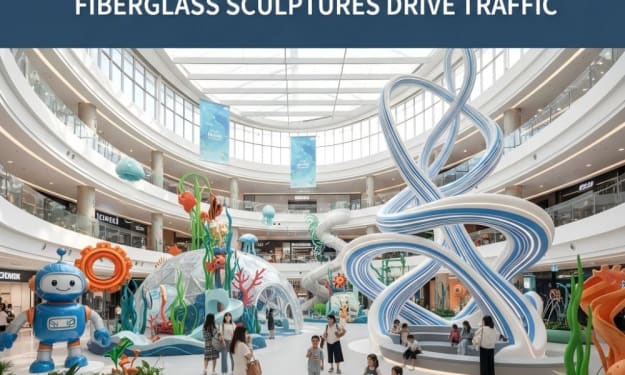
Today, offline commercial spaces are facing continuous pressure. With e-commerce offering convenient and fast services, physical stores must showcase unique features to attract customers. In this context, fiberglass sculptures are no longer merely decorative items; they have become visual focal points in shopping malls, brand stores, pop-up shops, and mixed-use commercial projects, playing a crucial role in increasing foot traffic.
By Shenzhen Ruiheng Crafts6 days ago in Art
Why Strategic Branding Is Essential for Long-Term Business Growth
In today’s fast-paced digital environment, businesses face constant pressure to stand out. Consumers are exposed to endless choices every day, making attention harder to earn and trust harder to keep. While quality products and services are important, they are no longer the only factors that determine success. Strategic branding plays a key role in helping businesses grow steadily and remain relevant over time.
By Ayush Bagwari6 days ago in Art



Comments
There are no comments for this story
Be the first to respond and start the conversation.