
how to industrialize Nigeria by Made in Nigeria project office
Industrialize Nigeria by made in Nigeria project office
Embrace Innovation & Technology: The Engine of Growth
You can’t industrialize using 20th-century tools in a 21st-century world. It's like bringing a knife to a gunfight.
We must create an environment that fosters research, innovation, and technology transfer. Whether it's setting up innovation hubs, supporting startups, or collaborating with universities, the goal is simple: make Nigeria a hub of smart industry.
Let’s support:
R&D in agriculture (high-yield seeds, smart irrigation)
Automation in manufacturing
Digital platforms for logistics and finance
The industrial revolution we need isn’t just smokestacks and steel. It’s also software, systems, and smart solutions.
Develop a Skilled Workforce: Talent is the New Oil
Here’s the truth: industries run on people, not just machines.
Unfortunately, many Nigerian graduates lack the skills today’s industries demand. There’s a mismatch between what our schools teach and what factories need.
To fix that, we need to:
Revamp the curriculum to include vocational training.
Partner with the private sector for technical internships.
Set up Industrial Skills Training Centers nationwide.
Let’s raise a generation of welders, coders, machinists, engineers, and agribusiness professionals who are not just job seekers, but job creators.
Attract Local and Foreign Investment: Capital is King
Industrialization is expensive, and Nigeria can’t foot the bill alone. We need private investment, both domestic and international.
To make that happen, the government has to create a business-friendly environment:
Tax incentives for manufacturers
Streamlined regulations (cut the red tape!)
Protection of intellectual property
Clear and consistent policies, no more policy somersaults
Investors need confidence, and that comes from predictability, transparency, and ease of doing business.
Export-Oriented Manufacturing: Think Global
Want to build wealth quickly? Start exporting.
By promoting export-oriented manufacturing, Nigeria can tap into global markets, earn foreign exchange, and scale up industries. Countries like Vietnam and Bangladesh became manufacturing powerhouses by doing just that.
The government can:
Create free trade zones
Provide export financing
Support market access initiatives
It’s time we stop seeing exports as a bonus and start seeing them as a baseline
Support SMEs: The Backbone of Any Economy
Big factories get the headlines, but it’s small and medium-sized enterprises (SMEs) that create most of the jobs.
We must empower them through:
Access to affordable credit
Training and mentorship programs
Business development services
Imagine if every small tailoring business could scale into a factory, how many jobs could that create? How many lives could that change?
Strengthen Legal and Regulatory Frameworks
Let’s be real, corruption, bureaucracy, and uncertainty are killing businesses before they’re even born.
We need:
Transparent laws
Reliable enforcement
Independent courts
Strong institutions
Without a solid legal foundation, all other industrial efforts are like building castles in the air.
Smart Trade & Investment Policies
The goal isn’t to close Nigeria off with heavy tariffs, it’s to balance protection with competition.
We need policies that:
Encourage local production
Promote exports
Protect infant industries, but gradually expose them to competition
Leverage trade agreements (like AfCFTA)
Strategic trade policy is a dance, not a fistfight.
About the Creator
MADE IN NIGERIA PROJECT OFFICE ABUJA
Made in Nigeria Project Office promotes local businesses, trade, and innovation by supporting entrepreneurs, hosting expos, and driving economic growth to position Nigeria in the global market.
Keep reading
More stories from MADE IN NIGERIA PROJECT OFFICE ABUJA and writers in Art and other communities.
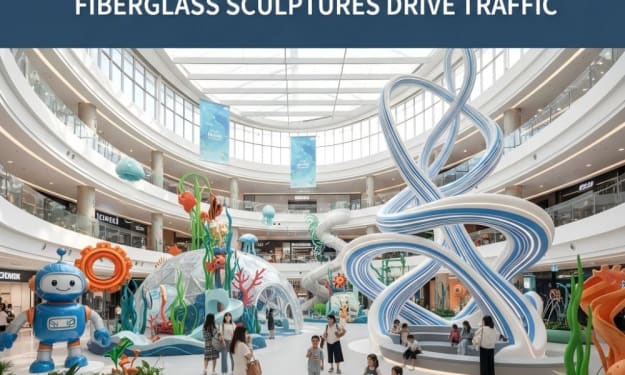
2026 Commercial Space Design:How Fbierglass Sculpture Drives Traffic
Today, offline commercial spaces are facing continuous pressure. With e-commerce offering convenient and fast services, physical stores must showcase unique features to attract customers. In this context, fiberglass sculptures are no longer merely decorative items; they have become visual focal points in shopping malls, brand stores, pop-up shops, and mixed-use commercial projects, playing a crucial role in increasing foot traffic.
By Shenzhen Ruiheng Crafts3 days ago in Art
Why Strategic Branding Is Essential for Long-Term Business Growth
In today’s fast-paced digital environment, businesses face constant pressure to stand out. Consumers are exposed to endless choices every day, making attention harder to earn and trust harder to keep. While quality products and services are important, they are no longer the only factors that determine success. Strategic branding plays a key role in helping businesses grow steadily and remain relevant over time.
By Ayush Bagwari3 days ago in Art



Comments
There are no comments for this story
Be the first to respond and start the conversation.