
How Laser Hair Removal Works: A Complete Guide
Do you have unwanted hair and want to permanently get rid of it?
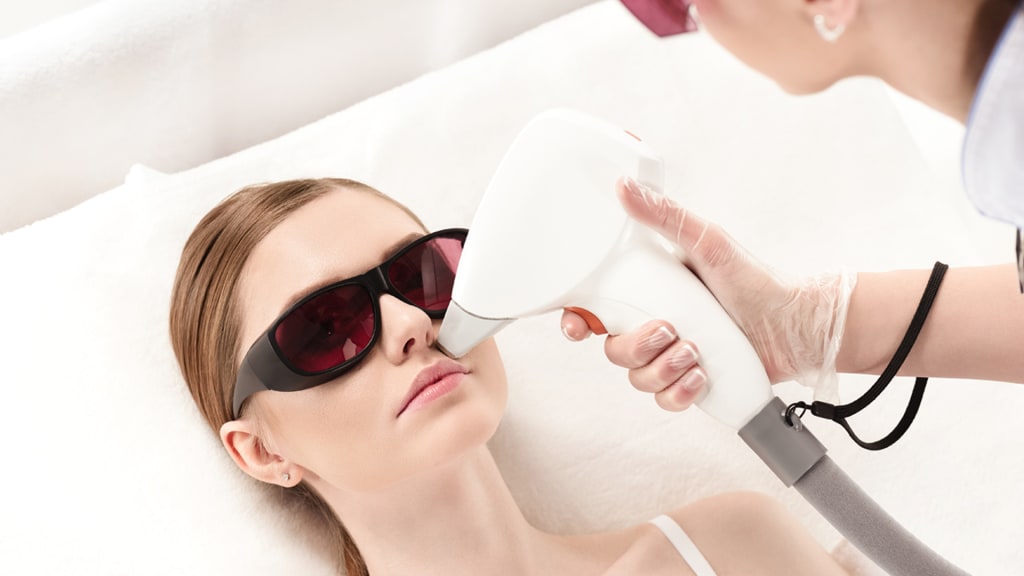
Well, you’re not alone facing this problem. Millions of people have, and they choose shaving, waxing, and threading to remove them. The concerned people often try home remedies to remove it. But these temporary solutions can satisfy people permanently. To address this pain, the laser hair removal technique has evolved, which emerged as a game-changing method. People have seen its growth reducing over time. Let’s reveal whether this treatment works indeed or not.
The Science Behind Laser Hair Removal
Laser hair removal is not magic but a science. It is evolved as a non-invasive procedure that harnesses concentrated light energy with precision to destroy hair follicles (hair roots). In short, this procedure works on the root, where the hair grows from. This process is based on selective photothermolysis. It requires the laser beam to selectively target the pigment (colour-adding melanin) in hair strands. While laser targets pigmented hair, the surrounding skin tissues remain unharmed.
The pigment in the hair allows the laser light to pass in to. Its energy converts into heat, which significantly damages the hair follicle. Gradually, its growth cycle slows down after repeated treatments. Eventually, you see the reduced hair regrowth leads to a hair-free surface. So, this is the science behind laser hair reduction treatment.
The Process of Laser Hair Removal
Now that you know how it works, let’s further proceed with several key steps involved in this process. Let’s break them down below to develop easy understanding:
1. Consultation and Skin Assessment
Before any skin or beauty treatment, the consultation must be an essential ritual. It will help you to find answers to your burning questions related to laser hair removal. A consultation with a dermatologist or skin specialist will further proceed with analysing skin type, hair colour, and medical history. This analysis guides you in making a concrete decision of whether the laser treatment is ideal for you.
Here, it must be understood that light skin with dark hair usually achieves the best results. This is actually the best-fit contrast for targeting melanin with laser effectively. However, advanced laser techniques have already evolved, which make this procedure more accessible for people with dark skin tones.
2. Preparation for the Procedure
Once the patient comes across every answer to his/her concerns, the procedure of laser hair removal starts. But it requires many guidelines to follow, which are the following:
· It’s better to avoid the sun for at least two weeks before the procedure so that the tan can be interrupted. It can cause side effects.
· Shave hair from the surface to be treated 24 hours before the treatment. It removes barriers in the way of the laser energy, which must be focused on the hair follicle, but not on the surface hair.
· Do not go for waxing or plucking hair. Leave it for at least four weeks prior to the treatment. Otherwise, the root won’t be there, which can make the laser hair removal ineffective.
· Avoid retinoids or glycollic acids, which are able to exaggerate the sensitivity of your skin.
3. The Treatment Session
After following the guidelines, the procedure will formally begin and go ahead this way:
• A pair of protective goggles will be put on your eyes to keep them protected from hazardous laser light.
• A cooling gel or a tropical anaesthetic will be lavishly applied to minimise the sensation and discomfort.
• Then, the laser device is moved over the surface to reduce hair growth. While doing so, precision is the key. It ensures that controlled light will go in to destroy follicles.
• However, the sensation will be minimal, but you may feel as if being stung or snapped. To soothe this sensation, some smart doctors use ice packs or lasers with a cooling mechanism.
• Considering the time, it completely depends on the size of the area being treated. The procedure may last anywhere from a few minutes (for the upper lip) to an hour (for larger areas like legs).
4. Post-Treatment Care
As the procedure is over, the redness or swelling can be pronounced. It seems like a mild sunburn. But this temporary side effect can be subsided by:
• Using aloe vera or cooling gel can make the surface super smooth.
• Covering the skin from the UV rays of the sun and applying sunscreen (SPF 30+)
• Saying no to waxing, plucking, or bleaching the hair when the sessions are going on.
• Avoiding saunas, hot showers, or anything that causes excessive sweating for at least 24-48 hours.
• Lubricating skin with water intake and using gentle skincare products.
How Many Sessions Are Needed?
The number of sessions depends on the hair growth cycles. This phase is called the anagen or growth phase of the hair cycle. But here, you should know the fact that all hair follicles grow hair in the different phases.
In most of the cases, individuals require 6 to 8 sessions, which are spaced 4 to 6 weeks apart. This interval is sufficient to achieve optimal results. However, maintenance may be required, which may be needed once or twice a year so that the regrowth can be retarded.
Benefits of Laser Hair Removal
Laser hair removal has multiple advantages over traditional hair removal methods.
1. Long-Lasting Results—Unlike waxing or shaving, laser hair removal significantly (however gradually) reduces hair growth and might reach permanency after 4-8 sessions.
2. Precision—In terms of precision, the laser focuses on hair follicles without causing any damage to the surrounding skin surface.
3. Speed—Technically, each pulse of the laser emanates at a fraction of a second, treating multiple hair follicles at the same time. That’s why it’s a lunchtime procedure.
4. Reduced Ingrown Hairs—On extremely sensitive ingrown hair, it ideally works. Simply put, you don’t feel skin irritation or inflammation during or after this procedure.
5. Less Pain Over Time—Although the very first encounter with laser beams can be uncomfortable, it becomes less painful in secondary sessions. Also, the hair growth reduces significantly.
Potential Side Effects
However, it won’t be tricky to understand some momentary side effects associated with this treatment. Here, you can explore them formally:
• Redness and Swelling
• Skin Irritation
• Pigment changes like hyperpigmentation (skin darkening) or hypopigmentation (lightening)
• Rare complications such as blistering, scarring, or burns
If you don’t want to experience severe injuries, avoid home-based laser hair removal treatments. If you are still eager to do so, consult with a skin specialist to know how to do. And for clinical treatment, choose a certified and experienced laser technician over an uncertified beautician.
Who is the Best Candidate for Laser Hair Removal?
Ideally, laser hair reduction treatment is for all. But people with these conditions can attain desirable results:
• Dark hair and light skin
• People with hormonal conditions (e.g., PCOS), which causes excessive hair growth.
However, individuals with very light blonde, grey, or red hair may not see desirable results. These conditions are not favourable as the melanin is insufficient in hair, which is a must for excellent results.
Cost and Affordability
Many factors decide the overall cost of this laser treatment, such as:
• Treatment area size (smaller areas like the upper lip cost less than larger areas like the legs or back).
• Number of sessions required.
• Clinic location and expertise of the practitioner.
You can consult and enquire about it.
Conclusion
Laser hair removal is an advanced and effective method for achieving long-term hair reduction. With proper preparation, multiple sessions, and post-treatment care, you can enjoy smooth, hair-free skin with minimal maintenance. While the procedure is not entirely permanent, it offers significant and lasting results compared to traditional hair removal methods. If you're considering laser hair removal, consult a qualified professional to determine the best approach for your skin and hair type.
About the Creator
How to Build a Profitable Online Business From Scratch
Building a profitable online business from scratch is no longer reserved for tech experts or Silicon Valley insiders. With the right strategy, tools, and mindset, anyone with a solid idea and the willingness to learn can create a sustainable source of income online. The digital economy has lowered the barrier to entry, allowing entrepreneurs to reach global audiences, test ideas quickly, and scale faster than ever before.
By Ayush Bagwari4 days ago in Art
Key considerations before customizing stainless steel sculptures
Custom stainless steel sculptures are widely used in public and commercial spaces due to their modern appearance, durable quality, and long lifespan. However, many problems with commissioned custom stainless steel sculptures only become apparent after installation. Understanding the sculpture's purpose, selecting appropriate materials and structure, and planning installation and maintenance in advance can significantly reduce project risks.
By Shenzhen Ruiheng Craftsa day ago in Art




Comments
There are no comments for this story
Be the first to respond and start the conversation.