
Fiberglass sculpture:realistic and affordable custom bronze-like solutions
how can fiberglass look like bronze sculptures?

When people think of bronze sculptures, they often associate them with weight, cost, and long-term durability. Traditional bronze works are valued for their metallic texture and aged visual character, but they are not always practical for every project. In many commercial and public installations, fiberglass sculptures are used instead to reproduce a bronze-like appearance while reducing structural load and production cost. Through controlled surface treatment and layered finishing methods, fiberglass can achieve a convincing bronze effect.
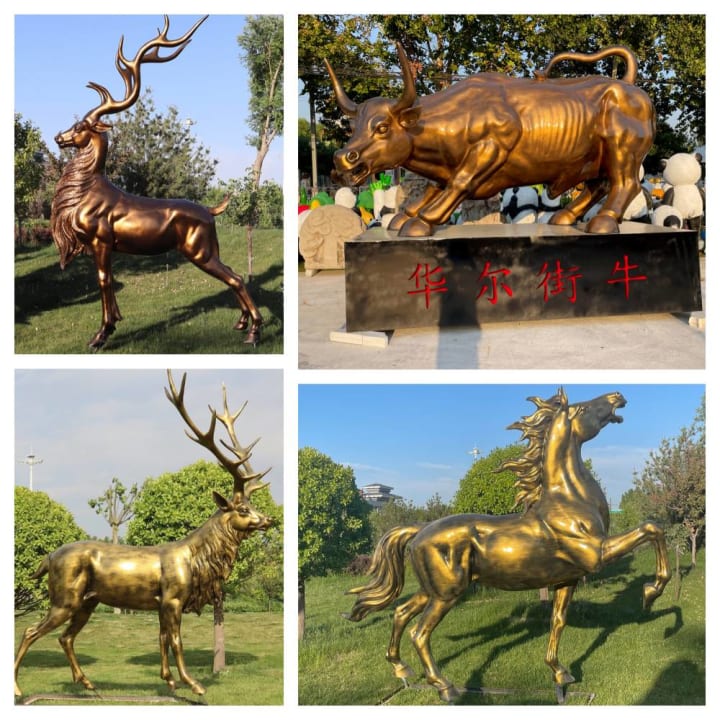
The process begins with the base material and structure. Fiberglass is widely used in sculpture fabrication because it is lightweight, formable, and weather resistant. It allows large shapes to be produced without the handling and transport challenges associated with cast metal. Before any metallic finish is applied, the surface is carefully refined and coated with primer. This preparation stage is important because metallic coatings tend to highlight surface defects rather than hide them. A smooth and stable base layer ensures better adhesion and more uniform visual results in later steps.

A bronze-like surface is created through layered coating techniques rather than a single paint application. The first visual layer is usually a dark base tone, often deep brown or black, which helps simulate the visual depth found in real bronze. Metallic coatings are then applied using bronze- or copper-toned paints that may contain fine metallic particles. These particles reflect light in a way that gives the surface a metal-like character rather than a flat color appearance.
To make the finish more realistic, additional treatments are used to simulate patina. Natural bronze develops color variation over time due to oxidation, and this effect is reproduced artificially through controlled color washing and selective shading. Greens, muted blues, and darker brown tones are applied in irregular patterns using brushes, sponges, or spray techniques. The goal is to avoid uniformity and introduce subtle variation, since real metal surfaces rarely age evenly. The balance between metallic brightness and patina softness is what determines whether the final result appears natural.
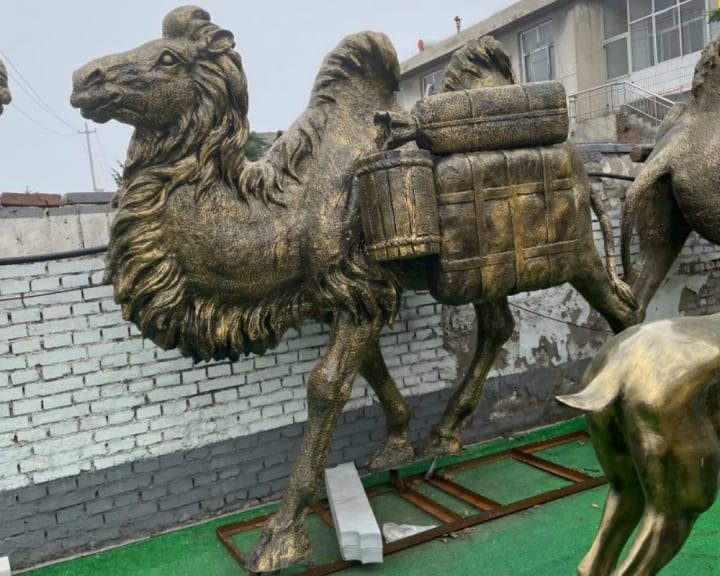
After the color and patina layers are complete, protective coatings are added. These clear layers serve multiple functions: they stabilize the finish, adjust surface gloss, and provide resistance to ultraviolet light and moisture. Outdoor installations especially depend on this protective stage to maintain appearance over time. Compared with real bronze, which can continue to oxidize and change color, a sealed fiberglass bronze-effect surface remains visually stable with routine maintenance.
Fiberglass as a base material also allows a wide range of detail reproduction. Textures, carved patterns, and sculpted relief elements can be formed in the molding stage and then emphasized through finishing. Because the metallic effect is created at the coating level, surface detail can be enhanced visually without increasing structural weight. This makes the method suitable for both small decorative objects and large display sculptures.
Another practical advantage of bronze-effect fiberglass finishes is flexibility in visual style. Variations can be introduced by adjusting metallic tone, patina strength, and gloss level. Some finishes lean toward a polished bronze look, while others simulate aged or antique metal. Mixed metallic effects, such as bronze combined with copper or gold accents, can also be produced through layered finishing methods. These variations are achieved through surface treatment rather than changes to the underlying material.
Bronze-effect fiberglass sculpture is therefore best understood as a surface engineering approach rather than a material substitute. The visual qualities associated with bronze are reproduced through preparation, layered coatings, controlled color variation, and protective sealing. When executed carefully, the result can closely resemble metal while retaining the practical handling and structural advantages of fiberglass.
About the Creator
Shenzhen Ruiheng Crafts
https://www.craftsornaments.com/
Keep reading
More stories from Shenzhen Ruiheng Crafts and writers in Art and other communities.
Key considerations before customizing stainless steel sculptures
Custom stainless steel sculptures are widely used in public and commercial spaces due to their modern appearance, durable quality, and long lifespan. However, many problems with commissioned custom stainless steel sculptures only become apparent after installation. Understanding the sculpture's purpose, selecting appropriate materials and structure, and planning installation and maintenance in advance can significantly reduce project risks.
By Shenzhen Ruiheng Crafts3 days ago in Art
Lauren Sánchez and Jeff Bezos turn heads in the front row at Paris Haute Couture Week
Lauren Sánchez and Jeff Bezos are painting the town red — and silver — in Paris. The former journalist, 56, and her billionaire husband, 62, kicked off Haute Couture Week on Monday, attending the Schiaparelli and Dior Spring 2026 fashion shows in the City of Light.
By Dena Falken Esq2 days ago in Art


Comments
There are no comments for this story
Be the first to respond and start the conversation.