
Eco-Art Frenzy: Saving the Planet One Wacky Installation at a Time
When Science Class Meets Reality TV Drama


Welcome, my beleaguered students of the world, to the grand spectacle of Eco-Art, where environmental science gets jazzed up with creative installations so bizarre and delightful, they make your Aunt Marge's Pinterest board look like a kindergarten finger-painting class! Now, before you roll your eyes and mutter under your breath about yet another art-meets-science mumbo jumbo, let me assure you, this is no ordinary paintbrush-and-easel affair. We're talking about using art to hammer environmental science into the thick skulls of the masses, one wildly flamboyant project at a time. Buckle up, it's going to be a roller coaster of absurdity and enlightenment.
Eco-Art, dear students, is the wacky lovechild of Mother Earth and a mad artist, birthed to address environmental issues with all the subtlety of a heavy metal concert in a library. Imagine splashing buckets of bright green paint on the White House to highlight climate change, except more legal and with less likelihood of a felony charge. Eco-Art’s goal is simple: take the mind-numbing boredom of environmental science and wrap it in a neon, glitter-covered package that even the most reality-TV-addled brain can't ignore.
This marvelous mess of creativity has roots going back to the 1960s when artists started thinking, "Hey, maybe we can use our talents to stop the planet from turning into a giant garbage dump." The movement has since grown, fueled by equal parts desperation and a love for outrageous spectacle. From Andy Goldsworthy's natural sculptures to Agnes Denes' wheatfields planted in the middle of New York City, Eco-Art has evolved into a full-blown phenomenon, and we are here for every dramatic, eyebrow-raising moment.
Techniques? Materials? Oh, honey, sit down because this is where things get deliciously weird. Eco-Artists will use anything and everything to make their point—recycled plastics, found objects, live plants, and yes, even your discarded childhood toys. Remember those Lego bricks you used to step on? Well, some genius artist somewhere has turned them into a statement piece about the choking hazards of ocean microplastics. Notable projects like Christo and Jeanne-Claude’s “Running Fence,” a gigantic fabric fence stretching across California, and Olafur Eliasson’s “Ice Watch,” which involved placing chunks of Greenland ice in urban spaces to illustrate melting glaciers, are the epitome of this mad genius.
But let’s not get lost in the glitz and glam. The true power of Eco-Art lies in its ability to make people pause their endless Instagram scrolling and pay attention to something other than the latest TikTok dance craze. Through sheer spectacle, these installations raise awareness about environmental issues in ways that a 10,000-page scientific report never could. Take, for example, Banksy's “Dismaland,” a dystopian art installation that mocked consumer culture and environmental neglect. Or the awe-inspiring “Climate Ribbon” project, which uses thousands of messages about climate action to create a visual and emotional impact far beyond a boring old pie chart.
In the wild, wild world of Eco-Art, education is not a dry lecture—it’s an explosive, mind-bending experience. Science and art galleries have jumped on the bandwagon, using these installations to teach the masses about sustainability, conservation, and all those other eco-buzzwords that usually make people’s eyes glaze over. Think of it as the educational equivalent of sneaking vegetables into a chocolate cake. The Eden Project in Cornwall, UK, with its bio-dome structures filled with plants and art, is a perfect example of how Eco-Art can educate and entertain simultaneously. Similarly, the “Art of Change 21” initiative uses art to engage young people in climate action, proving that even the most skeptical Gen Z-er can be convinced to care about the planet.
Now, let’s wrap this up with a neat, eco-friendly bow. Eco-Art, my dear cynics, is not just some fleeting trend. It’s a vital, dynamic force for change that blends the chaotic energy of modern life with the pressing need to save our planet. By turning scientific concepts into eye-popping spectacles, it captures hearts, minds, and social media feeds, making environmental science as irresistible as a cat video binge session. So, the next time you stumble upon an art installation that looks like it was designed by a mad scientist on a sugar high, take a moment to appreciate its underlying message. Who knows? It might just inspire you to swap out that plastic straw for a reusable one or, dare I say, actually care about the environment.
In conclusion, Eco-Art is like the perfect cocktail of education and entertainment, shaken, not stirred, with a twist of wild creativity. It’s proof that even the most serious, dull-as-dishwater topics can be transformed into a visual feast that grabs attention and refuses to let go. So let’s embrace the madness, celebrate the absurd, and maybe, just maybe, save the planet one wacky installation at a time. Now, go forth, spread the gospel of Eco-Art, and remember: if it’s not making you laugh and think simultaneously, it’s probably not worth your time.
About the Creator
ScienceStyled
Exploring the cosmos through the lens of art & fiction! 🚀🎨 ScienceStyled makes learning a masterpiece, blending cutting-edge science with iconic artistic styles. Join us on a journey where education meets imagination! 🔬✨
Keep reading
More stories from ScienceStyled and writers in Art and other communities.
Kinetic Capers: When Newton Meets Da Vinci in a Reality TV Mash-Up
Alright, class, gather 'round and hold onto your brain cells because today we're diving headfirst into the whirlwind world of kinetic art and the physics of motion. And trust me, it's going to be more exhilarating than binge-watching a season of Keeping Up with the Kardashians while riding a rollercoaster.
By ScienceStyledabout a year ago in Art
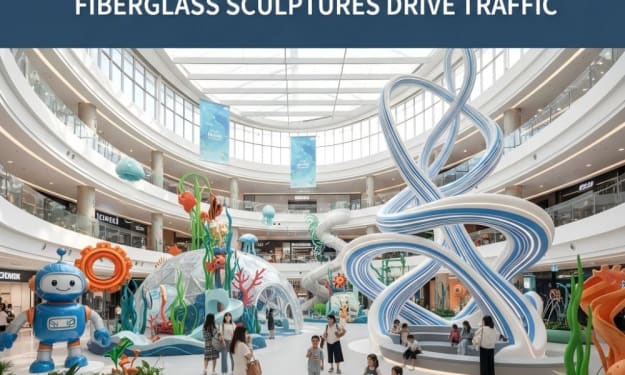
2026 Commercial Space Design:How Fbierglass Sculpture Drives Traffic
Today, offline commercial spaces are facing continuous pressure. With e-commerce offering convenient and fast services, physical stores must showcase unique features to attract customers. In this context, fiberglass sculptures are no longer merely decorative items; they have become visual focal points in shopping malls, brand stores, pop-up shops, and mixed-use commercial projects, playing a crucial role in increasing foot traffic.
By Shenzhen Ruiheng Crafts2 days ago in Art
Why Strategic Branding Is Essential for Long-Term Business Growth
In today’s fast-paced digital environment, businesses face constant pressure to stand out. Consumers are exposed to endless choices every day, making attention harder to earn and trust harder to keep. While quality products and services are important, they are no longer the only factors that determine success. Strategic branding plays a key role in helping businesses grow steadily and remain relevant over time.
By Ayush Bagwari2 days ago in Art
Ludacris and Nelly draw backlash over bookings at MAGA-coded music festival
Ludacris and Nelly headlining a mostly right-wing event is good for them. It’s also great for the genre of hip hop. The two rap veterans have showcased their talents on other stages. Why can’t they perform for mostly MAGA folks and grab that bag?
By Skyler Saunders3 days ago in Beat



Comments (1)
It's nice