

Connection.
In the quiet stillness of the natural world, where the whisper of leaves and the murmur of rivers weave a tapestry of existence, there lies an unspoken dialogue between nature and the human soul. Nature, with its intricate patterns and relentless cycles, reflects the depth and complexity of human emotion in ways both subtle and profound.
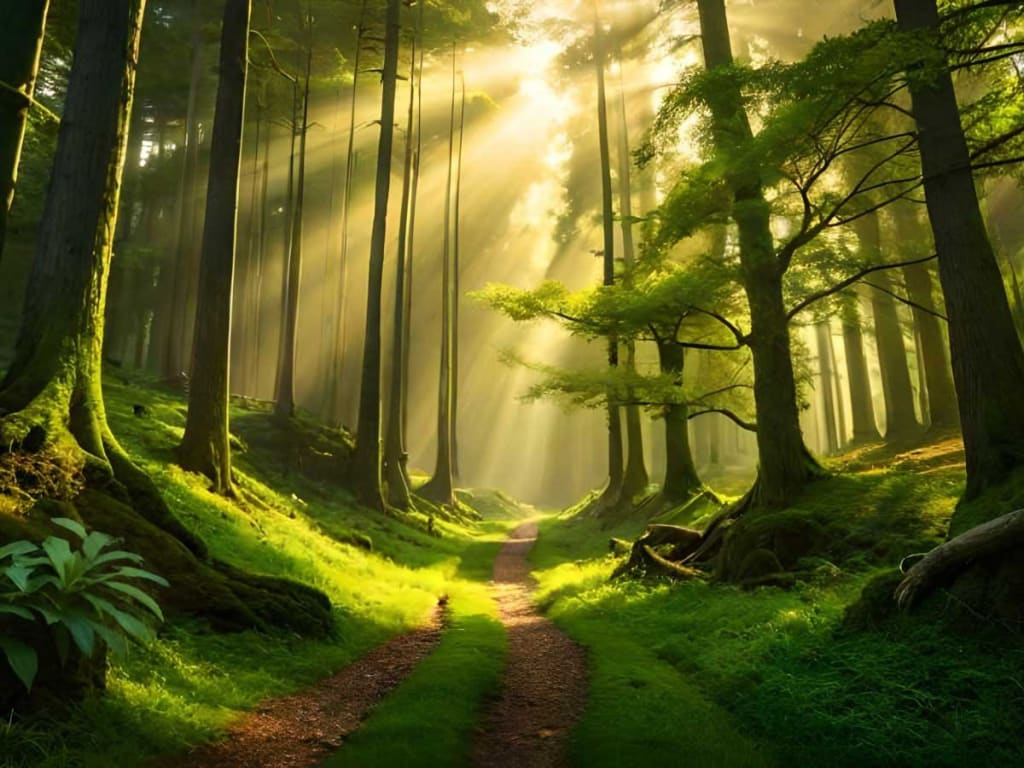
Imagine a vast, ancient forest, where towering trees stand as sentinels of time. Their branches, gnarled and twisted, cradle the secrets of countless seasons. Each rustling leaf, each creaking bough, carries a resonance that mirrors the inner landscapes of the human heart. When one stands amidst these giants, the quietude is not merely an absence of sound but a profound presence—a reflection of solitude, introspection, and the search for meaning.
The river, with its ceaseless flow, embodies the relentless march of time and the fluidity of emotions. It rushes over stones, carving paths through the earth, and its surface, ever-changing, reflects the turbulence and serenity of the mind. In moments of despair, the river’s roar can seem like an echo of internal chaos, while its calm stretches mirror the tranquility of acceptance.
On a serene evening, as twilight drapes its velvety cloak over the world, the sky transforms into a canvas of shifting hues. The colors of dusk—a fusion of soft pinks, fiery oranges, and deep blues—echo the spectrum of human feelings. As daylight fades, the gradual transition from light to dark mirrors the process of letting go, an invitation to embrace the quietude of the night and find solace in the unknown.
The whispering winds that sweep across fields and mountains carry with them the breath of change. Their gentle caress can soothe the weary soul, while their fierce gusts might stir the depths of unresolved grief. In their variability, they embody the essence of emotional fluctuation—an ever-present reminder that the cycle of highs and lows is as natural as the shifting seasons.
In the delicate interplay between the natural world and human emotion, there exists a profound symbiosis. Nature does not merely mirror emotions; it becomes an extension of them. The rustle of leaves, the flow of rivers, the colors of the sky—each element of nature becomes a vessel for the human experience, allowing one to feel seen, understood, and connected in ways words cannot fully capture.
In moments of silence, when one pauses to truly listen, nature’s echoes resonate deeply within the soul. It is here, in the quiet communion between the earth and the heart, that the most profound understandings emerge. For in the natural world, one finds not only a reflection of their emotions but a guide through the intricate dance of existence.

Anger.
In the boundless expanse of the sky, where darkness meets the horizon, a storm brews with a ferocity both awe-inspiring and terrifying. The first sign of its approach is a distant rumble, a low, ominous growl that seems to rise from the very depths of the earth. This sound, so primal and raw, hints at the turmoil within—a hidden storm that, like anger, brews quietly before it erupts.
The sky, once clear and serene, darkens as the storm gathers strength. Clouds converge, swirling and churning, their edges jagged and electric. This transformation mirrors the gradual build-up of frustration and rage, the slow accumulation of grievances and unspoken words. The air becomes thick with tension, a palpable heaviness that weighs down on everything beneath it.
As the storm reaches its zenith, the sky is ignited by a sudden flash—an intense, blinding crack of light that splits the heavens. This lightning, sharp and unforgiving, illuminates the darkness in an instant, a burst of raw, unrestrained power. It is the embodiment of anger, a vivid eruption of pent-up emotion that demands attention and leaves an indelible mark on the landscape.
The lightning’s brilliance is fleeting, but its impact is profound. It scours the sky with a jagged, almost violent grace, leaving behind a trail of afterimages that echo its intensity. In its wake, the storm's thunder follows—deep, resonant crashes that reverberate through the air, a sound that mirrors the rumble of anger breaking free, shaking the very foundations of calm and control.
Yet, as quickly as it came, the lightning fades, leaving behind a sky still shrouded in darkness, though now with an added sense of release. The storm continues its course, its fury spent, and the clouds begin to drift apart. The air, once heavy with pent-up emotion, now feels lighter, as if the storm has purged the sky of its turbulent energy.
This brief but explosive display of light and sound serves as a reminder of the nature of anger—an intense force that, when allowed to build unchecked, can explode with the same sudden, overwhelming force as a lightning strike. The storm’s passing brings a moment of quiet reflection, a chance to assess the remnants of its fury and begin the process of clearing the air.
In the aftermath, the sky starts to clear, revealing a landscape transformed by the storm. The ground, now slick with rain, gleams with a renewed clarity. The storm, much like anger, has left its mark but also made way for a fresh beginning. The sky, though scarred by the storm’s passage, begins to heal, reminding us that even the most intense bursts of anger eventually give way to a calmer, clearer perspective.

Sadness.
In the quiet expanse of the natural world, there comes a moment when the sky weeps. It is not a torrential deluge or a fierce downpour, but a gentle, persistent rain that falls with a soft, rhythmic grace. This rain, with its delicate patter, mirrors the quiet sadness that settles over the landscape, an expression of sorrow that seeps into every corner of existence.
As the rain begins, the first drops touch the earth with a tender caress. They land on leaves and petals, causing them to bow slightly, as if acknowledging a profound sadness that has permeated their being. The air grows cooler, and a damp stillness settles in, enveloping everything in a cocoon of subdued melancholy. The once vibrant colors of the world seem to fade, softened by the gentle veil of rain that blurs the edges of reality.
The sound of the rain is a steady, soothing murmur, a constant presence that fills the silence with its soft, relentless cadence. It is a lullaby of sorts, a comforting, though somber, melody that resonates with the heaviness of the heart. Each drop, as it meets its final resting place, contributes to a chorus of soft whispers—a song of quiet despair and introspection that echoes through the landscape.
Puddles form in the uneven terrain, collecting the rain’s tears and reflecting the muted sky above. These pools of water, now silent witnesses to the rain’s sorrowful descent, ripple gently with every new drop. They seem to hold the weight of the world’s sadness, a fragile mirror that reflects not just the sky, but the quiet, unspoken grief that flows through the natural world.
The rain continues its descent, a persistent reminder of the unrelenting nature of sadness. It washes over the ground, carrying away the dust of the day and leaving behind a fresh, raw sense of vulnerability. The earth absorbs the rain, soaking in the moisture as it does the weight of sorrow, transforming it into something that is both heavy and healing.
The trees stand stoically in their verdant attire, their branches heavy with the burden of the rain. They sway gently, their leaves rustling in a soft, mournful symphony that speaks to the deep, inherent sadness of nature. The once crisp lines of their foliage become blurred, their forms softened by the persistent, gentle touch of the rain.
As the rain lingers, the world outside becomes a place of introspection and quiet reflection. The gentle drip from the eaves of rooftops and the steady, soft fall of rain from the sky create a backdrop for contemplation. It is as if the rain has given nature a voice, a means to express the inexpressible sorrow that lies within.
In time, the rain begins to wane, its cadence growing softer until it is but a faint whisper. The clouds, having released their burden, begin to part, revealing glimpses of a sky that, though still overcast, holds the promise of renewal. The rain has left its mark, a testament to the depth of sadness that once enveloped the world. Yet, in its wake, there is a sense of cleansing, a gentle reminder that even the deepest sadness can eventually give way to a new beginning.
About the Creator
Christen
Think logically. I know you can do it!
Golden Journey
Once in a small town named Willow Creek, something extraordinary was about to happen. The sun was setting, casting long shadows and a golden glow across the landscape. Among the townspeople was a curious boy named Ethan. A dreamer with bright green eyes and messy brown hair, Ethan was often lost in his thoughts. He wanted to explore worlds beyond his own, driven by the tales of adventure his grandmother used to tell him.
By Hamad Afridi a day ago in Art
Review of 'Man on the Run'
My wife and I saw Man on the Run, a nearly 2-hour documentary on Amazon Prime, about Wings, Paul McCartney's group that flew around the world from shortly after The Beatles broke up in early 1970 to shortly after John Lennon was murdered at the end of 1980, making a Beatles reunion forever impossible.
By Paul Levinsona day ago in Beat


Comments
There are no comments for this story
Be the first to respond and start the conversation.