
Choosing the right thickness for stainles steel sculpture
Do you know how to choose?

When planning stainless steel sculptures, many people initially focus on shape, surface treatment, or size, while overlooking the thickness of the stainless steel itself. In practice, thickness directly influences structural safety, visual proportion, fabrication difficulty, and long-term performance. Selecting the right thickness is not simply a matter of “the thicker, the better,” but rather a process of matching material properties to design intent and environmental conditions.
In fabrication, common stainless steel sculpture thickness typically ranges from 2 mm to 8 mm, depending on overall scale, structural complexity, and installation environment. Different projects follow different structural logic, and thickness plays a key role in ensuring the sculpture remains both visually balanced and structurally reliable over time.
Thickness and Structural Stability
The primary function of thickness is to provide structural support. Stainless steel sculptures—especially those installed outdoors—must withstand wind loads, temperature variation, and long-term mechanical stress. If the steel is too thin, deformation, vibration, or fatigue may gradually appear, even if the sculpture initially seems stable.
As a general guideline, small to medium stainless steel sculptures under 2 meters in height often use 2 mm–3 mm stainless steel combined with internal reinforcement. Large outdoor sculptures exceeding 3 meters typically require 4 mm–6 mm panels supported by a structural frame. Rather than relying on a single standard, thickness is usually calculated based on height, surface curvature, load distribution, and installation method.

Visual Proportion and Design Intent
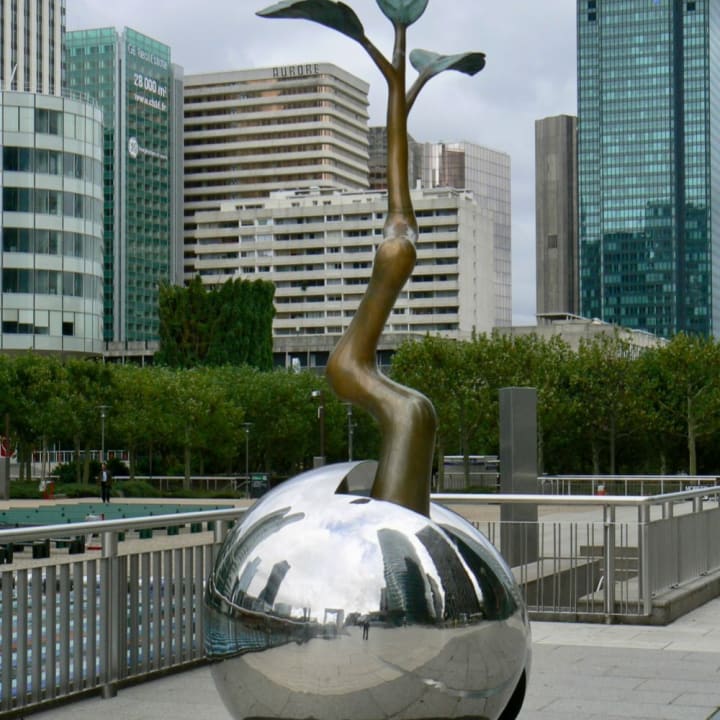
Thickness also affects the visual language of a sculpture. Excessively thick steel can make a piece appear heavy or bulky, which may conflict with minimalist or abstract designs that rely on lightness and flow. Conversely, steel that is too thin may create a fragile or unfinished impression, especially in public spaces where permanence is expected.
Designers often use form to balance perceived strength and actual material thickness. Curved surfaces, folded edges, and rounded profiles can increase stiffness and visual stability without significantly increasing weight. When handled carefully, thickness becomes an integral part of the sculpture’s visual rhythm rather than a distraction from the overall design.
Indoor vs. Outdoor Environment
The installation environment plays a decisive role in thickness selection. Indoor stainless steel sculptures are protected from wind, rain, and extreme temperature changes, allowing for thinner materials and finer detailing. In these cases, surface finish and craftsmanship often take priority over heavy structural reinforcement.
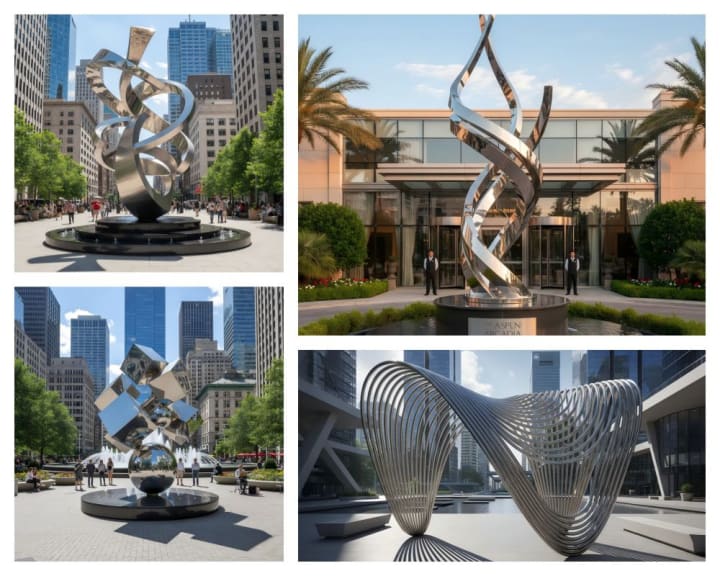
Outdoor sculptures face more demanding conditions. Wind pressure, humidity, thermal expansion, and occasional physical contact all influence material performance. Thicker stainless steel panels help reduce deformation and fatigue over time. For outdoor installations, a minimum thickness of around 4 mm is commonly used, while large-scale or exposed projects may require 5 mm–8 mm stainless steel combined with appropriate material grades such as 304 or 316. In coastal or high-humidity regions, increased thickness also contributes to improved corrosion resistance when paired with suitable surface treatments.
Fabrication and Welding Considerations
Thickness has a direct impact on fabrication methods. Very thin stainless steel demands higher welding precision and careful heat control to prevent warping or burn-through. Thicker steel is more forgiving during welding but increases cutting difficulty, material cost, and overall weight.
To balance these factors, fabricators may vary thickness within a single sculpture—using thicker material in load-bearing or high-stress areas and thinner panels in decorative sections. This approach improves structural performance while avoiding unnecessary material use.
Maintenance and Long-Term Performance
Long-term performance is closely tied to thickness. Thicker stainless steel generally offers better resistance to dents, impact damage, and surface wear, particularly in high-traffic public environments. Over years of exposure, this durability helps sculptures maintain their original form and finish, contributing to a lasting sense of quality in the surrounding space.
Choosing the appropriate thickness for a stainless steel sculpture is ultimately a process of balance. It requires understanding how material behavior, structural design, and environmental conditions interact in real-world use. When thickness is selected thoughtfully, stainless steel sculptures can achieve both strong visual presence and reliable long-term stability in indoor and outdoor settings alike.
About the Creator
Shenzhen Ruiheng Crafts
https://www.craftsornaments.com/
Keep reading
More stories from Shenzhen Ruiheng Crafts and writers in Art and other communities.
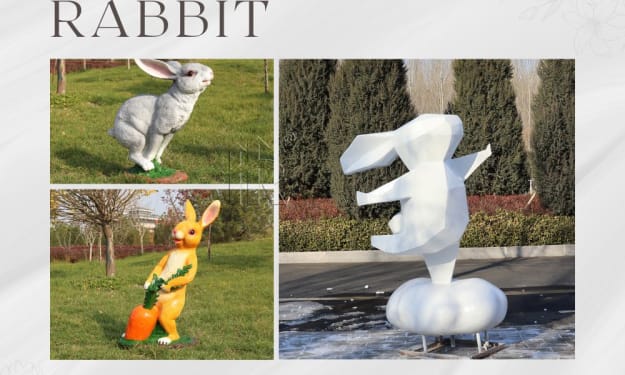
What does a rabbit statue symbolize?
Rabbit statues are more than cute decorative elements; they carry rich symbolism that has been valued across different cultures for centuries. From associations with luck and prosperity to meanings related to gentleness and creativity, rabbit imagery adds emotional depth and cultural context to a space.
By Shenzhen Ruiheng Crafts5 days ago in Art
Australian Woman Dies After Becoming Snagged in Ski Lift in Japan
A tragic accident in Japan has claimed the life of an Australian woman who became snagged in a ski lift, prompting renewed discussions about safety standards at winter sports resorts. Authorities confirmed the incident occurred at a major ski resort, where the victim was reportedly attempting to disembark from the lift when the accident happened.
By Aarif Lashari4 days ago in Art
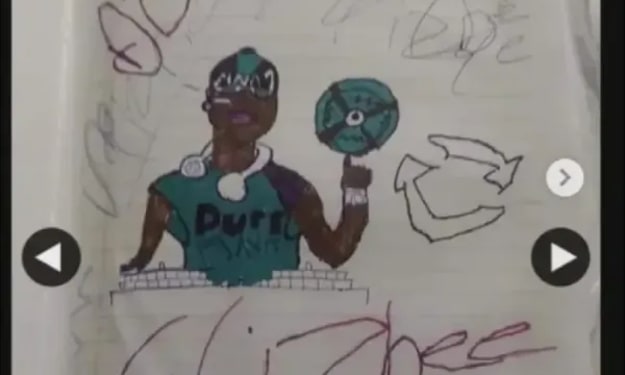
Dj Frizbee an illustration that I had done in highschool and when I was doing
Dj Frizbee is an illustration I did of a Dj I call Frizbee. I created DJ Frizbee when I was in highschool and this was around the time that I was doing tags around the school. Reina was an another graffiti piece that I did and a tagging name that I was trying on along with tags I was also creating pieces of my own as I had shown with this article.
By Revista Mikoabout 20 hours ago in Art
A Love Forboding
The chipped stone slope caused unbearable footing. I slid, skirting on my heels. I cast my shield, relinquishing my guard to stay upright. Left with my double-edge and a prayer to the maker, I skated toward my objective. The earthly stubble gave way to solid ground. I found myself restored, a trail of dust in my wake.
By James U. Rizzi7 days ago in Fiction


Comments
There are no comments for this story
Be the first to respond and start the conversation.