
Bridal Look Across India: Unraveling the Charm of Regional Brides
Bridal Look Across India

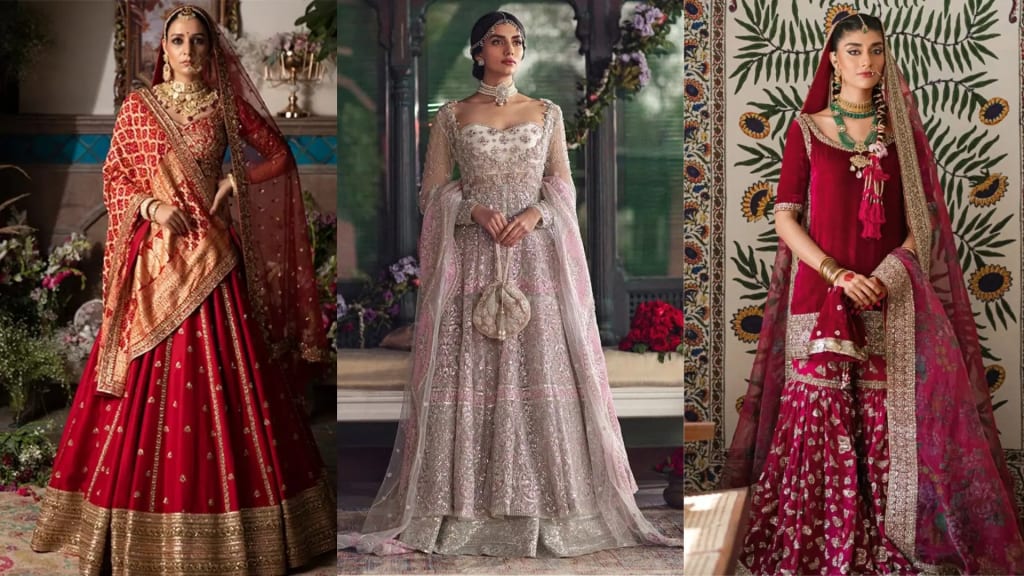
India, a land of diverse cultures, traditions, and heritage, showcases a breathtaking array of bridal looks that vary from one region to another. Each state has its distinct customs, colors, jewelry, and attire that define the beauty of a bride. From the regal elegance of a Rajasthani bride to the simple sophistication of a Malayali bride, the bridal look across in India is a celebration of centuries-old traditions infused with modern sensibilities. Let’s embark on a journey across India to explore the unique bridal looks that make every Indian wedding a grand spectacle.
1. North India: The Grandeur of Tradition
Punjabi Bride: Punjabi brides exude vibrancy with their red or maroon lehengas, heavily embroidered with zari and sequins. They accessorize with a dazzling set of jewelry, including chooda (red and white bangles), kaleeras (dangling ornaments), and a matha patti (headpiece). Their bridal look is incomplete without bold makeup and a radiant glow.
Kashmiri Bride: The Kashmiri bride’s charm lies in her traditional attire, known as the Pheran, adorned with intricate embroidery. She wears a Dejhoor (long gold earrings) and Tarang (a headscarf) that add grace to her ensemble. Kashmiri brides often prefer pastel or bright shades, beautifully complemented by minimal yet elegant jewelry.
Rajasthani Bride: A Rajasthani bride epitomizes royalty in her colorful lehenga-choli, often in hues of red, orange, or pink, embellished with gota-patti work. She dons a borla (rounded maang tikka), nath (nose ring), and an odhni (veil) that adds to her majestic look. The intricate Meenakari and Kundan jewelry complete her regal appearance.
2. West India: A Blend of Ethnicity and Grace
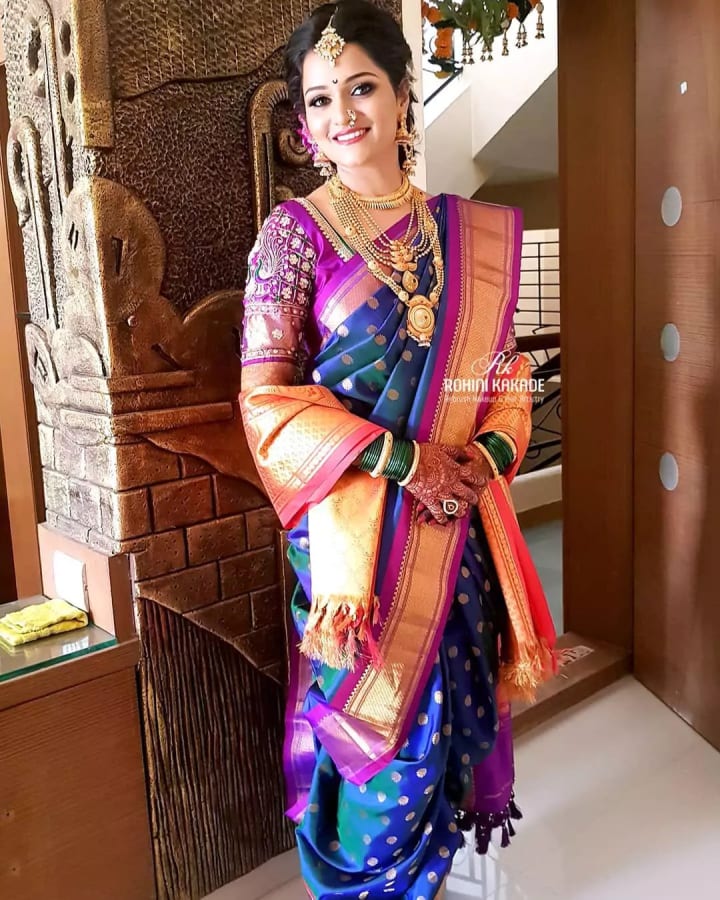
Maharashtrian Bride: The Maharashtrian bride is a vision of grace in a nauvari saree (nine-yard saree) draped in a dhoti style. She wears traditional gold jewelry, including the Mundavalya (a string of pearls tied across the forehead), Nath (crescent-shaped nose ring), and green glass bangles, which symbolize prosperity. Simplicity and elegance define her look.
Gujarati Bride: Gujarati brides wear richly embroidered Panetar sarees in white and red or Gharchola sarees with intricate bandhani work. They adorn themselves with exquisite gold jewelry, including the matha patti and bajubandh (armlet). A striking bindi and intricate mehendi complete their bridal look.
3. East India: A Touch of Tradition and Purity
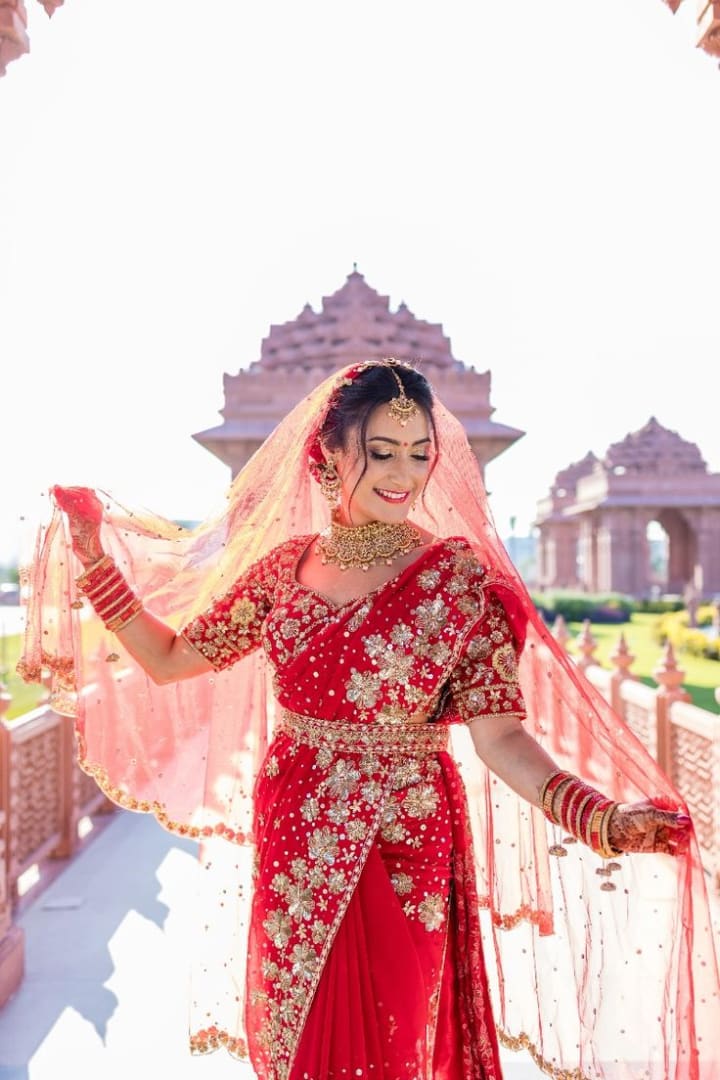
Bengali Bride: The Bengali bride is an epitome of beauty in her red or white Benarasi saree, draped elegantly. She wears a mukut (crown), large gold jewelry, and intricate Alta (red dye) designs on her hands and feet. Her large, expressive eyes are highlighted with bold kohl, and the sindoor ceremony adds a divine touch to her bridal charm.
Odia Bride: The Odia bride typically wears a red, white, or yellow saree adorned with silver or golden borders. She sports a unique headgear called the ‘Topor’ and layers of gold jewelry. Traditional Shankha Pola bangles (conch-shell and red bangles) and bold red lips enhance her bridal elegance.
4. South India: The Radiance of Silk and Gold
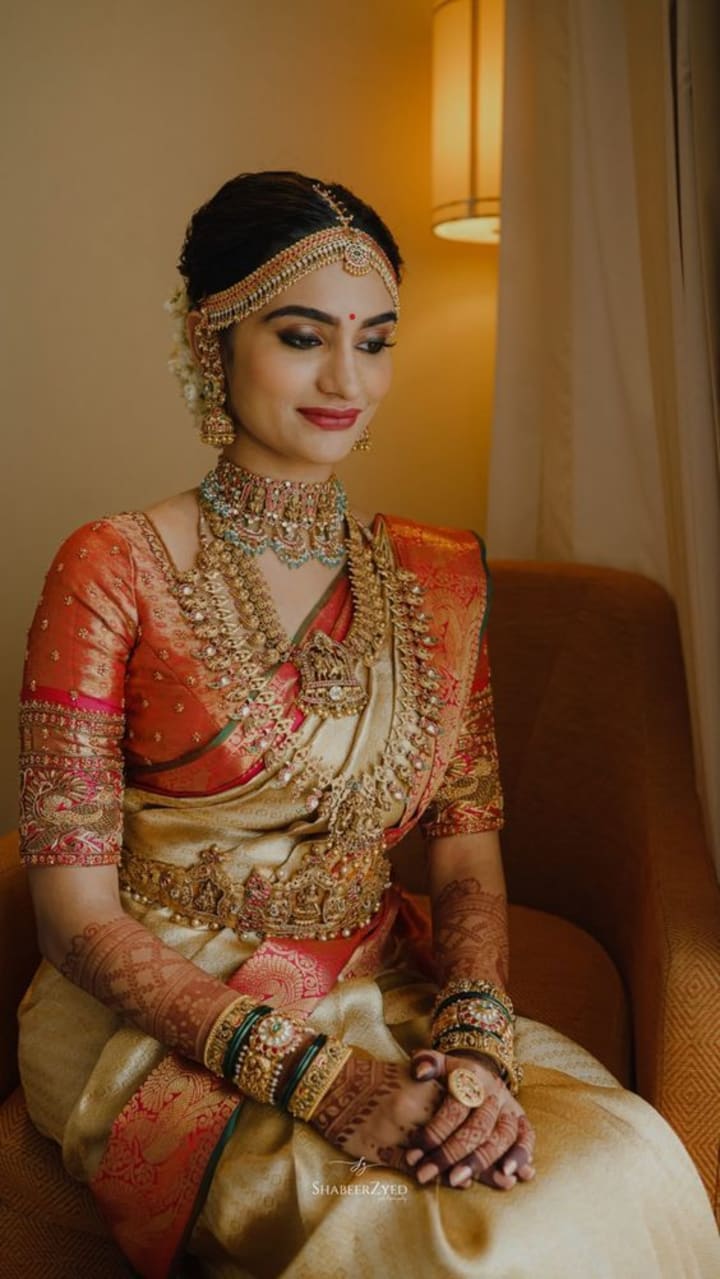
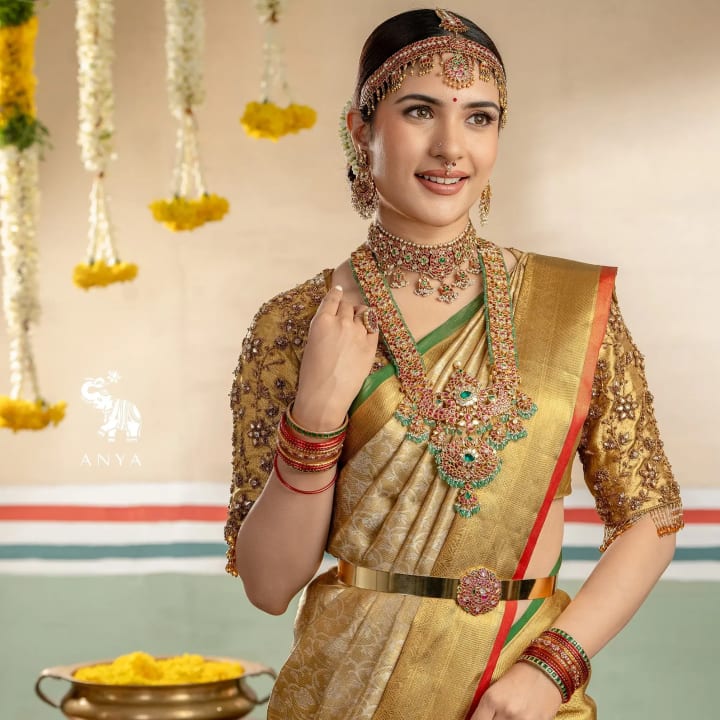
Tamilian Bride: Tamil brides are a sight to behold in their Kanjeevaram silk sarees, woven in rich gold and vibrant colors. They wear elaborate gold temple jewelry, including heavy necklaces, jhumkas (earrings), and vanki (armlets). The intricate jasmine-adorned bun and bold red sindoor add a divine aura to their bridal look.
Malayali Bride: Kerala’s Malayali bride is a vision of simplicity and grandeur in her off-white Kasavu saree with golden borders. Her jewelry includes traditional temple pieces such as Mullamottu mala (jasmine bud necklace) and Nagapadam (serpent motif necklace). A natural makeup look and a floral bun add to her ethereal charm.
Telugu Bride: The Telugu bride dazzles in a vibrant silk saree, adorned with layers of gold jewelry, including the Vaddanam (gold waist belt) and a long braid decorated with flowers. Her bridal makeup is soft yet radiant, complementing her traditional gold accessories.
Kannadiga Bride: The Kannada bride wears a Mysore silk saree, exuding elegance. The traditional Jada Billalu (hair ornaments), diamond nose rings, and layered gold necklaces complete her look. Simplicity combined with tradition makes the Kannadiga bride’s appearance graceful.
5. Northeast India: The Essence of Cultural Diversity
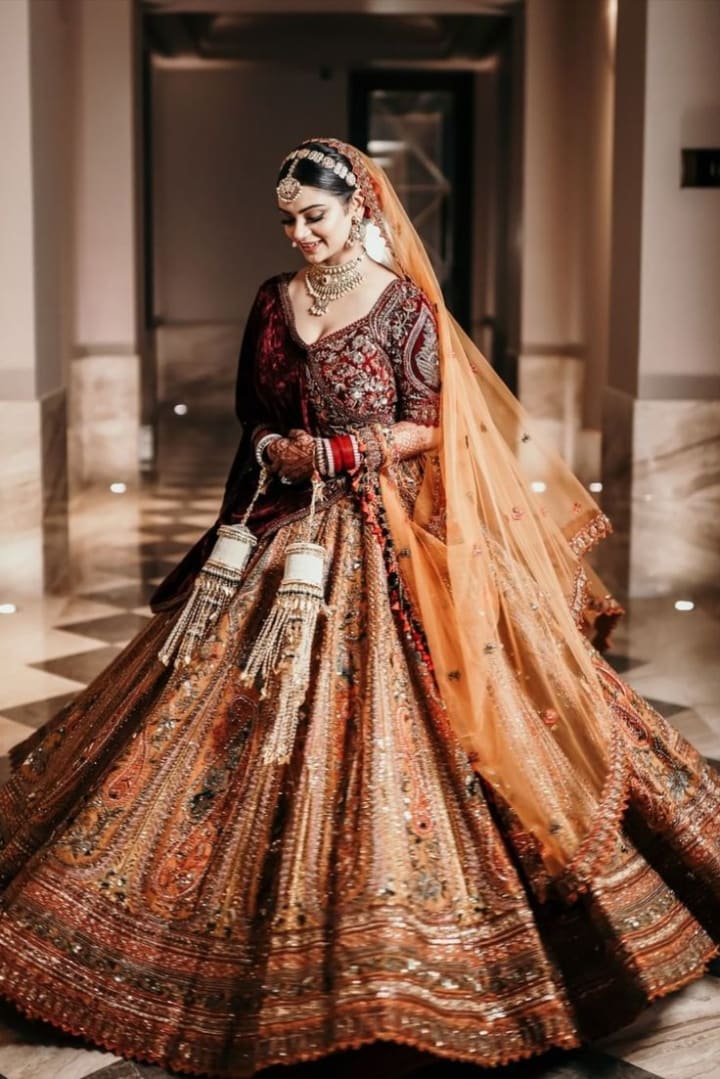
Assamese Bride: The Assamese bride wears the traditional Mekhela Chador, made of luxurious Muga silk. Her jewelry includes Junbiri (crescent-shaped necklace) and Gamkharu (golden bangles). Simplicity, grace, and natural beauty define her bridal appearance.
Manipuri Bride: Manipuri brides are known for their unique bridal attire, which includes the Potloi, a cylindrical skirt, and a white blouse with a red dupatta. They wear minimal gold jewelry and subtle makeup, reflecting their cultural richness.
Meitei Bride: The Meitei bride dons a Phanek and a beautifully embroidered Rani Phi, coupled with minimal yet elegant jewelry. Her look is completed with a simple yet radiant makeup style that enhances her natural beauty.
Conclusion
India’s bridal diversity is a true testament to its cultural richness. Each region’s bridal look is a blend of heritage, colors, and emotions, reflecting the traditions passed down through generations. Whether it’s the royal grace of a Rajasthani bride, the classic elegance of a Bengali bride, or the divine aura of a South Indian bride, every Indian bride shines in her unique way, making weddings a grand and beautiful celebration of love and culture.
About the Creator
shaadi dukaan
India's top wedding planning website. Find top vendors for makeup, photography, decoration, mehendi... compare price, see reviews to book the best.
Keep reading
More stories from shaadi dukaan and writers in Art and other communities.
15 Finger Mehndi Designs for Brides Getting Married In 2025
Mehndi has always been an essential part of bridal beauty rituals, symbolizing love, prosperity, and good luck. While traditional mehndi designs cover the hands entirely, modern brides are embracing minimalistic and elegant easy finger mehndi designs that blend tradition with contemporary aesthetics. If you're a bride-to-be in 2025, here are 15 stunning finger mehndi designs that will enhance your bridal look while keeping it stylish and unique.
By shaadi dukaan10 months ago in Art
The Best Philosophy in the World Is the One You Can Live
Ask ten philosophers what the best philosophy in the world is, and you will receive at least ten different answers—possibly delivered with footnotes, counterarguments, and mild contempt for the other nine. This disagreement is not a flaw of philosophy; it is its essence. Philosophy was never meant to be a universal prescription handed down like a rulebook. It exists to help human beings live better lives. By that standard, the best philosophy in the world is not the most elegant or complex—it is the one that can be lived.
By Fred Bradford4 days ago in Art




Comments
There are no comments for this story
Be the first to respond and start the conversation.