
Balancing Versatility and Specialization in Creative Careers
Creative Careers

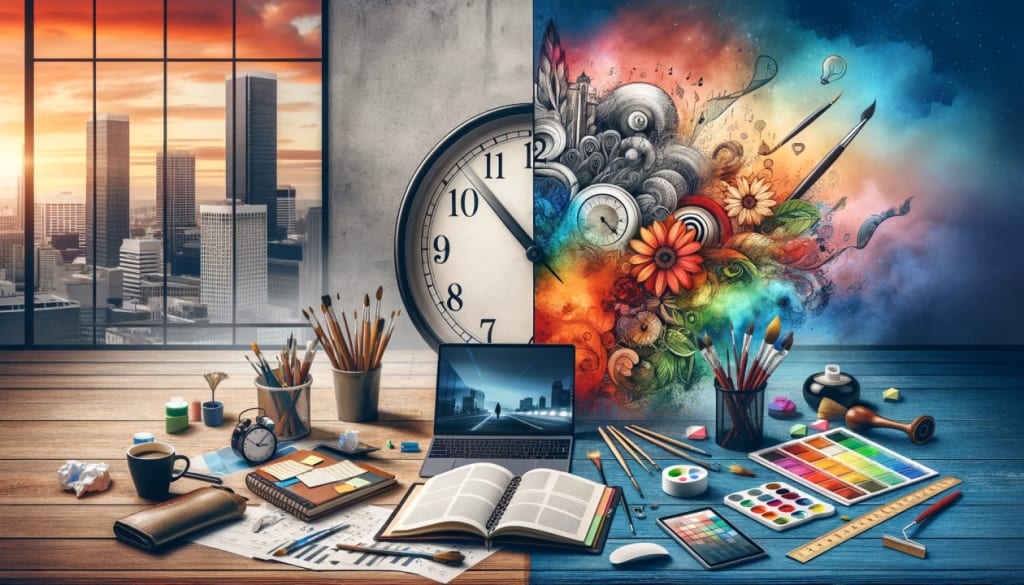
Balancing versatility and specialization in creative careers is a nuanced endeavor that can significantly impact an individual's professional trajectory and fulfillment. In the dynamic landscape of creative industries, professionals often grapple with the decision of whether to be a jack-of-all-trades or a master of one. Versatility, on one hand, offers the advantage of adaptability. A versatile creative professional is equipped with a broad skill set, enabling them to tackle diverse projects and collaborate across various disciplines. This adaptability is particularly valuable in an era where technological advancements and market demands are constantly evolving. For instance, a graphic designer who is proficient in both print and digital media, as well as familiar with video editing and web design, can seamlessly transition between different types of projects and meet the multifaceted needs of clients or employers. Such versatility not only enhances employability but also fosters continuous learning and innovation, as individuals are exposed to a wide range of techniques, tools, and trends.
However, the pursuit of versatility must be balanced with the need for specialization. Specialization allows creative professionals to develop deep expertise in a particular niche, distinguishing themselves in a crowded marketplace. A specialist is often perceived as an authority in their field, which can lead to higher demand and potentially higher compensation. For example, a photographer who specializes in fashion photography can build a strong portfolio that showcases their unique style and vision, attracting high-profile clients and opportunities that require specific skills and a keen eye for detail. Specialization also enables creatives to hone their craft to a level of mastery that is difficult to achieve when spreading oneself too thin across multiple disciplines. This depth of knowledge and skill can result in more innovative and high-quality work, as specialists can focus their energy and resources on excelling in their chosen area.
The challenge, therefore, lies in finding a balance between these two approaches. One strategy is to adopt a T-shaped skill set, where the vertical bar represents deep knowledge in one particular area (specialization), and the horizontal bar represents a broad understanding of related fields (versatility). This model allows creative professionals to leverage their deep expertise while still being adaptable and collaborative. For instance, a copywriter with a specialization in digital marketing can benefit from understanding basic principles of graphic design, SEO, and social media management. This broader knowledge base enables them to create more integrated and effective marketing campaigns and to communicate more effectively with other team members.
In practice, the balance between versatility and specialization can also be influenced by career stage and individual goals. Early in one's career, versatility may be more advantageous, as it provides exposure to various aspects of the industry and helps in identifying areas of interest and strength. As professionals gain experience, they may choose to narrow their focus and develop a niche that aligns with their passions and market needs. Moreover, the balance can shift over time as the industry evolves and personal interests change. Continuous self-assessment and adaptability are crucial in navigating this dynamic equilibrium.
Furthermore, the context of the creative industry and the specific demands of the market play a significant role in determining the optimal balance. In industries where rapid innovation and cross-disciplinary collaboration are prevalent, such as technology and media, versatility may be more highly valued. Conversely, in fields that require deep technical knowledge and precision, such as fine arts or architecture, specialization might be more critical. Understanding these contextual factors can help creative professionals make informed decisions about their career paths.
Ultimately, balancing versatility and specialization is a personal journey that requires self-awareness, strategic planning, and a willingness to adapt. By cultivating both breadth and depth in their skill set, creative professionals can position themselves to thrive in a competitive and ever-changing landscape. This balance not only enhances professional resilience and marketability but also contributes to a more fulfilling and sustainable creative career. Whether leaning towards versatility or specialization, the key is to remain open to learning and growth, continuously refining one's craft while embracing the diverse opportunities that the creative industries have to offer.
About the Creator
Ayesha Khalid
"I am a versatile individual, adept at learning new skills with a passion for creation and design. My journey is marked by curiosity and a drive to innovate, exploring realms where creativity thrives.
Keep reading
More stories from Ayesha Khalid and writers in Art and other communities.
The Role of Curiosity in Creative Design
Curiosity plays an indispensable role in the realm of creative design, acting as a catalyst for innovation, problem-solving, and the development of unique, engaging solutions. At its core, curiosity drives designers to explore new ideas, question existing paradigms, and continuously seek knowledge and inspiration from a variety of sources. This intrinsic desire to learn and discover fuels the creative process, enabling designers to push boundaries and venture into uncharted territories, ultimately resulting in more compelling and original designs.
By Ayesha Khalid2 years ago in Art
“What If It Happens?”
Monday, 11 April 2022 Ishrat Jahan One of our friends, Mr. Farooq, is a middle-aged man, yet he has still not been able to free himself from his deeply suspicious and fearful nature. These days, I happened to have some free time, so I thought it would be a good idea to meet him and try to untangle the puzzle of his constant worries. By coincidence, he himself arrived at my humble home, jolting along in a rickshaw.
By Sudais Zakwana day ago in Art
Introduction to Organic Solutions
In the realm of fitness, the role of nutrition cannot be overstated, and organic supplements are increasingly recognised as essential components of a well-rounded training regime. Unlike their synthetic counterparts, organic supplements are derived from natural sources, ensuring that fitness trainers can provide their clients with products that are free from harmful additives and chemicals. This not only promotes better health but also supports the body’s natural processes, thereby enhancing overall performance and recovery.
By Organic Products 6 days ago in Art
Wild Card Weekend Recap: What Happens Now?
I think I figured out why I love Wild Card Weekend so much. It's because it's the first playoff anything of the calendar year. The NFL season starts in the fall, and once upon a time, the champion was crowned either on or slightly before New Year's. The evolution of the NFL schedule has resulted in the playoffs starting just into the New Year, and currently, the final week of the season falls on the first weekend of the New Year, with Wild Card Weekend coming a week after that. So yes, chronologically, the NFL's Wild Card Weekend serves as the first playoff anything of the calendar year.
By Clyde E. Dawkins7 days ago in Unbalanced



Comments
There are no comments for this story
Be the first to respond and start the conversation.