
Ancient Egyptian Mummified Bodies Smell 'Woody,' 'Spicy,' and 'Sweet': A Journey Through Scent and Ritual
"New Research Reveals the Fragrant Secrets of Ancient Egyptian Embalming Rituals"
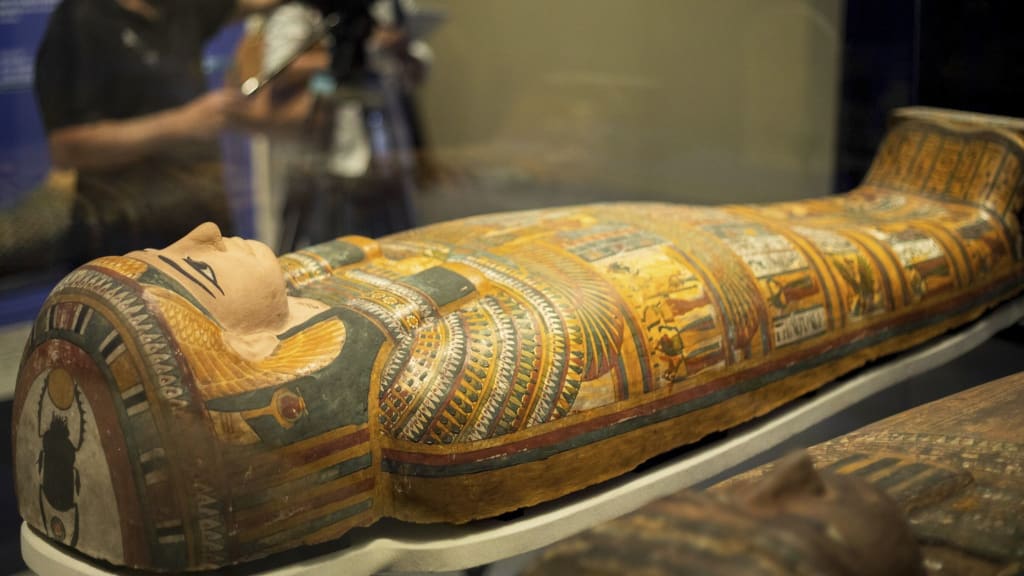
For centuries, ancient Egyptian mummies have captivated the imagination—mysterious, silent witnesses to a civilization obsessed with death, the afterlife, and immortality. From their ornate tombs and golden sarcophagi to their intricate wrappings and painted masks, mummies are often seen as relics of a bygone spiritual order. But beyond the visual grandeur, a more subtle, unexpected detail is emerging from modern research: their smell.
Thanks to advanced chemical analysis techniques, researchers are now discovering the complex aromas of ancient embalming balms. Surprisingly, these substances give off scents described as woody, spicy, and sweet a far cry from the musty or decayed smells many might associate with ancient remains. Instead of the odor of decomposition, these mummified individuals emit the fragrance of carefully curated blends of tree resins, fragrant spices, and aromatic oils.
In a recent study, scientists used gas chromatography mass spectrometry (GC-MS) to analyze the molecular composition of embalming balms found on two mummies buried over 3,000 years ago in the Theban necropolis, near modern-day Luxor. The team found evidence of ingredients like cedar oil, myrrh, benzoin, and possibly dammar resin components that were not only effective in preserving the body but also carried distinct, luxurious scents.
These findings bring us closer to understanding how the ancient Egyptians approached death not just with ritual, but with artistry. Embalming wasn`t merely a practical process it was a sensory, symbolic, and spiritual transformation. Fragrance played a key role in that transition from mortal to divine, from the earthly body to the eternal soul.
Why Scent Mattered in the Afterlife
In ancient Egyptian belief, the journey to the afterlife was deeply spiritual and symbolic. Preserving the body was only one aspect of mummification; it was also a sacred act intended to prepare the deceased for eternity. Scent played an important role in this preparation. Many of the aromatic substances used had both spiritual and antiseptic properties. Frankincense, for example, was associated with divinity and was thought to cleanse and protect both the body and the soul.
By enveloping the body in these rich, fragrant resins and oils, embalmers were not only slowing decay but sanctifying the deceased. The pleasant aromas created a sensory link to the gods, purity, and renewal core themes in Egyptian cosmology. To the living, these scents communicated reverence; to the gods, they symbolized a soul made ready for rebirth.
A Global Trade in Fragrance
The complexity of the embalming balms also sheds light on Egypt`s far-reaching trade networks. Several of the aromatic ingredients found in the mummification mixtures such as benzoin and possibly dammar resin are not native to Egypt. Benzoin comes from trees in Southeast Asia, while dammar is sourced from trees in the Malay archipelago. Their presence in tombs deep in the Egyptian desert reveals the vast and sophisticated commercial routes that connected ancient Egypt with regions thousands of miles away.
These imported materials were highly prized, both for their scent and their perceived spiritual potency. Their use in embalming rituals suggests that mummification was not just about physical preservation it was a luxury, a statement of status, and a final act of devotion. The dead, particularly the elite, were treated with rare substances that spoke of wealth, power, and access to the divine.
Reconstructing Ancient Aromas
Thanks to chemical analysis and modern perfumery techniques, researchers have begun recreating the original aromas of embalming balms. In one museum project, dubbed the “scent of eternity,” scientists reconstructed the exact aromatic profile of embalming materials used on a high-status Egyptian woman from the 15th century BCE. Visitors could actually smell a recreation of the balm, offering a powerful, immersive experience of ancient history.
These efforts allow us to engage with the ancient world in a completely new way. Unlike texts or images, scent creates immediate, emotional connections. It bypasses rational interpretation and taps into memory and instinct. To smell what the ancient Egyptians smelled to breathe in the same sacred air that once filled the tomb can be a profound historical encounter.
Embalming as Sacred Performance
The embalming process in ancient Egypt was more than a set of technical procedures it was a sacred performance. Embalmers acted not just as morticians but as priests, guided by ritual and tradition. Their knowledge of resins, oils, and herbs was likely passed down through generations, protected and refined within priestly circles.
Some scholars now speculate that embalming formulas were personalized. A pharaoh or noble might be embalmed with a unique blend of resins, their scent custom-tailored to reflect their status or relationship with specific deities. Just as today we associate certain perfumes with elegance or power, ancient Egyptians may have seen specific aromas as symbolic signatures of a person`s identity or divine destiny.
Conclusion
The discovery that ancient Egyptian mummified bodies smell woody, spicy, and sweet invites us to rethink the way we experience history. These scents are not just chemical traces; they are echoes of ritual, memory, and belief. They remind us that even in death, the ancient Egyptians sought beauty, meaning—and the eternal perfume of the divine.
About the Creator
Keep reading
More stories from jihad ahmed and writers in Art and other communities.
Evidence of a 30-Foot Ancient Sea Monster Found in Mississippi
In April 2025, in Starkville, Mississippi, the incredible fossil discoveries, paleontologists and the nation were equally fascinated. Geologists have discovered a giant vertebrae in the Mosasaurs. This is an impressive sea reptile that was dominated by the sea during the late Cretaceous season. This not only highlights the region's prehistoric marine life, but also highlights the importance of Mississippi in paleontological research.
By jihad ahmed8 months ago in History
Beyond, Beholding
Everytime i step on the ground the sound made wants to make a noise desiring to be heard if volume was loud enough to sense ears hearing as it wants to exist to be a force meant to be known by the recognition of dispute and the cause that is rival to light that is how God made darkness misunderstood being summoned by its own incomprehension because their was no time to validate evil. As the light shines awaited by the end as love has not met with unreachable places with no destination how could fate seal itself when theres nothing to please it without a savior because like God it is eternal.
By sophia saldarriaga4 days ago in Art


Comments
There are no comments for this story
Be the first to respond and start the conversation.