
AI killed my coding brain but I’m rebuilding it.
We sprinted into the AI age of autocomplete IDEs now we’re waking up wondering why we forgot how to write a for-loop..

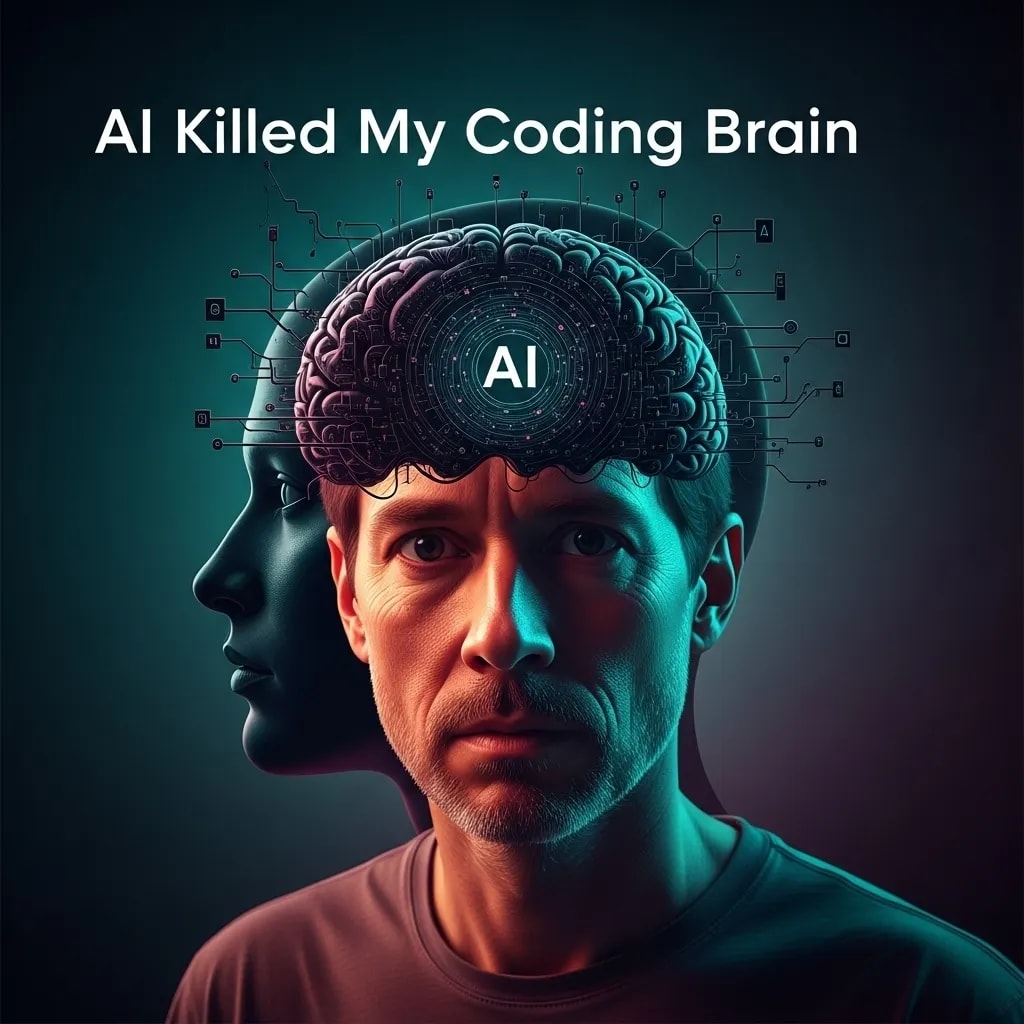
In recent years, artificial intelligence has revolutionized the way we work, learn, and solve problems. In the realm of programming, AI-powered tools like code autocompleters, intelligent debuggers, and even full code generators have made writing software faster and easier than ever. While these tools can be incredibly helpful, there’s a growing number of developers—including myself—who feel that leaning too heavily on AI has dulled their own coding instincts and problem-solving skills. In other words, AI killed my coding brain. But I’m not giving up; I’m rebuilding it.
The Rise of AI Assistance in Coding
As a programmer, I was initially thrilled when AI tools entered the scene. Tools like GitHub Copilot, Tabnine, and others promised to speed up development and reduce tedious boilerplate writing. When you’re on a tight deadline, having a smart assistant that suggests entire functions or fixes bugs in seconds feels like a godsend.
For a while, I leaned into it heavily. I asked AI to write code snippets, generate algorithms, and even build small projects. The workflow became smoother and faster. But over time, I noticed something troubling—my own ability to think through problems, write clean and efficient code, and debug complex issues started to atrophy.
I found myself struggling with concepts I once understood well. Instead of sitting down and designing a solution from scratch, my first instinct was to ask AI for help. Instead of debugging line-by-line, I trusted the AI-generated code without fully understanding it. My “coding brain” was in a slow decline.
Why AI Might Dull Our Coding Skills
There are several reasons why relying on AI can diminish our own problem-solving abilities:
1. Reduced Mental Effort
Coding requires critical thinking, creativity, and logical reasoning. When AI provides answers instantly, it removes the need to deeply engage with the problem. This reduced cognitive effort means our brain doesn’t get the workout it needs to stay sharp.
2. Overdependence on Autocompletion
Autocomplete features, when overused, can cause us to lose familiarity with syntax, language nuances, and common design patterns. Instead of learning through repetition and practice, we become passive receivers of code suggestions.
3. Lack of Debugging Practice
Debugging is a critical skill that teaches us how programs work internally. If AI generates code that “just works,” we miss out on the trial-and-error process that builds intuition and resilience.
4. Blind Trust in AI
AI tools aren’t perfect. They can produce buggy or inefficient code. When we blindly accept AI suggestions without questioning or understanding them, we risk introducing errors and missing learning opportunities.
Realizing the Problem
At some point, I had a moment of reckoning. I was stuck on a coding challenge that AI couldn’t solve for me outright. When I tried to work through it myself, I struggled immensely. I couldn’t remember fundamental algorithms and found myself constantly referring back to documentation or Stack Overflow. It was frustrating and humbling.
I realized that by outsourcing too much of my thinking to AI, I had allowed my skills to deteriorate. My brain had become lazy, and I needed to rebuild it from the ground up.
The Journey to Rebuild My Coding Brain
Rebuilding my coding skills meant embracing deliberate practice, discipline, and a mindset shift. Here’s how I approached the process:
1. Reducing AI Dependency
I started by limiting my use of AI tools during practice sessions. Instead of immediately asking for code, I forced myself to write out solutions on paper or in a simple text editor without assistance. This helped reactivate problem-solving muscles.
2. Relearning Fundamentals
I went back to basics—algorithms, data structures, core language features. Revisiting these foundational concepts helped me regain confidence and deepen my understanding, making it easier to tackle more complex problems.
3. Coding Challenges and Projects
I began solving problems on platforms like LeetCode, HackerRank, and Codewars without AI help. I also rebuilt small projects from scratch, focusing on designing architecture, writing clean code, and debugging on my own.
4. Writing Code by Hand
There’s something powerful about coding by hand—on paper or a whiteboard. It forces you to slow down and think through every step. I incorporated this practice regularly to improve memory retention and problem decomposition.
5. Debugging Without Shortcuts
Instead of running to AI or debuggers immediately, I tried to read error messages carefully, use print statements, and step through code logically. This helped me rebuild intuition about how programs behave.
6. Reading Code and Documentation
I spent time reading well-written open-source projects and official documentation. Understanding how experienced developers structure their code helped me absorb good practices and improve my coding style.
7. Teaching Others
One of the best ways to rebuild knowledge is to teach it. I started writing blog posts, answering questions in forums, and mentoring beginner programmers. Explaining concepts to others forced me to clarify my own understanding.
The New Role of AI in My Coding Life
I’m not anti-AI. On the contrary, AI is an incredibly powerful tool that can augment our work. The key is balance. After rebuilding my coding brain, I now use AI thoughtfully:
For inspiration or brainstorming ideas.
To check code quality or find alternative implementations.
To automate repetitive tasks after I’ve written the core logic.
As a learning aid—not a crutch.
By combining my sharpened skills with AI assistance, I feel more confident, efficient, and creative.
Lessons Learned
This experience taught me several important lessons:
Technology is a tool, not a replacement for thinking. AI should amplify our intelligence, not substitute it.
Skills degrade without use. Just like muscles, our cognitive abilities need regular exercise.
Patience and persistence are essential. Rebuilding a brain isn’t quick or easy, but it’s rewarding.
Balance is key. Leveraging AI wisely can boost productivity without sacrificing learning.
Final Thoughts
AI has the potential to transform coding, but it can also inadvertently weaken our own mental capacities if we aren’t careful. I’m grateful for the convenience AI offers but even more grateful for the opportunity to rebuild my coding brain. The process has reignited my passion for programming and reminded me that true mastery comes from within—not from a machine.
In the end, AI didn’t just kill my coding brain; it gave me a wake-up call. And now, I’m rebuilding it stronger than ever.
About the Creator
Keep reading
More stories from Hanifullah and writers in Art and other communities.
The Shadow of the Silver Tree
In the quiet village of Arindel, nestled between misty mountains and whispering forests, there stood a tree unlike any other. Its trunk shimmered silver in the moonlight, and its leaves rustled as if speaking secrets of ages past. The villagers called it the Silver Tree, but few dared approach it, for it was said that its shadow could reveal your deepest fears—and sometimes never let you go.
By Hanifullah5 months ago in Fiction
A Matter of Coincidence
Tuesday, 3 September 2024 Ayesha Fareed Ahmed, Mirpur Khas Sheeda was a simple and innocent man. One day, he was going to his wife’s village to bring her back. On the way, he saw some donkeys grazing on grass at a certain place. Eventually, he reached his in-laws’ house. His wife’s brother asked him to sit in the guest room.
By Sudais Zakwanabout 11 hours ago in Art




Comments (2)
Nice
👏 🥰 😍 😍 ☺️ 👍 ☺️ 🥰 👌 👌 😍 😍 🥰 👌 😍 😍 🥰 😍 🥰 👌 😍 👏 👌 ☺️ 🥰 👌 👍 😍 ☺️ 🥰 👍 👌 ☺️ 😍