
AI and the Future of Vector Art Services
This evolution has also led to the rise of concepts like Qualitycare digitizing, a blend of automation and expert precision to ensure top-notch output for embroidery

The art and design world is undergoing a digital revolution, and at the center of it is artificial intelligence (AI). One of the areas being transformed is vector art services—a specialized field that converts raster images into scalable, clean, and editable vector graphics. While vectorization was once a manual, time-consuming task, AI now enables faster, more accurate results. This evolution has also led to the rise of concepts like Qualitycare digitizing, a blend of automation and expert precision to ensure top-notch output for embroidery, printing, and branding industries.
Understanding Vector Art and Its Challenges
Vector art refers to images created using mathematical formulas rather than pixels. Unlike raster images (JPEGs, PNGs), vector files like SVG, AI, or EPS can be resized without losing quality. They are ideal for logos, business cards, signs, and embroidery patterns.
However, creating vector art requires precision. Manually converting araster image into vector format (a process known as vectorization) involves redrawing the image using paths, curves, and anchor points. It's tedious, especially for complex or low-resolution graphics. That’s where AI steps in.
How AI is Revolutionizing Vector Art Services
AI in vector art services isn't just a convenience—it’s becoming a necessity. Here are several ways artificial intelligence is enhancing this field:
1. Automatic Vector Conversion
AI-powered software can scan raster images and automatically trace shapes, lines, and colors to create vector equivalents. These tools use advanced algorithms to identify outlines, gradients, and details that would otherwise take hours to replicate manually.
2. Style Recognition and Replication
Modern AI tools don’t just trace—they understand style. Whether the original artwork is hand-drawn, geometric, or cartoon-like, AI can mimic the style during vector conversion. This preserves the essence of the design while transforming it into a cleaner format.
3. Time and Cost Efficiency
In traditional vector art services, skilled designers had to work on every single project from scratch. AI tools reduce that burden, allowing artists to focus more on creative adjustments. This saves both time and cost, which can be passed on as savings to customers.
4. Enhanced Accuracy and Consistency
AI ensures uniform quality across multiple designs. Whether you're converting 10 logos or 10,000, the consistency remains intact. This is especially valuable for embroidery digitizing and screen printing services, where precision is critical.
The Role of Qualitycare Digitizing
Now, let’s talk about the rising standard in the industry: Qualitycare digitizing.
Qualitycare digitizing is more than just vector conversion—it’s a commitment to combining AI efficiency with human craftsmanship. At its core, this approach ensures that while AI handles the groundwork, experienced designers step in for refinement and customization.
Here’s what sets Qualitycare digitizing apart:
– AI-Assisted, Human-Perfected Workflows
AI generates the initial draft of the vector artwork, dramatically speeding up the process. But before the final file is delivered, expert artists inspect and tweak every line, curve, and fill. This ensures the result is flawless and ready for real-world applications like embroidery machines or large-format printing.
– Focus on File Quality and Clean Stitching Paths
For embroidery and apparel businesses, vector files are often used to create stitch paths. Qualitycare digitizing ensures that these files are clean, minimal in thread breaks, and optimized for machine readability—something generic AI tools can’t always guarantee.
– Customization with Client Goals in Mind
Different clients have different needs. Whether it’s thicker outlines for caps or detailed fills for patches, Qualitycare digitizing adapts the vector process to suit specific applications, ensuring that the final output meets both aesthetic and technical requirements.
– Error Detection and Fixing
AI, while fast, can sometimes misinterpret low-resolution images or blend edges incorrectly. The Qualitycare approach includes manual checking to correct common AI mistakes like distorted curves, jagged edges, or incomplete fills.
Why Businesses are Adopting AI-Powered Vector Services
From print shops and clothing brands to promotional product companies, everyone benefits from AI-integrated vector services:
Speed to market: Faster turnaround means designs are ready for production sooner.
Cost control: Less manual labor equals lower overhead.
Scalability: Businesses can process more orders without compromising on quality.
Better customer satisfaction: High-quality vector files reduce errors during production and lead to better-finished products.
Use Cases of AI in Vector Art
Let’s explore some real-world scenarios where AI and Qualitycare digitizing make a significant difference:
● Embroidery Digitizing for Apparel
Using vector files, embroidery machines stitch company logos, names, or designs onto shirts, jackets, and hats. Clean vectors ensure smooth, consistent stitching—critical for brand visibility and durability.
● Logo Recreation for Print Materials
Often, clients submit pixelated or blurry logos. AI tools can quickly convert these into vector formats, allowing for crisp prints on banners, flyers, and promotional items.
● Merchandise and Product Customization
From mugs to mousepads, AI-optimized vectors make it easier to adapt designs for different product surfaces and sizes, without distortion or loss of quality.
● Batch Processing for Bulk Orders
If a company needs 500 designs converted quickly, AI makes that possible. Then, designers apply the Qualitycare digitizing layer to ensure every file is perfect.
Future of AI in Vector Art: What’s Next?
The future is promising. AI will continue to improve in its ability to understand design intent, correct imperfections, and support more complex styles. With cloud-based tools, collaboration between clients and designers will become more streamlined.
But as powerful as AI becomes, the human touch will remain irreplaceable. That’s why the hybrid model of Qualitycare digitizing is set to become the gold standard—where speed and scale meet creativity and control.
Final Thoughts
Artificial intelligence is not here to take over the creative process but to enhance it. In vector art services, AI is making workflows faster, more efficient, and more affordable. But to truly deliver premium quality—especially for embroidery and printing—Qualitycare digitizing is the key.
This approach respects both speed and skill, blending automation with artisanal detail. Whether you’re a designer, business owner, or production manager, embracing AI-powered vector art with Qualitycare digitizing ensures you get the best of both worlds.
About the Creator
Keep reading
More stories from writers in Art and other communities.
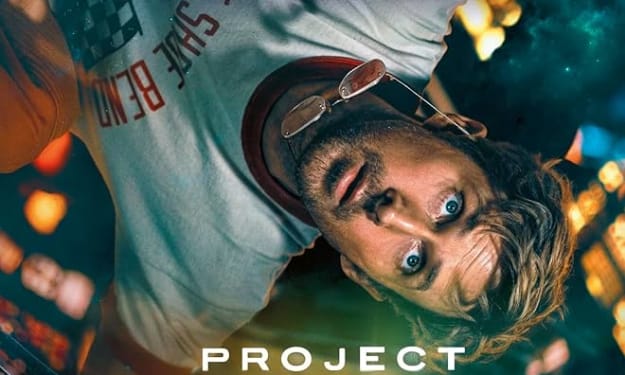
Project Hail Mary
The anticipation for the Project Hail Mary film adaptation in 2026 is absolutely massive! Andy Weir’s story is a masterclass in 'competence porn,' and seeing Ryland Grace brought to life on the big screen is going to be a cinematic treat. Translating that level of scientific problem-solving to film is a highly strategic process—much like the focus and timing required in a top-tier ice fishing slot game in the UK—you have to get every detail right to make the 'catch' truly satisfying for the audience
By StanleyGreen5 days ago in Art


Comments