
A Spell Well Cast
Grande and Erivo Bring Wicked to Life
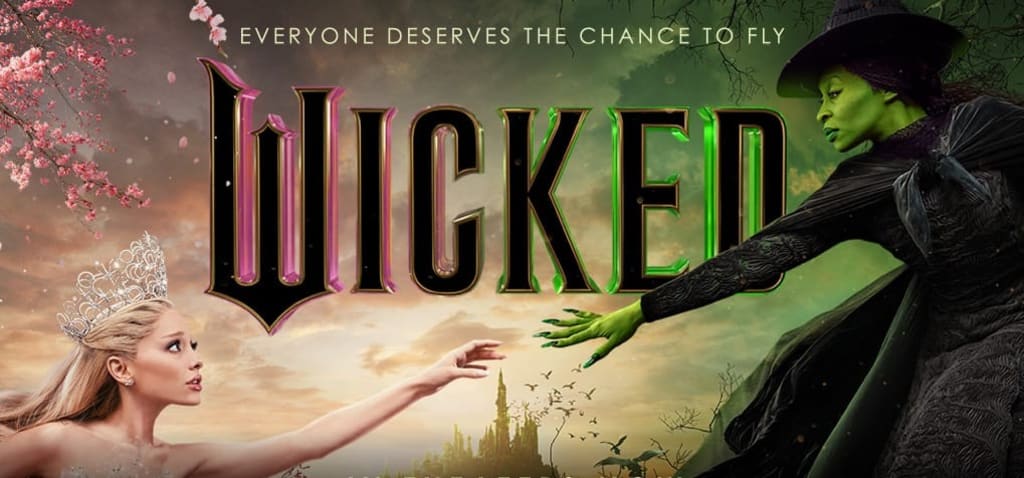
Sometimes there comes a film that seems rather not merely created for our amusement but to speak with us—in the voice of its characters, in the sweep of its songs, in how it opens little windows of feeling. Wicked is such a film. Boasting star turns, lush staging, and an emotional undercurrent about friendship, otherness, and power, it lands with a kind of sincerity that is rare in big-budget musicals.
At its center, Wicked is the story of two women in a place that expects them to fit a mold—one bright and bubbly, gold‑haired; the other green‑skinned, strong‑willed, and wrestling with a world that misunderstands her. The film, helmed by Jon M. Chu and company, retains much of the spectacle of the stage show but opens up interior emotional lives in ways that feel roomy and lived‑in. For one thing, the movie gives more space to Elphaba's green skin and the bullying she endures—something the original stage material touched upon but here feels closer to intimate.
Performances, really, are the anchor here, and yes, I'll say it: Grande and Erivo are doing a phenomenal job. Grande is not just playing "the smiling good witch"; she shows us cracks, ambition, fear of becoming irrelevant. Erivo could have made Elphaba be all about green skin and the witch-tag; she gives us instead a deeply felt creature whose powers and pains messily intertwine. Their chemistry isn't all "cute best‑friends" but conflicted, layered, honest. Critical consensus backs this up: many reviews highlight the duo's vocal and dramatic gifts as integral to making the film live.
Where the film really flies is in the singing. The pitfall with big musicals is the way in which songs become spectacle; here, they seem like revelations of character. Whether it's Elphaba wrestling with who she is or Glinda questioning what's expected of her—the numbers aren't just "big show tunes," they are emotional touchstones. When the moment finally comes for "Defying Gravity" (yes, that one), the film, thanks especially to Erivo, reaches the level where you feel the lift. And yes: the vocal power held up. To say it is "top tier" would not be hyperbole: the musical heartbeat of the movie is pure, committed, generous.
It visually and conceptually embraces its fantasy roots: the Land of Oz has never looked so lush, and the "witch-world" set-up gains new textures. That said, a number of critics have indicated the movie does feel long, the spectacle at times overwhelming the story.
These are fair caveats: this isn't a lean, thriller of a film; the scale is grand. Because the performances ground it, however, I found the length forgivable.
But what really impressed me was how Wicked makes the "origin" story—where we learn how the "witch" became "witchy" and how the "good witch" became "good" — feel like something that matters. Friendship becomes rivalry; discovery becomes conflict; power becomes responsibility. We often watch films where characters are locked into fixed labels ("good," "bad"); here the labels are challenged. And the story doesn't shy away from big ideas: inclusion, loyalty, truth‑telling, the cost of being "different." For all the whimsy, there's a pulse of something serious beneath. See also discussion of the themes of otherness and acceptance.
But perhaps what I cherished most was how the film takes the better part of its 160 minutes—yes, it is a big movie—to allow silence after the storm, letting the characters look at each other and let the weight of choices sit. That breathing room is rare in modern musicals of this scope. Simultaneously, if you come expecting wall‑to‑wall punchy edits and a steady tempo of “song‑song‑song,” you will feel the pacing slack in places. The second act carries more structural weight, and at times, transitions lean a bit more into "movie musical glamour." But I think that's a risk that pays off in spades.
Another strength: the handling of the supporting characters. While this is Glinda and Elphaba's story, the world around them—the University of Sorcery ("Shiz"), the politics of Oz, the young sister Nessarose, the mentors—all feel properly drawn. The sets, the costuming, the design all amplify the feeling that we're in a magical realm, but the magic never overshadows the human stakes. Of course, production design and costume design are standouts, say critics.
As noted, its runtime and size may be overwhelming to some: the spectacle sometimes overshadows the more intimate character work. The adaptation from stage to screen inevitably means changes—some of the fans of the theatrical version may object to pacing changes or trimming and expanding of certain scenes. There are times when the visual effects—or at least the ambition for them—feel on the edge of immersive rather than fully grounded; in a story about feeling grounded, that can pull you slightly out of the emotional moment. Some critics have flagged this.
Finally, the film is obviously designed with the sequel in mind: there's the sense of "we're still building to something" which means some arcs are incomplete. That isn't a flaw per se, but it means the film sometimes feels like Part One of the story rather than a fully self‑contained whole.
Who's it for? If you're the kind of person who loves a musical, who loves character-driven drama wrapped in fantasy, then you will likely leave the theatre feeling you've experienced something special. If you are less drawn to spectacle, preferring your narratives lean and minimalist in their telling, you might feel that at times the length and scale overshadows the subtlety. For families, it has heart and warmth; yet its themes run deep enough to provoke thought.
Verdict: Wicked is one of those rare movie musicals that doesn't just translate from stage to screen—it transcends the translation. Thanks in large part to Ariana Grande and Cynthia Erivo delivering performances that are vocally commanding and emotionally honest, the film delivers on its promise of magic. The songs reach for something big; the story does too. It may not be perfect, but the sheer ambition and execution mean it succeeds more than most. In short: it earns its climb. If you go, listen for the silence between the notes; watch for how the color green becomes metaphor; and allow yourself to believe for a while that maybe we all can fly beyond the rainbow.
About the Creator
Jane Carty
A graduate of Western Kentucky University with a degree in journalism and media studies, determined to give a voice to the people and places often overlooked. Bringing empathy, integrity, and a touch of humor to every story she writes.
Keep reading
More stories from Jane Carty and writers in Art and other communities.
Taylor Swift’s “Tortured Poets” Era
The Era Emerges When Taylor announced The Tortured Poets Department at the 2024 Grammys, the whole world leaned in. The album―officially released on April 19, 2024―was the centerpiece of a distinct literary‑rock‑pop aesthetic: introspective yet spectacle‑ready, heartbreak‑laden yet playful.
By Jane Carty 4 months ago in Art
Crossing Into Darkness
Bold and breathtaking, yet somehow subdued and intimate, Crossing Into Darkness is the most stunning small art show I have seen in a long time. It combines astonishing, and sometimes atypical works, from some of the most important artists you know, with equally important work from artists you have never heard of.
By Raymond G. Taylor3 days ago in Art


Comments
There are no comments for this story
Be the first to respond and start the conversation.