
Why MVP Development Is the Smartest First Step for Startups
Discover how MVP development helps startups validate ideas, reduce risk, and build smarter products by focusing on what matters most - early and fast.
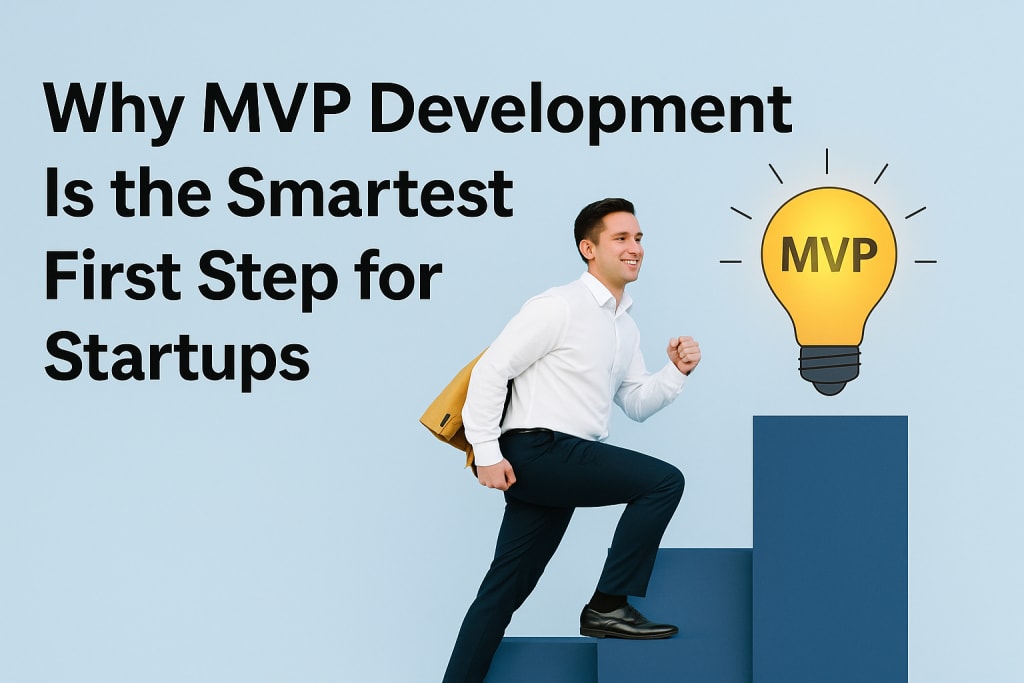
In the fast-paced world of startups, it’s easy to get caught up in the idea of building “the next big thing.” But here’s a reality check: most successful startups didn’t launch with a full-fledged product. They began with something much smaller — a Minimum Viable Product (MVP).
As someone who’s worked with founders, development teams, and product strategists, I’ve seen what happens when startups go all-in too early — and what happens when they start lean, gather feedback, and build with purpose.
This article is based on real experience, practical reasoning, and a product mindset. If you're considering launching a digital product or mobile app, here’s why MVP development might be the smartest decision you’ll make.
1. You Need to Validate, Not Just Build
Many startups fall into the trap of building a complete product before ever speaking to a user. It feels productive, but it’s risky. You might spend months (and thousands of dollars) creating features that nobody wants.
An MVP focuses on your core value proposition — the one thing your product must do well. It allows you to launch fast, test your assumptions, and see how users respond before investing in full development.
Validation isn’t just a nice-to-have; it’s survival.
2. You Save Time and Money Where It Matters Most
Resources are limited when you’re starting out. Building a polished, full-featured app can take 6–12 months. An MVP, on the other hand, can often be delivered in 6–10 weeks.
This not only reduces your financial risk — it also helps you get to market faster. You’ll be able to:
- Identify what matters to users
- Cut out the fluff
- Avoid costly rework
Spending less upfront lets you invest more in iteration, user experience, and growth.
3. You Get to Real Users Faster
There’s no substitute for real-world usage.
Early user feedback tells you:
- Where users are getting stuck
- Which features they use most
- What you missed entirely
An MVP helps you learn from behavior — not just surveys or assumptions. That kind of insight is incredibly difficult to get without something tangible in users' hands.
4. It Keeps Your Product Vision Grounded
It’s easy to fall in love with your idea. But an MVP forces you to define what’s essential. That discipline helps you avoid feature bloat and scope creep — two of the biggest killers of early-stage software.
You’ll be focused on what actually moves the needle:
- What problem are you solving?
- How can you solve it simply?
- What can be built quickly and effectively?
This thinking not only helps with the first launch — it creates a smarter approach to product development long-term.
5. It’s Easier to Pivot or Adjust
Most successful products didn’t get it right on the first try. Slack started as a game communication tool. Instagram began as a location check-in app. These products evolved because their teams were paying attention.
With an MVP, you’re not locked into a long roadmap. You’re building something lean — and if it doesn’t connect, you can adjust your direction quickly without losing everything.
Agility is a huge advantage in the early days.
6. You Build Momentum — Not Just Software
There’s a real energy that comes from launching something, even if it’s small. That first version gives you:
- Something to demo
- A reason to talk to users
- A story for potential investors
- A way to begin building community
Momentum matters more than perfection. An MVP is a catalyst.
7. It Attracts Investors With Evidence, Not Just Ideas
It’s one thing to pitch an idea. It’s another to show a working product, even if it’s basic.
When you’re raising early-stage capital, an MVP proves:
- You can execute
- People are using your product
- You’re gathering data
- You’re serious about solving a problem
Investors want to reduce their risk. A working MVP does just that.
8. It Starts the Real Product Conversation
Internal conversations about product features are theoretical. Users change that.
Once your MVP is in the wild, you’ll start having better conversations:
- What features are users asking for?
- What pain points are they still facing?
- What’s the right pricing model?
These aren’t guesses anymore — they’re grounded in usage and behavior.
9. It Helps You Test the Market Before Scaling
Just because a problem exists doesn’t mean people will pay to solve it. Just because you can build something doesn’t mean the market is big enough to support it.
An MVP lets you test the waters. You’ll find out:
- Who your early adopters really are
- What acquisition channels work
- Whether your unit economics make sense
Better to learn that now — not after 12 months and a huge budget.
10. It’s the Approach the Best Companies Use
Airbnb started with one apartment and a few guests. Dropbox validated demand with a simple explainer video. Spotify’s first version wasn’t public — it was a test of their streaming engine.
The MVP approach isn’t a shortcut. It’s a proven method used by the most disciplined teams in tech.
Final Thoughts: Build Less, Learn More
As a founder or product builder, your job isn’t just to launch. It’s to learn, evolve, and grow. MVP development gives you that chance — without the high stakes of building everything at once.
It’s not about shipping something incomplete. It’s about shipping something focused.
The smartest startups don’t start with everything. They start with what matters.
If you're exploring MVP Development Services, make sure you're working with a team that understands your goals — not just your feature list. You want partners who’ll challenge assumptions, focus your scope, and help you get to the first real version of your product quickly and meaningfully.
Because getting started isn’t just about writing code. It’s about building something that matters — and learning fast enough to make it better.
About the Creator
Keep reading
More stories from Sachin Wankhede and writers in 01 and other communities.
Top Benefits of Custom Patient Management Software for Clinics & Hospitals
Running a healthcare practice means wearing a dozen hats. Some days you’re the problem solver, the scheduler, the tech troubleshooter—and, of course, the provider. Behind every patient interaction is a web of admin, systems, and coordination.
By Sachin Wankhede9 months ago in 01
How Much Does App Development Cost in Colorado?
You are probably staring at a napkin sketch thinking you’ve found the next big thing. Good for you. Truly. But I reckon your first real hurdle isn't the code. It is the cold, hard cash required for app development cost in Colorado.
By Sherry Walker7 days ago in 01
How to Choose a Mobile App Development Company in 2026
The Google ecosystem is currently undergoing a structural realignment that fundamentally changes how mobile applications are discovered and validated. We are witnessing a tectonic movement away from traditional index-based search toward a unified Trust Graph where Entity Signals dictate market survival.
By Devin Rosario5 days ago in 01



Comments
There are no comments for this story
Be the first to respond and start the conversation.