
Why Mental Health Matters: Understanding Its Impact on Daily Life
Imagine waking up each day with a sense of purpose and energy, feeling connected to those around you, and handling life’s challenges with resilience. For many, this is an ideal state of well-being, yet it’s often easier said than done. Mental health plays a crucial role in achieving this ideal, influencing almost every aspect of our daily lives. In this blog, we’ll explore why mental health matters, how it affects daily functioning, and what you can do to prioritize it.
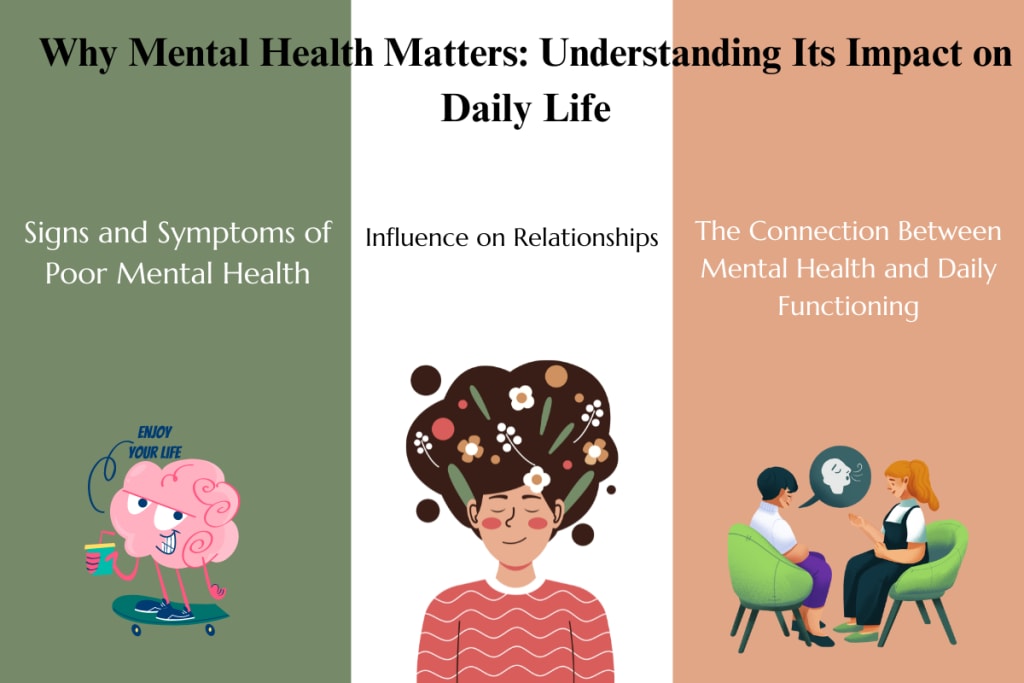
Mental Health refers to our emotional, psychological, and social well-being. It affects how we think, feel, and act in response to life's experiences. Mental health is more than just the absence of mental illness; it’s a state of overall well-being where individuals can manage stress, relate to others, and make sound decisions.
Mental Health vs. Mental Illness
While mental health encompasses our general well-being, mental illness refers to specific conditions that affect our mental functioning. Mental illnesses, such as depression, anxiety, and bipolar disorder, are diagnosable conditions that can impact mental health significantly. Understanding both concepts helps in appreciating the broader spectrum of mental health and the importance of addressing issues before they escalate.
2.The Connection Between Mental Health and Daily Functioning
Impact on Work and Productivity
Mental health profoundly affects work performance and productivity. Issues such as stress, anxiety, or depression can lead to decreased motivation, difficulty concentrating, and lower job satisfaction. Conversely, good mental health enhances focus, creativity, and efficiency, contributing to a more fulfilling work experience.
Influence on Relationships
Our mental health also influences our relationships with others. Positive mental health fosters better communication, empathy, and connection, leading to stronger and more supportive relationships. On the other hand, mental health struggles can create barriers, leading to misunderstandings, conflict, and social withdrawal.
Effect on Physical Health
The link between mental and physical health is well-established. Mental health issues can manifest in physical symptoms such as headaches, fatigue, and digestive problems. Similarly, chronic physical conditions can impact mental well-being, creating a cycle that can be challenging to break. Prioritizing mental health is essential for overall health and well-being.
3.Signs and Symptoms of Poor Mental Health
Common Indicators
Recognizing the signs of poor mental health is crucial for timely intervention. Emotional signs include persistent sadness, excessive worry, or mood swings. Cognitive symptoms might involve difficulty concentrating, decision-making problems, or negative thought patterns. Behavioral changes such as alterations in sleep patterns, appetite, or social withdrawal can also indicate mental health issues.
When to Seek Help
It’s important to seek help if you experience these signs persistently or if they interfere with daily functioning. Professional support from a therapist, counselor, or mental health professional can provide effective strategies and interventions.
4. The Benefits of Prioritizing Mental Health
Improved Quality of Life
Focusing on mental health enhances overall life satisfaction. When individuals feel mentally well, they are better equipped to handle stress, enjoy daily activities, and achieve personal goals. This leads to a more balanced and fulfilling life.
Enhanced Resilience
Good mental health fosters resilience, enabling individuals to bounce back from setbacks and adapt to challenges. This resilience helps in managing stress effectively and maintaining a positive outlook even during difficult times.
Better Relationships and Social Connections
Maintaining mental health contributes to healthier relationships and more meaningful social connections. It allows individuals to engage with others more effectively, offer and receive support, and build stronger social networks.
5. Practical Tips for Maintaining Mental Health Daily
Self-Care Practices
Incorporate self-care activities into your daily routine to support mental well-being. Exercise regularly, engage in hobbies, and ensure you have time to relax and recharge. Self-care practices help in managing stress and maintaining a positive outlook.
Mindfulness and Stress Management
Practicing mindfulness and stress management techniques can improve mental health. Techniques such as meditation, deep breathing exercises, and progressive muscle relaxation help in reducing stress and promoting mental clarity.
Seeking Professional Help
Don’t hesitate to seek professional help if needed. Therapy and counseling provide valuable support and strategies for managing mental health issues. Finding the right mental health professional can make a significant difference in achieving and maintaining well-being.
6. Overcoming Stigma and Promoting Mental Health Awareness
Addressing Stigma
Societal attitudes toward mental health can create barriers to seeking help. Addressing stigma involves challenging negative perceptions, promoting understanding, and supporting open conversations about mental health.
Promoting Open Conversations
Encourage dialogue about mental health in your community. Share your experiences, listen to others, and support those who seek help. Open conversations help normalize mental health discussions and contribute to a more supportive environment.
7.Resources and Support
Available Resources
Numerous resources are available for mental health support. Helplines, support groups, and online tools can provide assistance and information. Exploring these resources can offer guidance and help in finding the right support.
How to Reach Out
If you or someone you know needs help, reaching out is the first step. Contact mental health professionals, seek support from community organizations, or access online resources for assistance.
Conclusion
Mental health matters because it influences every aspect of our lives. By understanding its impact and prioritizing mental well-being, we can improve our quality of life, enhance relationships, and build resilience. Take the time to focus on your mental health, seek support when needed, and foster a positive environment for mental well-being. Your mental health is essential for leading a fulfilling and balanced life.
About the Creator
Keep reading
More stories from Alpha Beta SEO and writers in 01 and other communities.
The Importance of Yoga in Our Daily Life: Enhancing Wellness and Balance
Yoga has evolved from an ancient practice into a modern wellness phenomenon, gaining immense popularity across the globe. From busy professionals to students and parents, more people are turning to yoga to navigate the stresses of daily life. This blog explores the importance of incorporating yoga into our daily routines and how it can profoundly impact our overall well-being.
By Alpha Beta SEOabout a year ago in 01
OpenClaw Review: An AI Agent That Truly Controls Your PC in 2026
Look, I’m going to be real with you. I am absolutely exhausted by subscriptions. It’s 2026. We were promised flying cars, or at least a robotic butler that could fold laundry. Instead, we got a dozen different AI chatbots that all cost $20 a month and hallucinate when you ask them to do basic math.
By Sherry Walkera day ago in 01
Mobile App Development Orlando: iOS vs Android Cost Comparison
The first sign the comparison was flawed didn’t come from engineering. It came from accounting. We were months past launch, reviewing what should have been a predictable cost curve, when one platform’s line refused to settle. Nothing dramatic. No runaway spending. Just a persistent pattern of small overruns that added up quietly.
By Nick Williamabout 5 hours ago in 01




Comments
There are no comments for this story
Be the first to respond and start the conversation.