
Who Were the 12 Knights of the Round Table?
Who Were the 12 Knights of the Round Table?

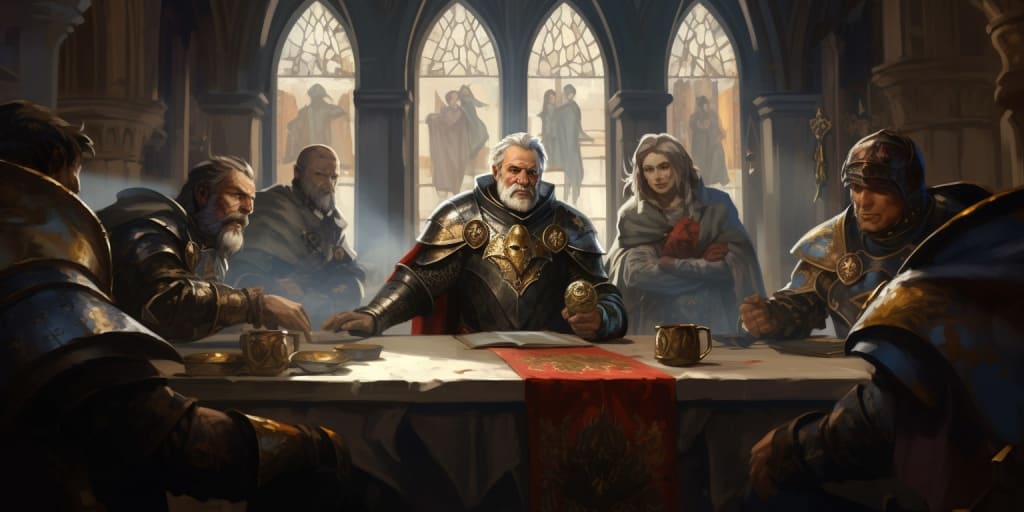
The Knights of the Round Table are a legendary group of knights from Arthurian legend, celebrated in medieval stories and mythology. These knights served King Arthur, the ruler of Camelot, and upheld values of chivalry, honor, courage, and justice. The Round Table was symbolic of equality, as it had no head, signifying that all knights who sat at it were considered equals. Over time, many stories and accounts have contributed to the list of knights, but there is a general consensus about the core twelve knights who were most prominent in Arthurian lore. Below is an exploration of these knights and the roles they played in the legend of King Arthur.
King Arthur
Before diving into the knights themselves, it's important to first understand King Arthur, their leader. Arthur, the once and future king, is the central figure in these legends. He is said to have been born in a time of chaos in Britain, with his father Uther Pendragon’s death leaving the kingdom in turmoil. Arthur, the child of Uther and the enchantress Igraine, was raised in secret by the wizard Merlin, as Uther’s enemies would have killed him. When Arthur pulled the sword Excalibur from the stone, he was revealed to be the true heir to the throne. Under his rule, Camelot flourished as a symbol of justice and virtue.
The 12 Knights of the Round Table
There is no single version of the Arthurian legends, and various medieval texts offer different variations of the twelve knights. However, the following knights are consistently mentioned across most of the stories.
1. Sir Lancelot du Lac
Sir Lancelot is often regarded as the greatest of all the knights. He was raised by the Lady of the Lake and was known for his unparalleled skill in combat. Lancelot’s loyalty to Arthur was unwavering, though his love affair with Queen Guinevere, Arthur’s wife, later became a tragic flaw. His love for Guinevere, and his subsequent betrayal of Arthur, is a central theme in many Arthurian tales, leading to the eventual downfall of Camelot.
2. Sir Gawain
Sir Gawain, Arthur’s nephew, is another prominent knight. Known for his strong sense of duty and honor, Gawain is often portrayed as a courageous and virtuous warrior. In the famous story “Sir Gawain and the Green Knight,” Gawain accepts a challenge from a mysterious knight and demonstrates both bravery and integrity. Gawain is also featured in various other tales, including his role as a defender of Camelot during Arthur’s absence.
3. Sir Galahad
Sir Galahad is the son of Sir Lancelot and is often depicted as the purest and most virtuous knight of the Round Table. He is the one who ultimately succeeds in the quest for the Holy Grail, an adventure that several knights of the Round Table embark upon but fail to complete. Galahad’s purity and devotion to God are key elements in his character, and he is often seen as a symbol of spiritual righteousness.
4. Sir Percival
Sir Percival is another key knight associated with the quest for the Holy Grail. Often portrayed as naïve and innocent, Percival’s story is one of growth and enlightenment. He is initially unaware of his noble heritage and the significance of his quest, but through his journey, he matures and becomes a brave and wise knight. Percival’s connection to the Grail is also central to his character, as he is one of the knights chosen to seek it.
5. Sir Bors de Ganis
Sir Bors is another knight known for his unwavering loyalty to Arthur and his role in the quest for the Holy Grail. He is often depicted as a noble and honorable warrior. Bors is one of the three knights who actually witnesses the Holy Grail, alongside his brother Lionel and Sir Percival. His sense of duty and honor is a central aspect of his character, and his presence in the Grail quest highlights the deep moral and spiritual tests that the knights face.
6. Sir Tristan
Sir Tristan is a tragic figure in the Arthurian tales, best known for his doomed love affair with Isolde, the wife of King Mark of Cornwall. Despite his romantic entanglements, Tristan is an exceptional knight, skilled in battle and devoted to his king. His love for Isolde leads to many conflicts, and ultimately, his death is one of the most sorrowful events in Arthurian lore.
7. Sir Kay
Sir Kay is Arthur’s foster brother and one of the most loyal knights of the Round Table. Although Kay is often portrayed as brash and sometimes overconfident, he is also known for his wit and courage. He serves as a squire to Arthur before becoming a knight, and his role in Arthur’s rise to power is significant. Kay’s character often adds an element of humor to the tales, but his loyalty and bravery are unquestioned.
8. Sir Bedivere
Sir Bedivere is one of the earliest knights to join Arthur’s court and is known for his role in the final days of Camelot. After Arthur’s mortal wounding in the battle against Mordred, Bedivere is tasked with returning Excalibur to the Lady of the Lake. His loyalty and devotion to Arthur are evident in his actions, and his role in the king’s death and legacy is an important part of the story.
9. Sir Lamorak
Sir Lamorak is another knight known for his exceptional fighting skills. He is the son of King Pellinore, who was the first to fight King Arthur in the legends. Lamorak is a tragic figure, as he is eventually betrayed and killed by his half-brother, Sir Gawain, over a family dispute. Lamorak’s story is one of the many tragic elements that punctuate the Arthurian legends, showcasing the often-complicated relationships between the knights.
10. Sir Gaheris
Sir Gaheris is also a son of King Pellinore and the brother of Sir Lamorak. He is depicted as a noble and honorable knight, though his most notable role in the legends is his involvement in the death of Queen Morgause, the mother of Gawain, Gaheris, and Lamorak. Gaheris’s story is often overshadowed by the more prominent knights, but his actions contribute to the complex web of relationships that defines the Arthurian world.
11. Sir Gareth
Sir Gareth is the youngest of the three sons of King Lot of Orkney (the other two being Gawain and Gaheris). He is often portrayed as a humble and noble knight, eager to prove himself despite his family’s powerful reputation. Gareth’s story is one of honor and chivalry, as he completes a series of difficult tasks, earning the respect of his peers.
12. Sir Mordred
Sir Mordred, perhaps the most infamous of all the knights, is the son of King Arthur and his half-sister Morgause. Mordred is often portrayed as a traitor who ultimately leads the final battle that brings about the fall of Camelot. His relationship with Arthur is complex, and in many versions of the story, Mordred’s betrayal is a key factor in Arthur’s tragic death.
The Quest for the Holy Grail and the Fall of Camelot
The stories of the twelve knights revolve around their individual quests for glory, honor, and the elusive Holy Grail. As the knights seek the Grail, they face personal trials that test their virtues. Some knights, like Sir Galahad, succeed, while others falter due to personal flaws, such as Lancelot’s love affair with Guinevere or Gawain’s rashness.
Ultimately, the disunity and betrayal within the Round Table lead to Camelot’s downfall. Arthur’s death at the hands of Mordred marks the end of an era, and the knights, having failed in their quests or fallen victim to their weaknesses, disband. The knights of the Round Table represent ideals of chivalry, but they are also flawed human beings whose stories reflect the complexities of loyalty, love, and honor.
In conclusion, the Twelve Knights of the Round Table each have distinct roles in the legends of King Arthur. Their individual quests and virtues contribute to the overall narrative, one of heroism, tragedy, and the quest for a better world. While the Round Table symbolizes unity and equality, the personal flaws and betrayals of the knights show that even the most noble of men are not immune to failure. The legend of King Arthur and his knights continues to resonate through literature and culture, serving as a timeless reminder of the complexities of heroism, loyalty, and love.
About the Creator
Cost of Building a Scooter App Like Lime (2026)
I remember sitting in a cafe in Austin back in 2018. The streets were suddenly covered in green and bird-themed scooters. It looked like a silicon valley fever dream. Since then, the hype has settled into a real, profitable business model for those who survive.
By Sherry Walker5 days ago in 01
The History and Cultural Role of Custom Pennants in Sports
Pennants have been part of sports traditions for more than a century. These triangular banners are widely associated with teams, championships, and fan culture. In many sports, including soccer and baseball, pennants symbolize identity and pride for both players and supporters. Items such as soccer pennants, soccer club flags, custom pennant flags, and custom felt pennants are commonly used to represent teams, commemorate matches, and preserve sporting traditions.
By charliesamuel4 days ago in 01


Comments (1)
Round tables are amazing! So are knights. Man, when you put knights and round tables together, AMAZING’! Great work! Well written 👍🏼