
What is the Meaning of Allahumma Barik Laha and Lahu?
Allahumma Barik

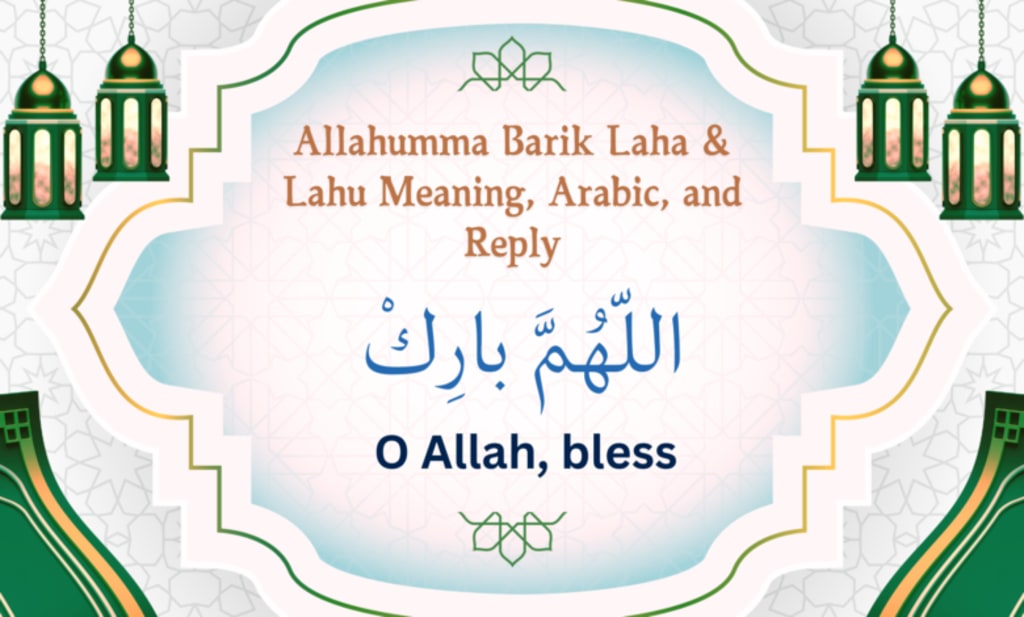
In Islamic culture, supplications or duas play a significant role in daily life, reflecting gratitude, blessings, and goodwill. Two commonly used phrases, Allahumma Barik Laha and Allahumma Barik Lahu, are powerful prayers that express the desire for Allah’s blessings on individuals.
Allahumma Barik" Meaning in English
The phrase "Allahumma Barik" (اللهم بارك) translates to "O Allah, bless" or "O Allah, bestow Your blessings" in English.
This supplication is an appeal to Allah, asking Him to grant His divine grace, protection, and abundance. When reciting "Allahumma Barik," you are seeking Allah’s favor in the following ways:
- Blessings and protection
- Divine favor and mercy
- Abundance and prosperity
- Grace and kindness
How to Respond to "Allahumma Barik"
When someone says "Allahumma Barik" to you, you can reply with any of the following:
- Ameen – Meaning: "May it be so."
This is a simple and heartfelt way to affirm the supplication.
- JazakAllah Khair (جزاك الله خيراً) – Meaning: "May Allah reward you with goodness."
A polite and appreciative response that conveys gratitude.
- BarakAllah Feek (بارك الله فيك) – Meaning: "May Allah bless you too."
This is a way to return the blessings and show goodwill.
Allahumma Barik Laha
This phrase is an invocation meaning, “O Allah, bless her.” It is used when praying for blessings upon a woman, whether for her health, success, happiness, or any aspect of her life. The word “Barik” comes from the Arabic root barakah, which means blessings, growth, or increase. Adding Laha (meaning “for her”) makes it specific to a female.
Allahumma Barik Lahu
Similarly, Allahumma Barik Lahu translates to, “O Allah, bless him.” This is directed toward a male, asking Allah to grant him blessings and goodness in his endeavors, character, or life circumstances.
When Are These Duas Used?
These supplications are versatile and can be used in various situations, such as:
- Congratulating someone on an achievement.
- Wishing blessings for a new marriage, business, or home.
- Praying for loved ones, friends, or anyone deserving of good intentions.
Why Use These Phrases?
Allahumma Barik is frequently used in various situations, such as:
- Showing gratitude and appreciation
- Praying for blessings and protection
- Marking joyful occasions like weddings, the birth of a child, or acquiring something new
- Seeking Allah’s guidance and favor
It is a heartfelt expression that reflects a desire for Allah’s blessings in one’s life and the lives of others.
Difference Between "Allahumma Barik" and "Masha Allah"
Both "Allahumma Barik" and "Masha Allah" are commonly used phrases in Islam, but they have distinct meanings and purposes:
Allahumma Barik
Meaning: "O Allah, bless."
- Purpose: A supplication to ask Allah for blessings, protection, and goodness.
Usage: Used when praying for someone or something to be blessed, such as after admiring a new achievement, possession, or blessing.
Masha Allah
Meaning: "What Allah has willed."
Purpose: An expression of admiration or appreciation for something positive, while attributing it to Allah's will.
Usage: Often said to acknowledge or praise a blessing, talent, or achievement without envy.
Key Difference:
- "Allahumma Barik" is a prayer requesting blessings.
- "Masha Allah" is a statement acknowledging that something good has happened by Allah’s will.
Both phrases complement each other, as "Masha Allah" can be followed by "Allahumma Barik" to admire and pray for blessings simultaneously.
In Islam, praying for others is considered an act of kindness and earns rewards for the one who makes the supplication. The Prophet Muhammad (peace be upon him) emphasized the value of asking Allah for blessings upon others, as it strengthens bonds and spreads goodness.
In conclusion, Allahumma Barik Laha and Allahumma Barik Lahu are simple yet meaningful prayers that embody the essence of goodwill and compassion. By using these phrases, Muslims seek divine blessings for others, fostering a spirit of love, generosity, and unity.
About the Creator
Islam Pro
IslamPro.net, your trusted source for authentic Islamic knowledge, tools, and resources designed to support Muslims around the world



Comments (1)
top friend