
What are the Benefits of Combined 2d and 3d Animation?
The enhanced technique can be used in the composition of these mixed-media forms.

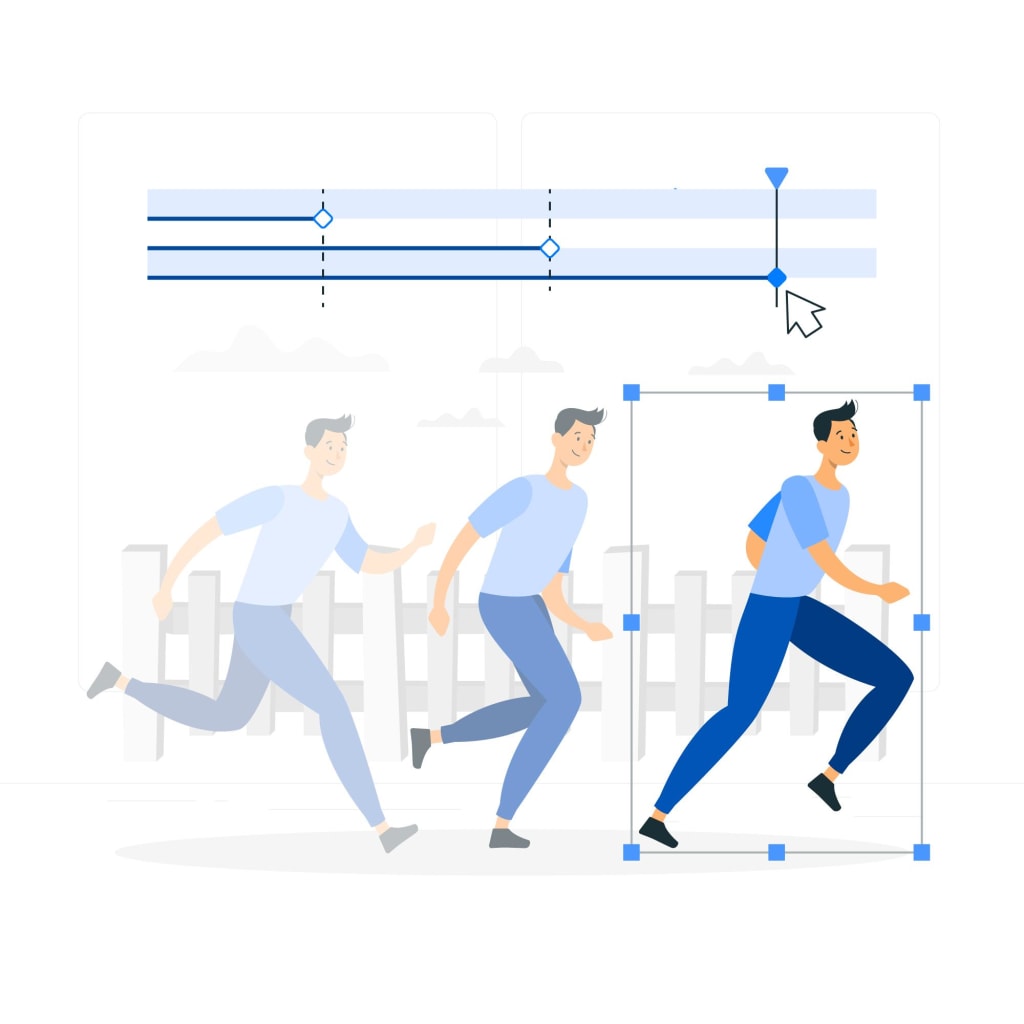
Before talking about mixing 2D with 3D for Animation Video Production, let us first talk about both of them separately.
What is 2d animation?

In 2D animation, animators use visual effects, characters, and backgrounds to create an illusion of movement in two-dimensional space by sequencing individual drawings together over a set period.
2D animation refers to cartoon-style animation where the characters appear on a flat plane, such as traditional hand-drawn animation or computer vector animations that adopt traditional animation techniques using software like Flash.
While computer-generated 2D animations use techniques similar to traditional animation, the computer speeds up the process by creating the frames between the animator's main (key) frames. This work was previously managed by junior animators called "in-between" it took time and was laborious.
The 2D Animation style is used in cartoons, advertisements, product demonstrations, and brand videos, such as educational videos or infotainment videos.
What is 3d animation?

3D Animation is employed to generate three-dimensional objects for various media. Pixar, for instance, is well known for creating many amazing feature films and short films exclusively using 3D animation to create characters, environments, vehicles, monsters, and anything imaginable.
3D animation is performed using computer software and creates 3D models and their movement in a digital environment. 3D animation is much more complicated than 2D animation, involving modelling, animation, and rendering.
Artists “build” models in 3D space. These models are then “rendered” under the light. The lighting and shadows create the illusion of 3D that we see in the finished images. Like computerized 2D animation, 3D animators set “key poses” where needed, typically every few frames. The computer then automatically creates all the images between the key poses.
Combined Media
With a defined understanding of 2D and 3D, combined media can now also be studied. Many animation studios today have found beneficial the combination of 2D with 3D for Animation Video Production for various reasons. Reasons may include expediting the production process, allowing for greater artistic effect, or enhancing a storyline. Let's look specifically at Paperman which will briefly help in review other cases and purposes for the mixed media.
Paperman is a 7-minute romantic comedy made by Walt Disney Animation Studios and directed by John Kahrs that won the Academy Award for Best Animated Short Film. This short film famously combines 2D and 3D animation and has a touching yet intriguing tale. Disney pays respect to its heritage of traditional cell animation, in which each frame of an animation is hand-drawn while also looking to the future of 3D computer graphics. According to Kahrs' interview, he wanted to create a realistic and plausible look while also retaining the wonder and flair of classic Disney animations. He did this by painting 2D brush strokes on top of a rendered 3D CG layer.
Disney had to build a new animation process to produce this short because the 2D animation had to move with the CG. The base 3D Animation model and visuals needed to be built first. Modelling, rigging, and animation were all part of the process, as they are in any 3D animated film. Disney then used computer graphics to construct motion fields, which allowed the 2D component to be transferred to 3D. The development of the motion fields necessitated per-frame per-element renderings with a 2D offset for each pixel in the image. Finally, this procedure permits the 2D portion to flow.
To keep the characters' distinctive Disney aesthetic, silhouette ribbons have to be designed for them. Characters from their silhouettes were then split into cylindrical components. Setting these components perpendicular to the camera direction gives the light feels that 2D animations have when you achieve characters. The offset gave the character a lot of room to maneuver about. Furthermore, a paper texture was created to give the image more depth. Line painters then used the software Meander to create non-key framed drawings by sketching 2D drawings over the CG renders. Motion pasting enabled the creation of all intermediate frames between the artist's mainframes (Wong).
Paperman was a short that stood out because of the homage paid to traditional 2D Animation while using 3D technologies. 2D animation used to be time-consuming and difficult to create. This historical style can be kept while still achieving the required effects of a 3D-produced animation by mixing it with contemporary technologies.
Not all sorts of combined media, nevertheless, have identical artistic intentions as Paperman. For previously mentioned Makoto Shinkai, the CGI component served to enhance the artistry seen in his animation. Different Japanese animators employ computer graphics to further up the production process and lower costs. Computer-generated imagery was generally used for machines, cars, or rigid bodies that only had simple rotation, scaling, or translational transformations. The use of 3D in 2D animations is not only limited to Japanese animations. American animations such as Anastasia are seen to use 3D for the creation of complex architectural models. Disney's Mulan can likewise be believed to use 3D in automatically making a considerable number of Hun heroes in the fight scene in the mountain fight scene.
There was minimal integration technique of 2D with 3D as the 3D model lacked the details present in 2D drawings. Shinkai, who also uses computer graphics in his works, notes that for the 3D computer graphics to blend seamlessly, careful texture mapping and cell shading need to be applied. Even so, the "too perfect" movements of the CG animation give away what is 3D and what is 2D.
Another of Walt Disney Animation Studio's productions, Get a Horse is a short film that uses mixed media as a part of the storyline and as a way to enhance the plot. An interaction between 3D animated characters and characters animated in style is reminiscent of the Disney animations in 1928. The short uses the 2D and 3D worlds as two environments in which the characters go back and forth.
Mixed media has reached many new forms. Each of the films utilizing mixed media serves its purpose. Arguably, however, there may be a misunderstanding of how to properly create mixed media without first understanding the strengths and abilities of the 2D and 3D forms. By discovering these strengths and abilities, the enhanced technique can be used in the composition of these mixed-media forms.
About the Creator
KrishaStudio
KrishaStudio is a leading animated video production company that provides a wide range of animated video production services to businesses across various industry verticals.
Keep reading
More stories from writers in 01 and other communities.
So You Decided To Become a Nurse Practitioner:
So you decided to become an "Advanced Practice" nurse. Congratulations!... is what I would say if this was a good idea. Grad school? In this economy? What were you thinking? Likely it was something along the lines of either 1) “I've seen these other chucklefucks do it— Why can't I?” or even 2) “I've got a nice career, I should shake it up. I miss feeling like I have no clue what I'm doing.”
By Sandor Szabo5 days ago in Fiction



Comments
There are no comments for this story
Be the first to respond and start the conversation.